

Singapore Invests $118m in Bioeconomy
Singapore has committed $118 million to develop sustainable materials and chemicals using living organisms, aiming to support industry-aligned research and commercialisation. The initiative focuses on transforming agricultural waste and producing commercially relevant products.
 Global Newsflix 3 min read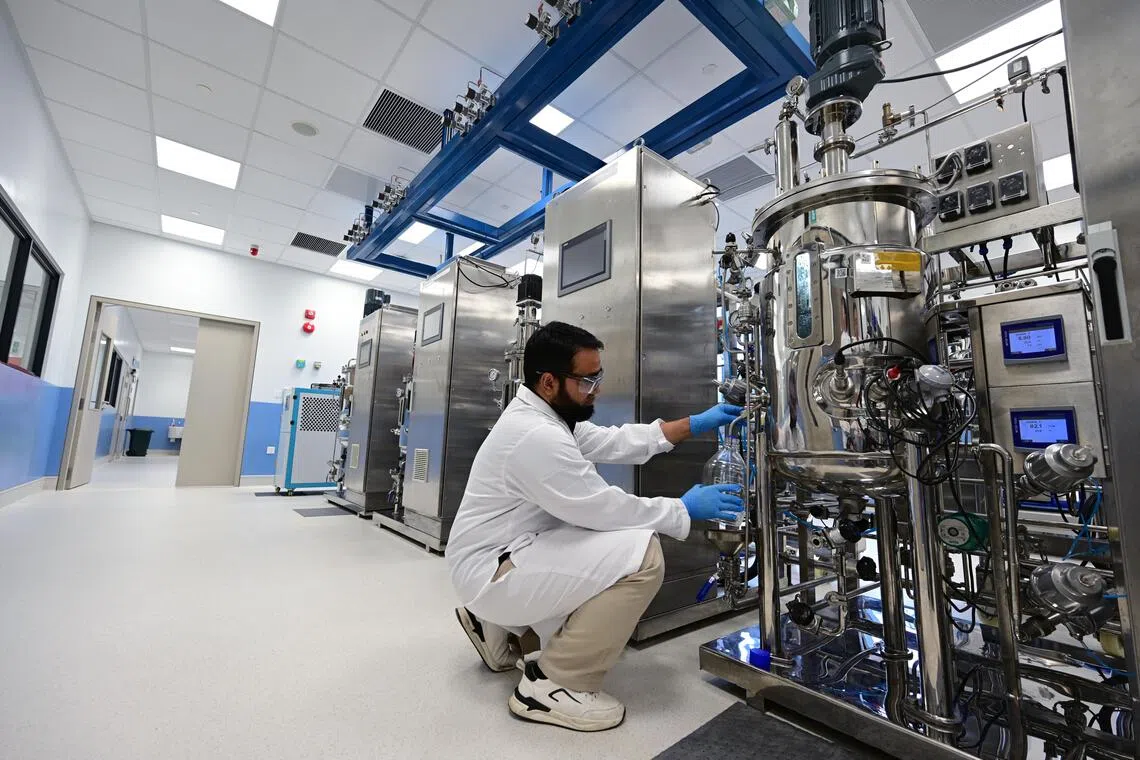
Singapore has launched a $118 million initiative to grow its bioeconomy sector, with a focus on developing sustainable materials and chemicals using living organisms. The Bioeconomy Funding Initiative was announced by Education Minister Desmond Lee at the launch of the National Centre for Engineering Biology.
The initiative aims to support research by institutes of higher learning and the Agency for Science, Technology and Research, by bringing strengths closer to industry needs and wider application. Jermaine Loy, managing director of the Economic Development Board, noted that there are opportunities for Singapore to grow its capabilities in innovation and production of higher-value specialty chemicals and advanced materials.
The National Centre for Engineering Biology, supported by a nearly $50 million grant, will unite top universities to advance engineering biology, fostering sustainable specialty chemicals and scaling up industrial bioprocessing technologies. The centre will build foundational knowledge and technologies in engineering biology for the sustainable biomanufacturing of specialty chemicals.
The initiative joins existing funding of about $82 million and contributes to a total commitment of some $200 million for bioeconomy-related projects over the next five years. The effort is Singapore's largest funding tranche for developing the bioeconomy sector, according to government agencies.
The global market for such materials and chemicals could exceed $200 billion by 2030, driven in part by the roll-out of regulations spurring firms to look for alternatives to raw materials dependent on fossil fuels. The National Centre for Engineering Biology will work closely with academic, government, and industry partners to create an impactful shared research ecosystem.
The centre's work is organised around three research thrusts: machine learning for predictive biodesign, engineering biology for specialty chemical production, and improving efficiency in processing and production. The initiative will support research by institutes of higher learning and the Agency for Science, Technology and Research.
Professor Matthew Chang, executive director of the National Centre for Engineering Biology, said that the centre will bring strengths together, working closely with partners to create an impactful shared research ecosystem. The goal is to enable more sustainable ways of making products that society depends on, using renewable feedstocks and cleaner manufacturing processes.
Key facts
- Singapore has committed $118 million to develop its bioeconomy sector
- The National Centre for Engineering Biology will unite top universities to advance engineering biology
- The global market for bio-based materials and chemicals could exceed $200 billion by 2030
- The initiative joins existing funding of about $82 million, contributing to a total commitment of $200 million
Three perspectives
Neutral
The initiative aims to support industry-aligned research and commercialisation, with a focus on developing sustainable materials and chemicals. The National Centre for Engineering Biology will work closely with partners to create an impactful shared research ecosystem. The outcome of the initiative will depend on the success of the research and commercialisation efforts.
Positive
The initiative has the potential to drive growth in Singapore's bioeconomy sector, creating new business opportunities and jobs. The National Centre for Engineering Biology will advance engineering biology, fostering sustainable specialty chemicals and scaling up industrial bioprocessing technologies. The initiative could contribute to a more sustainable future for Singapore.
Negative
The initiative's success is not guaranteed, and the research and commercialisation efforts may face challenges. The initiative's focus on developing sustainable materials and chemicals may not be enough to drive significant growth in the bioeconomy sector. The outcome of the initiative will depend on various factors, including the success of the research and commercialisation efforts.
Your week in news, every Wednesday
The biggest stories of the week for your edition, in your inbox every Wednesday morning, your time. Free, and you can unsubscribe at any time.