


Jamaica Wants Final Court of Its Own Design
 Global Newsflix 1 min read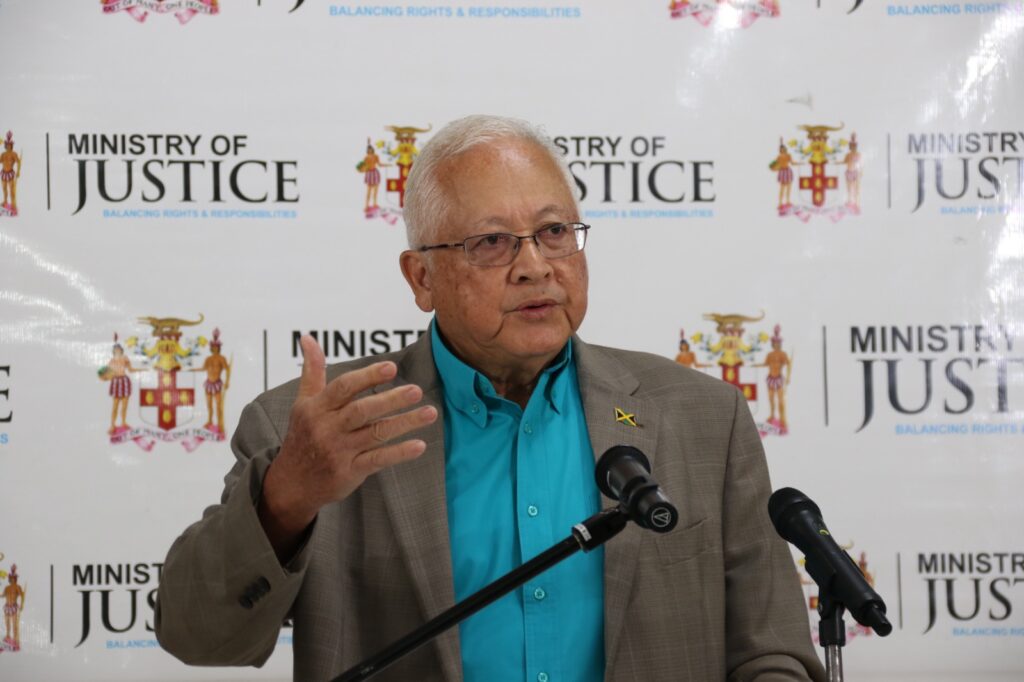
Jamaica's Minister of Justice and Constitutional Affairs, Delroy Chuck, has stated that the country's eventual final court should be of Jamaican design, not an external court. This comes amid a political tug-of-war between the government and the opposition over whether to use the Caribbean Court of Justice or the UK-based Privy Council as the final court. The issue is part of Jamaica's transition to a republic.
Key facts
- Jamaica's Minister of Justice and Constitutional Affairs, Delroy Chuck, wants the country's final court to be of Jamaican design.
- The government and opposition are at odds over whether to use the Caribbean Court of Justice or the UK-based Privy Council as the final court.
- The debate is part of Jamaica's transition to a republic.
Three perspectives
Neutral
The debate over Jamaica's final court has been ongoing, with the government and opposition holding different views. Minister Chuck has urged the opposition to engage in discussions to find a consensus. The outcome of this debate will have significant implications for Jamaica's judicial system.
Positive
The government's position on a Jamaican-designed final court could lead to greater autonomy and self-governance for the country. Minister Chuck's call for dialogue with the opposition may facilitate a more collaborative approach to constitutional reform. This could ultimately benefit Jamaicans by providing a more tailored and effective judicial system.
Negative
The delay in reaching a consensus on Jamaica's final court may hinder the country's transition to a republic. The opposition's lack of response to the prime minister's letter has been criticized by Minister Chuck. The uncertainty surrounding the final court may also create concerns about the stability of Jamaica's judicial system.