

Loss of bat ecological functions can remain hidden from species lists
Declining bat populations may fail to fulfill ecological roles like pest control and pollination even while species remain on checklists.
 Science Desk 2 min read
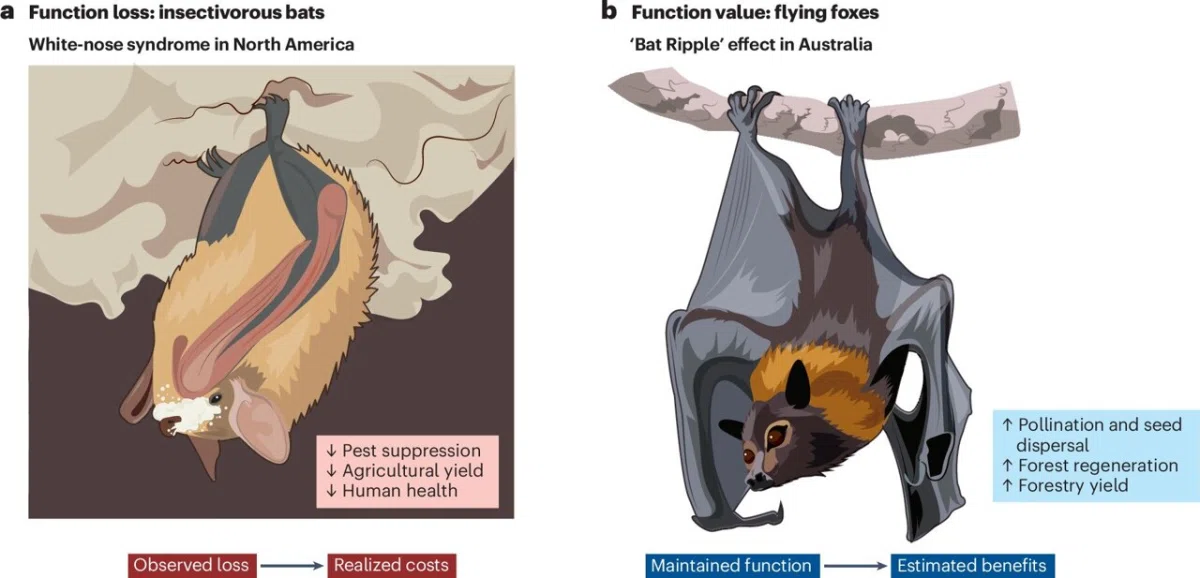
Populations may become too small, or relationships with prey and plants may change, causing losses that remain hidden while the species is still on the checklist.
Insect-eating bats help regulate populations of forest and agricultural pests. In tropical and subtropical regions, nectar-feeding and fruit-eating bats support plant reproduction and forest regeneration through pollination and seed dispersal.
Artificial lighting and habitat fragmentation can restrict access to feeding areas or interrupt journeys between forest patches and flowering plants. Changes in the seasonal timing or availability of fruit, flowers, and insects can also weaken ecological relationships. Heat, drought, and disease can affect reproduction and behaviour, with consequences that may accumulate before population losses become obvious.
In cities, farmland, and other modified landscapes, a few abundant bat species may account for a large share of remaining ecological functions. The decline of these common species can have consequences across wide areas, even if they are still considered widespread.
Conservation measures should protect the capacity of bats to move, adapt, and interact with ecosystem processes. Proposed actions include maintaining genetically diverse populations, safeguarding dark flight corridors and roost networks, reducing pesticide exposure, and retaining habitats that provide food throughout the seasons.
Monitoring should assess whether conservation measures maintain ecological functions by combining species presence and acoustic activity records with measurements of seedling establishment, successful pollination, pest suppression, or survival and reproduction.
Key facts
- Common bat species in modified landscapes may account for a large share of remaining ecological functions.
- Conservation goals should include preserving population sizes that make ecological processes possible.
Three perspectives
Neutral
Researchers are examining how the loss of ecological functions in bats can remain hidden even when species are still present.
Positive
Proposed conservation measures include safeguarding networks of roosts and dark flight corridors to protect bat interactions with ecosystem processes.
Negative
Declining bat numbers and habitat fragmentation can weaken ecological relationships and reduce biological pest control.
Your week in news, every Wednesday
The biggest stories of the week for your edition, in your inbox every Wednesday morning, your time. Free, and you can unsubscribe at any time.