

Irish Catholic washerwoman executed in 1688 preceded Salem witch trials
Ann Glover was convicted of witchcraft in Boston four years before the 1692 Salem trials, following a case involving religious prejudice and language barriers.
 Crime & Justice Desk 2 min read
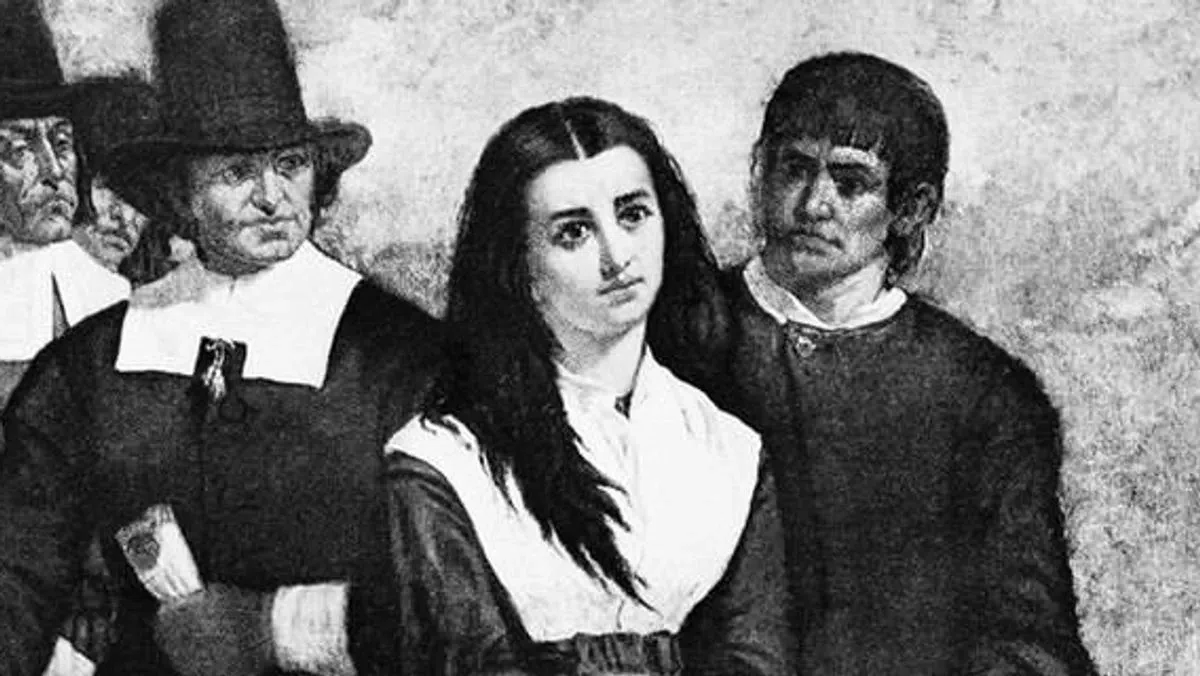
Ann "Goody" Glover, an Irish Catholic washerwoman, was executed in Boston in 1688, four years before the Salem Witch Trials of 1692. Her case was driven by religious prejudice against Catholics, language barriers, and unsubstantiated spectral evidence. Glover had moved to the Massachusetts Bay Colony with her daughter after her husband was executed in Barbados for his commitment to the Catholic faith. The family had been transported to the Caribbean island during Oliver Cromwell's conquest of Ireland in the 1650s.
Glover worked as a housekeeper for mason John Goodwin in the North End during the 1680s, where she helped care for his five children. In the summer of 1688, several children fell ill and behaved strangely, howling like dogs and making cat-like sounds. A doctor concluded the behavior was caused by witchcraft after being unable to offer another explanation. This followed a dispute between the eldest child and Glover over missing laundry.
During her trial, Glover communicated exclusively in Irish Gaelic, which caused confusion over her testimony. Although she understood English, she refused to speak the jurors' language. When asked to recite the Lord's Prayer, she could only deliver it in Irish or broken Latin. Because an inability to recite the prayer was believed to be a sign of a witch, this served as proof of her guilt.
Cotton Mather, an influential New England Puritan minister, was convinced Glover was practicing witchcraft. While officials found small images in her home, these may have been representations of Catholic saints. Five of the six physicians who examined her concluded she had a sound mind.
Glover's execution served as a precursor to the 1692 Salem witch trials, where 150 people were accused and 14 women and five men were hanged. Robert Calef, a Boston merchant who knew her, said the proof against her was wholly deficient and that they did her cruelly. In 1988, the Boston City Council declared November 16 as Goody Glover Day.
Key facts
- Ann Glover was executed in Boston in 1688.
- Glover's husband was executed in Barbados for his Catholic faith.
- The Salem Witch Museum features a plaque dedicated to Glover.
- The Boston City Council declared November 16 as Goody Glover Day in 1988.
Three perspectives
Neutral
Ann Glover was an Irish Catholic washerwoman executed in Boston in 1688.
Positive
In 1988, the Boston City Council declared November 16 as Goody Glover Day to recognize her.
Negative
Glover was convicted of witchcraft based on deficient proof and religious prejudice.
Your week in news, every Wednesday
The biggest stories of the week for your edition, in your inbox every Wednesday morning, your time. Free, and you can unsubscribe at any time.