

Nepal and India agree to strengthen border security and technology use
The 10th APF–SSB coordination meeting in Kathmandu concluded with agreements on intelligence-sharing, drone surveillance, and coordinated patrols.
 Politics Desk 2 min read
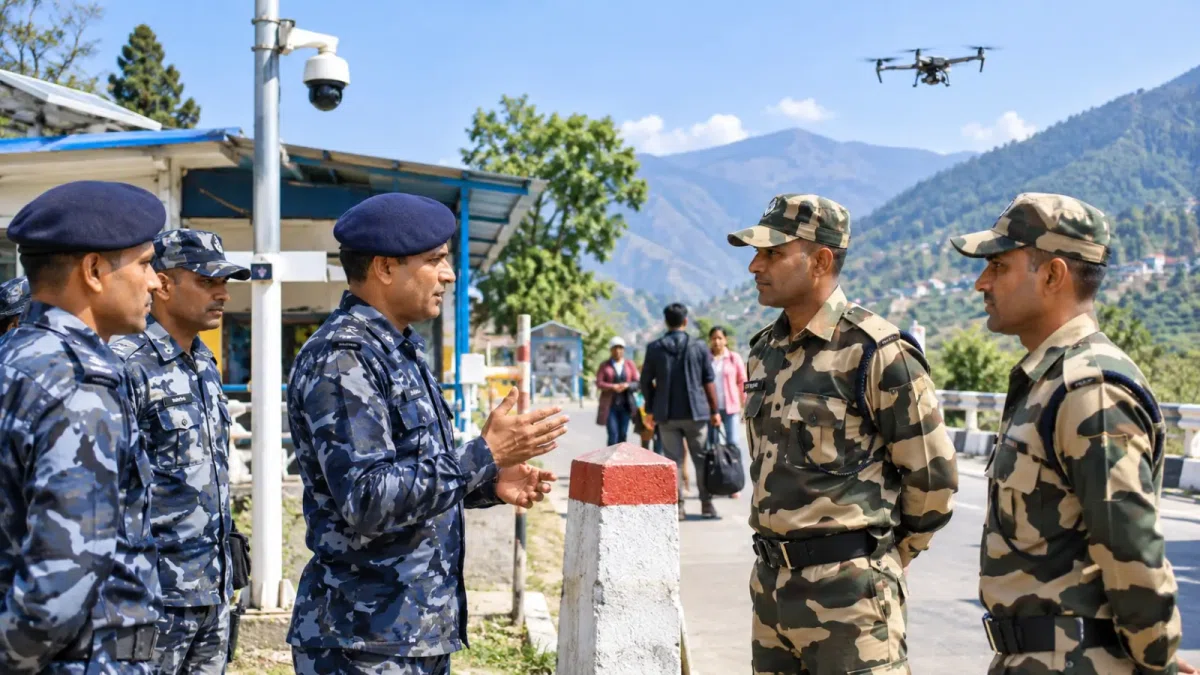
Nepal and India have agreed to strengthen border security and expand cooperation against cross-border crime following the 10th Nepal–India Coordination Meeting in Kathmandu. The meeting between Nepal's Armed Police Force (APF) and India's Sashastra Seema Bal (SSB) took place from October 28 to 30, 2026.
The two sides agreed to improve intelligence-sharing, coordinated patrols, and document verification. Discussions included modernizing border management through the use of CCTV cameras, baggage scanners, walk-through metal detectors, and expanded drone surveillance.
The meeting was led by APF Inspector General Narayan Dutta Paudyal and SSB Director General Sanjay Singhal. Both sides reviewed previous decisions and agreed to strengthen cooperation at strategic, operational, and field levels.
Authorities also discussed managing the no-man's-land area, known locally as Dashgaja, by working to remove unauthorized cultivation, encroachments, and illegal structures. They agreed to continue efforts regarding boundary-pillar maintenance and improving disaster-response preparedness.
The approximately 1,751-kilometre open border supports trade, tourism, and social connections, but also presents challenges such as human trafficking, drug smuggling, and illegal trade.
Key facts
- Nepal and India held the 10th APF–SSB coordination meeting in Kathmandu from October 28 to 30, 2026.
- Agreed security measures include intelligence-sharing, coordinated patrols, and the use of drones and CCTV cameras.
- The two countries will work to remove encroachments and illegal structures from the Dashgaja no-man's-land area.
Three perspectives
Neutral
Nepal and India have agreed to strengthen security cooperation along their shared 1,751-kilometre border through technology and coordinated patrols.
Positive
The cooperation aims to strengthen action against cross-border crime while improving border management and assistance for legitimate travellers.
Negative
Both countries face challenges involving human trafficking, drug smuggling, illegal trade, and counterfeit currency along the open border.
Your week in news, every Wednesday
The biggest stories of the week for your edition, in your inbox every Wednesday morning, your time. Free, and you can unsubscribe at any time.