

Handmade globes face challenges from changing political borders
Räthgloben, a company with a 100-year tradition, updates its hand-laminated globes to reflect shifting political names and territories.
 Business Desk 2 min read
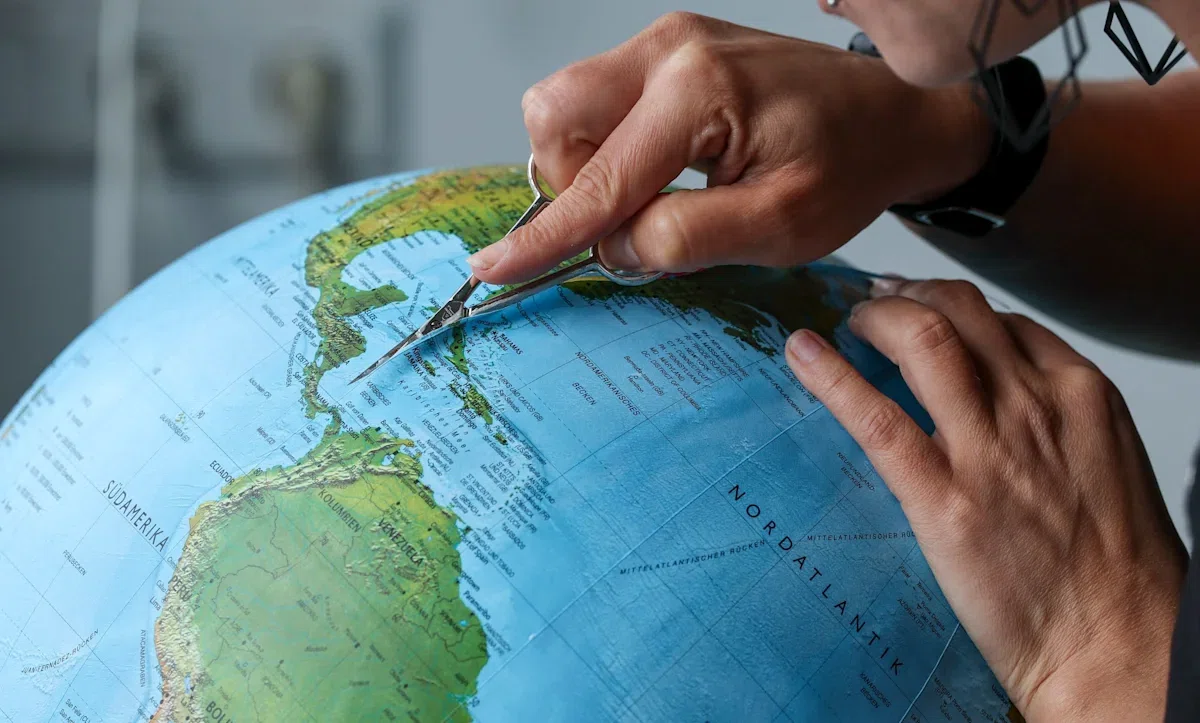
Räthgloben, a company near Leipzig with a tradition spanning more than 100 years, produces globes by hand. Publishing director Thomas Härtel says political shifts that require alterations on the globes are among the hardest things for the business.
The company adheres to official German and European Union lines in its cartography. For Räthgloben, Crimea belongs to Ukraine and the Gulf of Mexico retains its name, despite US President Donald Trump's executive order renaming the Gulf of Mexico the Gulf of America. Härtel also noted that changes like the renaming of Lake Ontario to Lake America are expected.
When political changes become official, the company updates them in the next edition. Previous changes included the secession of South Sudan and the renaming of the Republic of Macedonia to North Macedonia following a dispute with Greece.
The company was founded by Paul Räth in 1917 and survived World War II and the division of Germany. It was nationalized under the German Democratic Republic and later privatized following German reunification in 1990. After becoming insolvent in 1999, it was acquired by the Italian company Tecnodidattica, which holds almost 100% of the business.
A small team of five permanent staff members produces around 1,000 hand-laminated globes per year. One laminator, Claudia, applies 12 printed elliptical strips of paper onto plastic or glass spheres. The process is delicate, as the paper tears easily and mistakes can obscure city or country names.
Key facts
- Räthgloben has been in operation for more than 100 years.
- The company produces approximately 1,000 hand-laminated globes annually.
- Räthgloben follows official German and European Union cartographic lines.
Three perspectives
Neutral
Räthgloben produces handmade globes that must be updated to reflect changing international borders and names.
Positive
The company's significance is reflected in its presence in the Globe Museum of the Austrian National Library.
Negative
Political disputes and shifting borders create difficult and costly alterations for the globe-making business.
Your week in news, every Wednesday
The biggest stories of the week for your edition, in your inbox every Wednesday morning, your time. Free, and you can unsubscribe at any time.