

Spiders exhibit REM-like sleep stages, study finds
Researchers at the University of Bonn confirmed regulated sleep and two distinct stages in the Australian jumping spider Portia fimbriata.
 Science Desk 2 min read
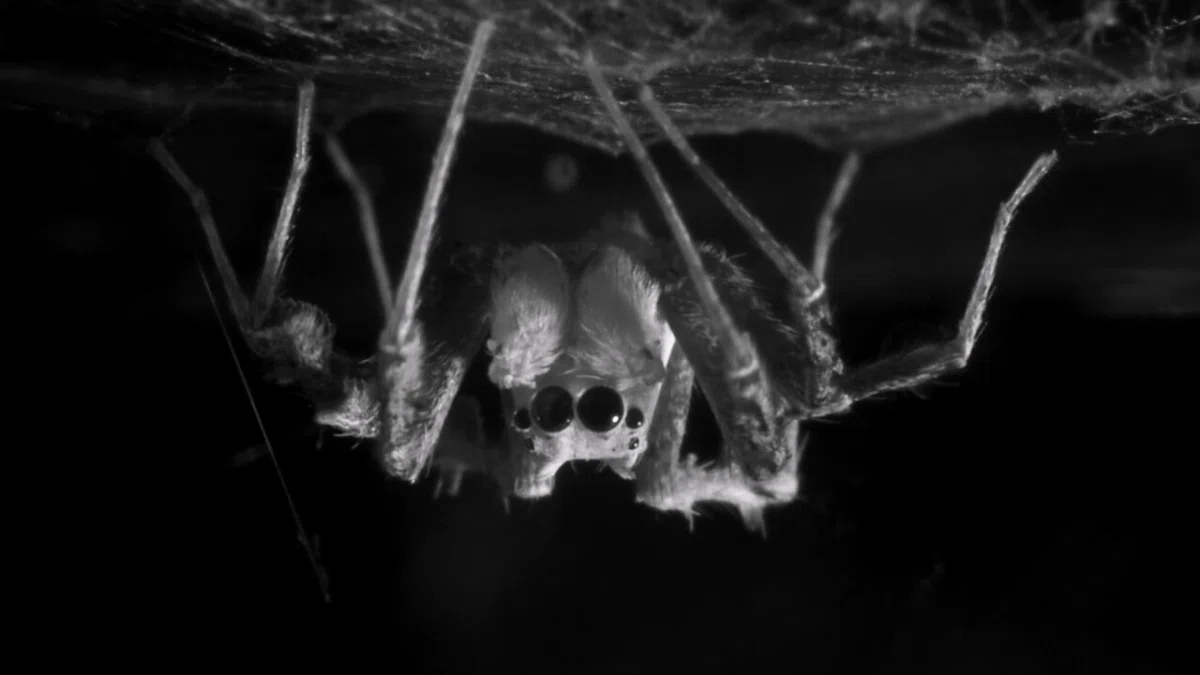
The Australian jumping spider Portia fimbriata exhibits true, regulated sleep with two clearly distinguishable sleep stages. This includes a REM-like state characterized by muscle twitches and eye movements.
Researchers from the Institute of Organismic Biology at the University of Bonn investigated the spider to see if it goes through different sleep stages like humans and other vertebrates. The study provides the first comprehensive confirmation of sleep behavior in a spider.
To conduct the research, the team recorded the behavior of the spiders in high resolution over several days and nights. They used infrared cameras for nighttime recordings to document resting phases, sleep positions, and REM-like phases. The researchers also used an acoustic stimulus to verify if the animals were in a sleep state by measuring reaction times.
The team tested whether the spiders exhibited sleep rebound, which is making up for lost sleep after disruption. They also observed individuals in 12-centimeter diameter plastic dishes under varying lighting conditions to record day-night rhythms.
The Portia fimbriata is about the size of a one-euro coin when fully grown. Species in the Portia genus feed on other spiders and use diverse hunting strategies, such as mimicking the vibrations of insects to attract web-building spiders.
Key facts
- Portia fimbriata exhibits two clearly distinguishable sleep stages, including a REM-like state.
- The research was conducted by the Institute of Organismic Biology at the University of Bonn.
- The study was published in the journal Proceedings of the National Academy of Sciences.
Three perspectives
Neutral
Researchers studied the sleep behavior of the Australian jumping spider Portia fimbriata using high-resolution video and acoustic stimuli.
Positive
The findings provide the first comprehensive confirmation of sleep behavior in a spider and may help explain how sleep evolved.
Negative
The researchers had to work without being able to measure brain activity, relying solely on the animals' behavior.
Your week in news, every Wednesday
The biggest stories of the week for your edition, in your inbox every Wednesday morning, your time. Free, and you can unsubscribe at any time.