

Japan to launch mission to collect samples from Martian moon Phobos
The JAXA Martian Moons eXploration mission aims to return soil samples to Earth by 2031 to study the origins of the moons and the solar system.
 Space Desk 2 min read
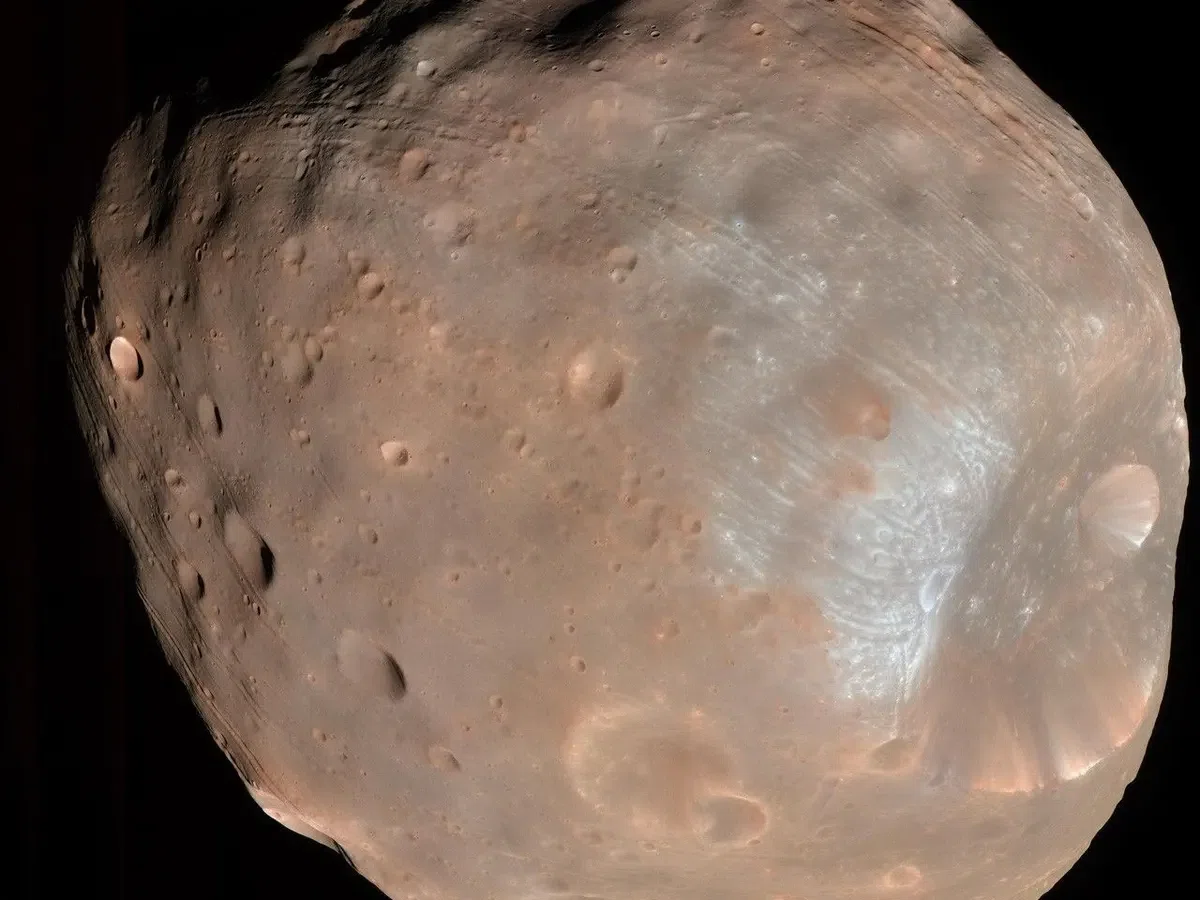
The Japan Aerospace Exploration Agency (JAXA) aims to launch the Martian Moons eXploration (MMX) spacecraft on Tuesday on a new Japanese mainstay H3 rocket. The spacecraft is expected to arrive in the Mars region around August 2027. It will fly near and around Phobos for three years to collect data and samples before returning home in 2031.
The mission targets Phobos, a moon about 27km in diameter at its widest point, to collect at least 10g of soil from two sampling attempts. JAXA officials say material from Mars is expected to make up about 0.1% of the collected material. The spacecraft will use a NASA sampling device that uses pressurised gas to lift surface dust and a JAXA coring method to collect samples from a depth of about 2cm.
Yasuhiro Kawakatsu, project manager for the MMX mission, said samples from Phobos would provide useful data for scientists to consider using a Martian moon as a base for a future manned mission to the planet. Scientists hope the mission will provide clues to how Phobos and its smaller sibling Deimos formed and may shed light on the origins of life in the solar system. Kiyoshi Kuramoto, principal investigator on the mission, said they can almost certainly come to a conclusion by analysing soil samples.
The MMX spacecraft includes three modules for propulsion, exploration and return, with only the third module returning home with the samples. The spacecraft will carry 13 instruments, including a rover jointly developed by France and Germany and a NASA sampling device. The module is expected to land in Australia before being sent back to Japan.
NASA is providing equipment and communications support, including the MEGANE spectrograph and the Pneumatic Sampler technology demonstration. NASA will obtain and curate about 15% of the total returned sample at its Johnson Space Center Astromaterials Lab in Houston.
Key facts
- JAXA aims to launch the MMX mission on Tuesday on an H3 rocket.
- The spacecraft is expected to arrive at Mars in August 2027 and return to Earth in 2031.
- The mission aims to collect at least 10g of soil from Phobos.
Three perspectives
Neutral
The MMX mission is an international effort led by JAXA to study the origins of Phobos and Deimos through soil sampling.
Positive
The mission could provide data to help scientists consider using a Martian moon as a base for future manned missions to Mars.
Negative
Multiple Russian attempts to land on Phobos, including one launched in 2011, have failed.
Your week in news, every Wednesday
The biggest stories of the week for your edition, in your inbox every Wednesday morning, your time. Free, and you can unsubscribe at any time.