Ancient Martian meteorite Teghaza 001 found in Mali salt plain
The 800-gram rose-colored rock formed more than 4.1 billion years ago and provides a rare look at the ancient Martian crust.
 Space Desk 2 min read
Teghaza 001, a rose-colored rock discovered in a salt plain in Mali, is one of the most ancient Martian meteorites ever found on Earth.
The meteorite is one of roughly 435 Martian meteorites found on Earth. It is one of the three most ancient Martian meteorites found, but it differs from its peers through its texture, age, and unique igneous minerals.
Researchers found zircon crystals in the meteorite, which can be used by geologists to precisely age-date a sample and record clues to a rock's formation. Further analysis revealed when the rock formed and when changes, such as water alteration, occurred.
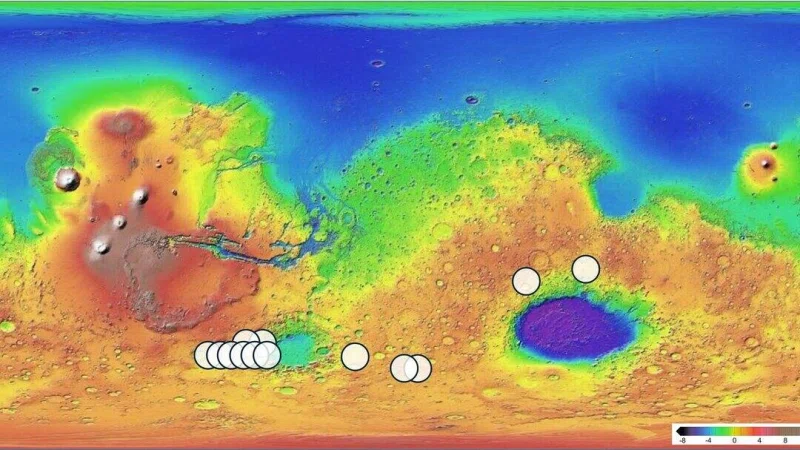
The meteorite's mineralogy matches observations made by NASA's Mars Reconnaissance Orbiter in the cratered southern highlands of Mars. While the exact origin is unknown, researchers identified several potential locations that match the chemistry and mineralogy of Teghaza 001.
Yang Liu of NASA’s Jet Propulsion Laboratory said the meteorite is unique. Lee Saper, a scientist at NASA’s Ames Research Center, said the sample is the first piece of Martian crust from a part of Mars that researchers have never had a sample of before.
The meteorite may record interactions between water and rock and an imprint of the Martian atmosphere as it was losing water. A separate paper published in Science Advances in June detailed the meteorite's water content.
Key facts
- Teghaza 001 is a nearly 2-pound (800-gram) Martian meteorite found in a salt plain in Mali.
- The meteorite formed more than 4.1 billion years ago.
- The rock contains zircon crystals that helped scientists age-date the sample.
Three perspectives
Neutral
Teghaza 001 is a rose-colored Martian meteorite that formed more than 4.1 billion years ago.
Positive
The meteorite provides a rare snapshot of Mars' ancient crust and how water and rocks interacted on the early planet.
Negative
No one will ever know exactly where the meteorite originated on Mars.
Your week in news, every Wednesday
The biggest stories of the week for your edition, in your inbox every Wednesday morning, your time. Free, and you can unsubscribe at any time.