

 Iceland
Warning signs at Reynisfjara beach collapsed after being battered by waves
Coastal erosion has caused the removal of an illuminated warning sign at the popular south coast destination.
 Lifestyle Desk 2 min read
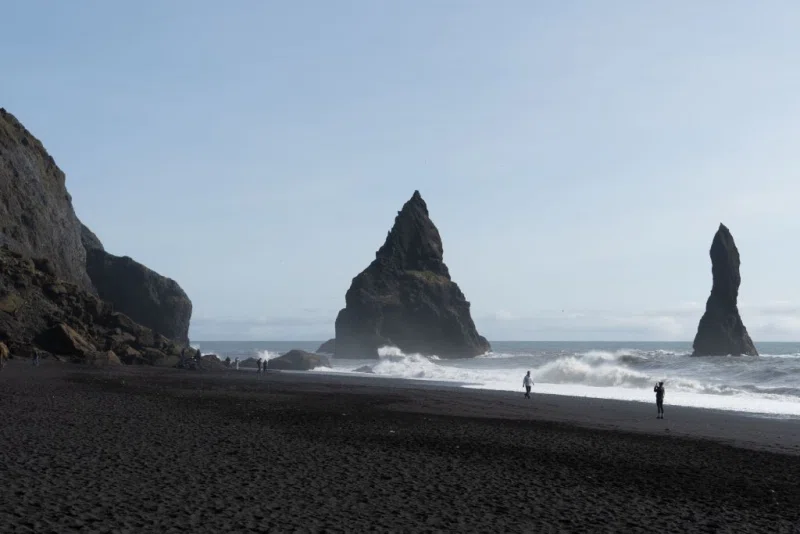
A sign displaying the different hazard zones of Reynisfjara beach collapsed after being battered by the waves. In February 2026, the Icelandic Tourist Board reported that the illuminated warning sign had been removed for safety.
Reynisfjara is a popular tourist destination on the south coast of Iceland featuring jet-black sand and towering basalt columns. The beach is considered deadly due to sneaker waves, which are unusually powerful waves that surge higher and further up the beach than those that precede them.
Sneaker waves can knock people off their feet even on a day marked with a green light. Violent backwash and local rip currents can then drag people out to sea into near-freezing water, where cold shock and hypothermia make survival difficult.
At least five tourists have lost their lives at Reynisfjara in recent years, and there have been many more emergency incidents.
For years, a traffic-light system at the entrance warned visitors about conditions. Green meant low risk, amber signified moderate danger, and red indicated the beach was highly hazardous.
In February 2026, visitors were advised to remain on the upper ridge of the beach and away from the base of the basalt columns.
Key facts
- The Icelandic Tourist Board reported in February 2026 that an illuminated warning sign was removed for safety.
- At least five tourists have died at Reynisfjara beach in recent years.
- A sign displaying hazard zones collapsed after being battered by waves.
Three perspectives
Neutral
Reynisfjara is a popular tourist destination on Iceland's south coast known for its black sand and basalt columns.
Positive
The Icelandic Tourist Board removed an illuminated warning sign in February 2026 for safety.
Negative
Sneaker waves, violent backwash, and rip currents can sweep visitors off the beach and into near-freezing water.
Your week in news, every Wednesday
The biggest stories of the week for your edition, in your inbox every Wednesday morning, your time. Free, and you can unsubscribe at any time.