

Reviving insect eating could improve food security in rural Zambia
A study of households in Central province suggests entomophagy can support nutrition and livelihoods if integrated into mainstream practices.
 Science Desk 2 min read
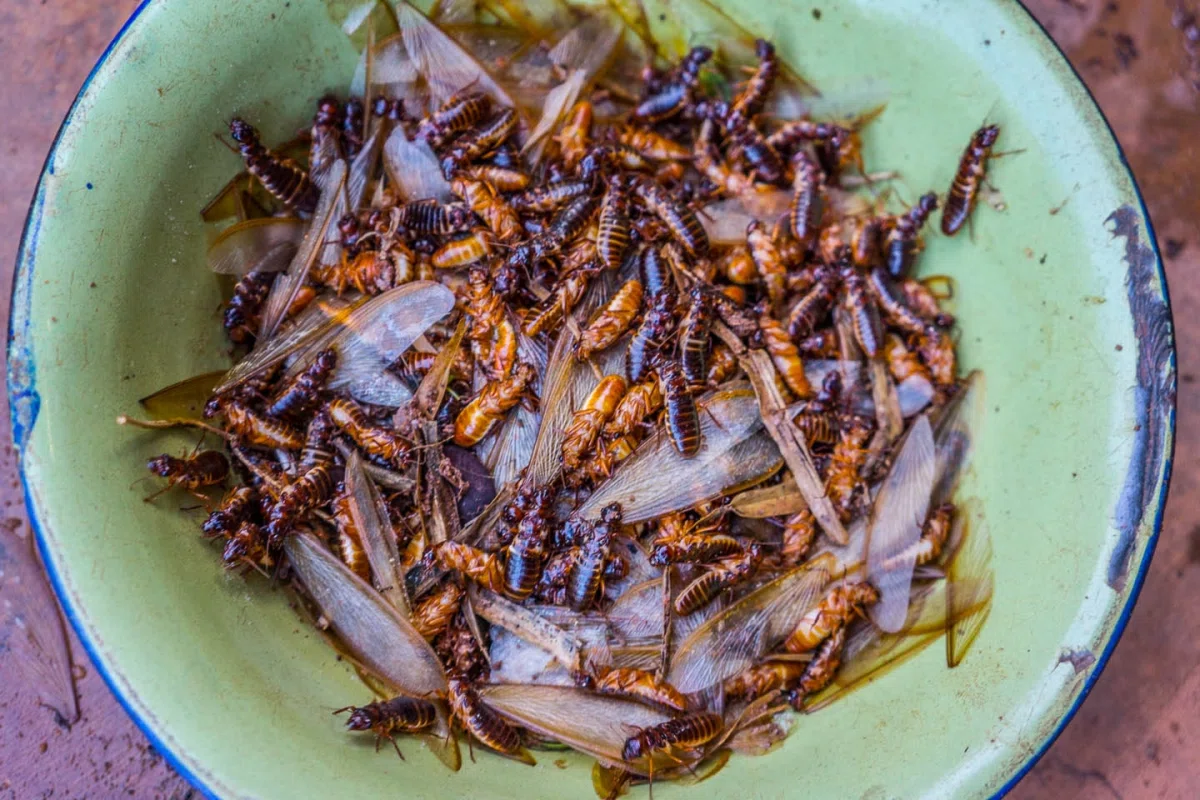
Reviving the practice of eating insects could help households improve food security in rural areas of Zambia, where eating insects has long been part of local food culture. However, the potential for this depends on how widely insect-eating is embraced by the mainstream.
Researchers John Nyawali and Jasper Knight from the University of the Witwatersrand in South Africa surveyed 139 rural households in Zambia’s Central province to understand the types and quantities of insects eaten. They found that edible insects contribute to household food security and nutrition, but the tradition of entomophagy, or eating insects as food, has declined in recent years, especially among younger people.
Insects have the potential to contribute to sustainable food systems, but they are not well-integrated into mainstream economic and dietary practices. This limits their potential to contribute to sustainable livelihoods, food security and wellbeing. In some cultures, entomophagy is sometimes stigmatized as primitive or associated with poverty.
Households with higher levels of education consumed more insects compared to those with less education, suggesting educated community leaders may help communicate the economic and nutritional importance of entomophagy. Co-author Knight said another way for entomophagy to gain traction is to link it with existing community-based public health initiatives, such as AIDS awareness, mother and baby health care, and primary school education.
The researchers emphasized that a push toward insect farming should stay small in scale to create sustainable incomes and improve food security in Africa. Knight said if insect farming is taken over by agribusinesses like all other types of farming, it reinforces the status quo and does not help rural communities develop.
Arnold van Huis, an expert on entomophagy in Africa with Wageningen University & Research in the Netherlands, said insect consumption needs commercialization and the development of insect farming to avoid gradually disappearing. While farming methods exist for species such as crickets, more research may be needed for caterpillars, and termites are particularly difficult to farm.
Key facts
- Edible insects contribute to household food security and nutrition in rural Zambia.
- The tradition of entomophagy has declined in recent years, especially among younger people.
- Households with higher levels of education in Central province consumed more insects than those with less education.
Three perspectives
Neutral
A study of 139 rural households in Zambia's Central province shows that while edible insects contribute to nutrition, the practice of eating them has declined.
Positive
Reviving insect eating and small-scale insect farming could help households improve food security and supplement incomes.
Negative
Entomophagy is sometimes stigmatized as primitive or associated with poverty, and the practice may gradually disappear without commercialization.
Your week in news, every Wednesday
The biggest stories of the week for your edition, in your inbox every Wednesday morning, your time. Free, and you can unsubscribe at any time.