

 United States
Scientists identify possible 115 million-year-old dinosaur blood cells
Researchers found structures resembling red blood cells and traces of heme in an Aratasaurus fossil from Brazil.
 Science Desk 2 min read
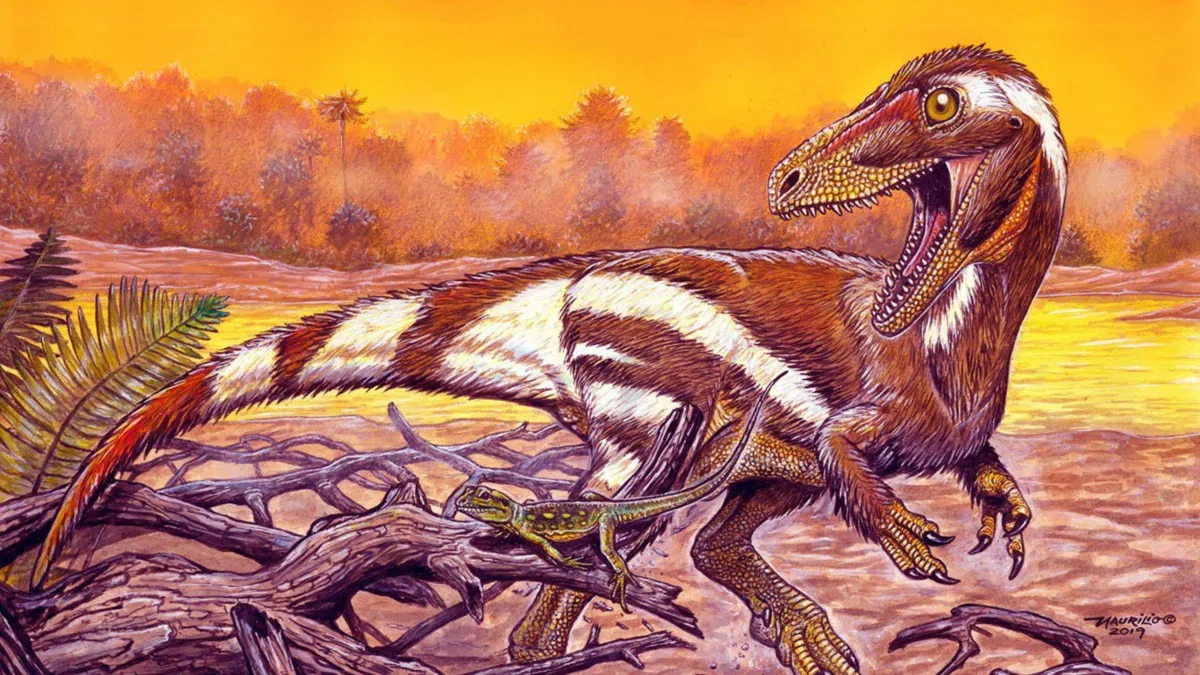
A team led by scientists at Curtin University has identified what appear to be fossilized red blood cells inside a dinosaur leg bone. The discovery was made in a fossil of an Aratasaurus, a small theropod dinosaur that lived approximately 115 million years ago. The bone was recovered from a mine in Brazil in 2008.
Researchers found ellipsoidal microstructures inside fossilized vascular canals in the right leg bone. Chemical analysis identified the presence of heme, a molecule that helps blood cells carry oxygen. High-performance liquid chromatography–mass spectrometry showed the bone extract was dominated by heme B.
The team suggests the delicate structures may have been stabilized by manganese mineralization in a shallow, oxygen-starved microbial mat. A manganese compound called hausmannite may have helped replicate the structures during fossilization. The microstructures were also correlated with iron, carbon, and nitrogen.
The find is controversial because biological tissues typically break down quickly. Prof Mary Schweitzer of North Carolina State University noted that the structures found were concave, whereas dinosaur red blood cells should have a nuclear bulge making them appear dome-like. Schweitzer expressed more persuasion regarding the discovery of heme and collagen amino acids.
If confirmed, the discovery could allow scientists to investigate dinosaur metabolism and activity levels. Kliti Grice, an organic geochemist at Curtin University, said the research could lead to revisiting thousands of fossils in museum and university collections.
Key facts
- The Aratasaurus fossil dates back approximately 115 million years.
- Researchers detected heme B and amino acid building blocks for collagen in the bone.
- The microstructures were found in a fossil recovered from a Brazilian mine in 2008.
Three perspectives
Neutral
Researchers identified cell-like microstructures and heme in an Aratasaurus fossil, though experts debate if they are true red blood cells.
Positive
The discovery could enable scientists to study ancient dinosaur physiology and revisit existing museum collections.
Negative
Some scientists remain skeptical, noting that the structures are concave rather than dome-like as expected for red blood cells.
Your week in news, every Wednesday
The biggest stories of the week for your edition, in your inbox every Wednesday morning, your time. Free, and you can unsubscribe at any time.