

Firecracker emissions caused 80% of Delhi pollution on Monday
Models show firecracker emissions accounted for over 80% of the capital's pollution load a day after Diwali, as officials consider updating monitoring limits.
 Climate Desk 2 min read
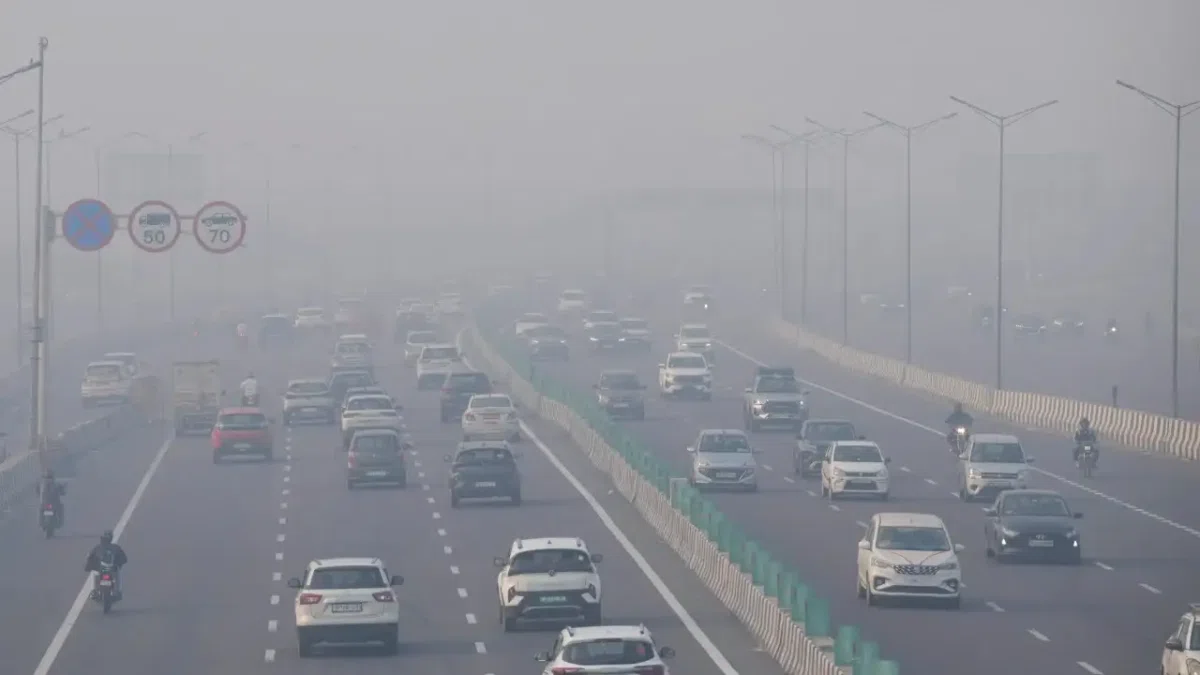
Firecracker emissions accounted for more than 80% of Delhi's pollution load on Monday, a day after Diwali, according to models from the Indian Institute of Tropical Meteorology. This contribution occurred while the city was already facing high pollution levels from various sources.
The Central Pollution Control Board (CPCB) indicated on Tuesday, November 10, 2026, that it is considering steps to capture peak levels of particulate matter (PM) that exceed the current monitoring range. Data from several government monitoring stations in Delhi went missing for hours during the pollution spike following Deepavali on Sunday.
The CPCB stated on Tuesday that PM levels are measured only up to 1,000 micrograms per cubic metre (µg/m³) for AQI calculations. During extreme episodes like Diwali firecracker bursting, readings beyond this calibrated range are treated as outside the range and are not used in the computation of the 24-hour average.
Discussions are now underway regarding raising the cap so that peak values above 1,000 µg/m³ can be measured.
Delhi's air quality improved to the 'poor' category on Tuesday, November 10, 2026, with a 24-hour average AQI of 299, just below the 'very poor' threshold of 300. Experts attributed this improvement to increased wind speeds.
Key facts
- Firecracker emissions accounted for more than 80% of Delhi's pollution load on Monday.
- The CPCB is considering raising the 1,000 µg/m³ cap to measure peak particulate matter levels.
- Delhi's 24-hour average AQI was recorded at 299 on Tuesday, November 10, 2026.
Three perspectives
Neutral
Firecracker emissions contributed over 80% of Delhi's pollution load on Monday, while the CPCB considers updating monitoring methodologies for peak particulate matter.
Positive
The CPCB is discussing raising the measurement cap to capture peak pollution values above 1,000 µg/m³.
Negative
Data gaps occurred during the Deepavali pollution spike because particulate matter levels exceeded the existing 1,000 µg/m³ monitoring range.
Your week in news, every Wednesday
The biggest stories of the week for your edition, in your inbox every Wednesday morning, your time. Free, and you can unsubscribe at any time.