

 United Kingdom
Websites taken offline as critical PHP vulnerability is discovered
National security agencies in Washington and London issued warnings after a flaw in the PHP programming language was discovered, affecting almost 70% of websites.
 AI & Cyber Desk 2 min read
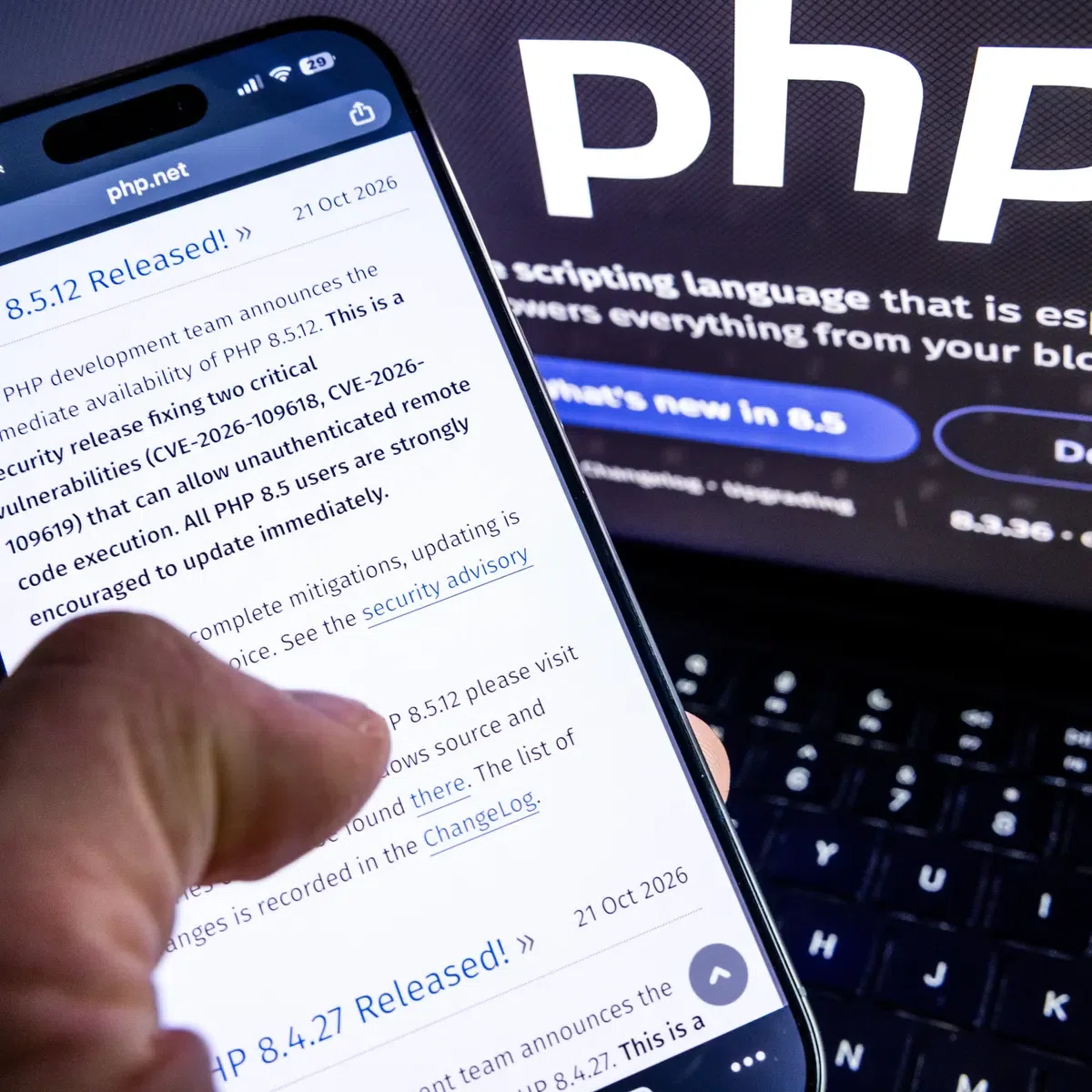
Belgian, Dutch, Finnish, French and German sites were among those that governments took down temporarily to patch a critical weakness in PHP. The vulnerability, which became public on Tuesday, could provide a direct path to a server's file system or database.
In the UK, websites belonging to Edinburgh, Bristol and Oxford councils were taken offline. The UK's National Cyber Security Centre gave advice to organisations to check for backdoors installed by an attacker.
The PHP Foundation released a patch on Wednesday after researchers testing cyberdefences discovered the flaw. OpenAI said it led a coalition of researchers that discovered the flaw and claimed frontier AI had been key, though the researcher who found the weakness said they did not use models that were not available to the general public.
The US National Security Agency told all organisations using PHP to take their systems offline if they were unable to patch them immediately. The Wikimedia Foundation said it had taken down several systems on Wednesday as a precautionary measure until they could be patched.
Internet infrastructure expert Michał Woźniak said Russian state actors or organised criminals could exploit the flaw to carry out cyber-attacks. He said the bug might allow cryptocurrency miners to exploit vulnerable servers and that large crime organisations could use the sites as a launching pad for distributed denial of service attacks.
Prof Alan Woodward, a cybersecurity expert at Surrey University, said the extent to which PHP was used around the world was surprising and troubling. He said there is going to be a long tail of websites who may not be maintained as well and they are going to remain vulnerable, which means there may be weeks and months of ongoing attacks.
Key facts
- PHP is used by almost 70% of websites.
- The PHP Foundation issued a patch on Wednesday.
- The vulnerability could provide a direct path to a server's file system or database.
Three perspectives
Neutral
The PHP Foundation released a patch on Wednesday after researchers discovered a flaw in the programming language.
Positive
The PHP Foundation issued a patch very quickly.
Negative
Experts warn that a long tail of unmaintained websites may remain vulnerable, leading to weeks and months of ongoing attacks.
Your week in news, every Wednesday
The biggest stories of the week for your edition, in your inbox every Wednesday morning, your time. Free, and you can unsubscribe at any time.