

Climate disasters pose major risks to economic stability, says central bank governor
Larry Howai warns that weather events in the Caribbean can trigger sharp increases in food prices and damage infrastructure.
 Climate Desk 2 min read
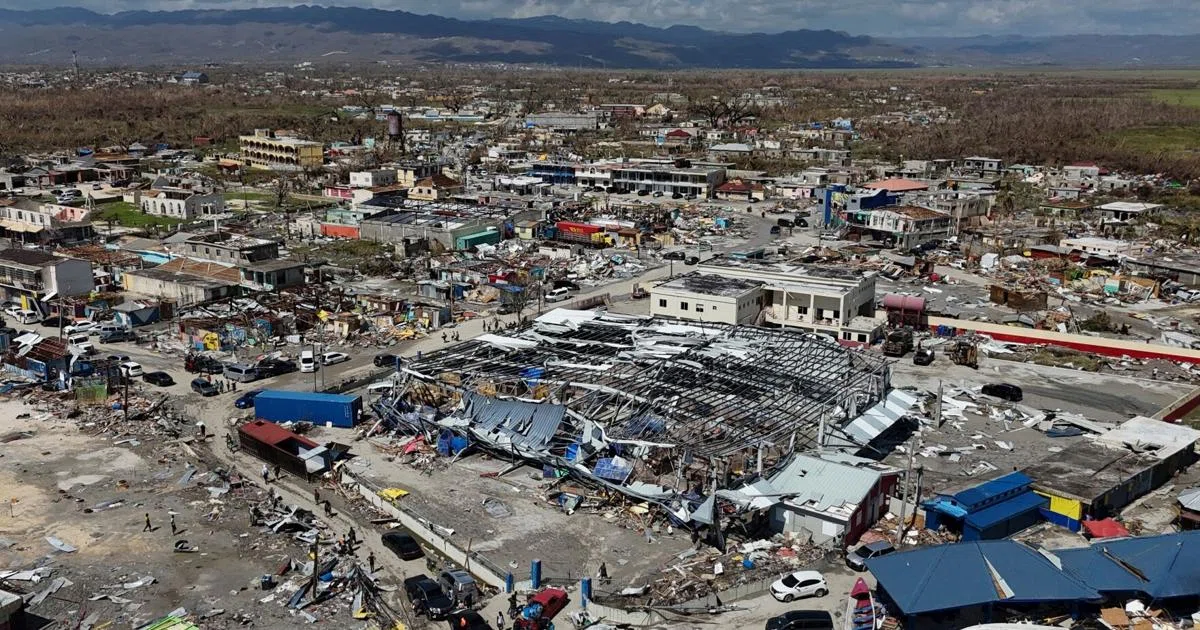
Central Bank governor Larry Howai has urged policymakers and financial regulators to treat climate-related disasters as major risks to economic and financial stability, particularly in small and vulnerable economies. Speaking at the Green Swan Conference in Manila, Philippines, Howai shared the Caribbean’s experience of increasingly severe weather events and their effects on inflation, food security, infrastructure and financial stability.
Howai noted that in the Caribbean and Central America, the weather is part of the economy. He highlighted the impacts of Hurricanes Melissa and Beryl, noting that climate disasters can destroy agricultural production, damage homes and infrastructure, disrupt supply chains and trigger sharp increases in food prices.
Regarding the impact of Hurricane Melissa in Jamaica, Howai said the World Bank and the IDB put the physical damage to Jamaica at US$8.8 billion, which is equal to 41% of the country’s 2024 GDP. The largest share of that damage was in homes. One month after the hurricane, Jamaica’s consumer prices rose 2.4% in a single month, the sharpest monthly increase in more than a decade, while food prices rose 6% in that month alone.
The cost of vegetables, tubers, plantains and pulses jumped 19.1% following the hurricane, and by December, food inflation had reached 7.1% year on year. Howai also noted that when Hurricane Beryl struck Carriacou and Petite Martinique in July 2024, about 98 per cent of buildings were damaged and destroyed.
The Central Bank of Trinidad and Tobago is moving from awareness to implementation to ensure homeowners, farmers and businesses are protected and compensated for losses from climate events. Under its 2026-2031 Strategic Plan, the Bank is strengthening climate-risk supervision through enhanced data collection and the development of climate-risk stress testing.
Key facts
- Physical damage from Hurricane Melissa in Jamaica is estimated by the World Bank and IDB at US$8.8 billion, or 41% of the 2024 GDP.
- Following Hurricane Melissa, Jamaica's food prices rose 6% in a single month.
- Hurricane Beryl caused damage or destruction to about 98 per cent of buildings in Carriacou and Petite Martinique in July 2024.
Three perspectives
Neutral
Governor Larry Howai addressed the financial and economic implications of climate-related disasters at the Green Swan Conference in Manila.
Positive
The Central Bank of Trinidad and Tobago is developing climate-risk stress testing and financing mechanisms to help manage damaging climate events.
Negative
Hurricane Melissa caused US$8.8 billion in damage to Jamaica, representing 41% of the nation's 2024 GDP.
Your week in news, every Wednesday
The biggest stories of the week for your edition, in your inbox every Wednesday morning, your time. Free, and you can unsubscribe at any time.