

Nepal to expand flood warning systems and lower glacial lake levels
The government plans to install early warning systems across six river basins and implement a $49.9 million project to manage high-risk glacial lakes.
 Climate Desk 2 min read
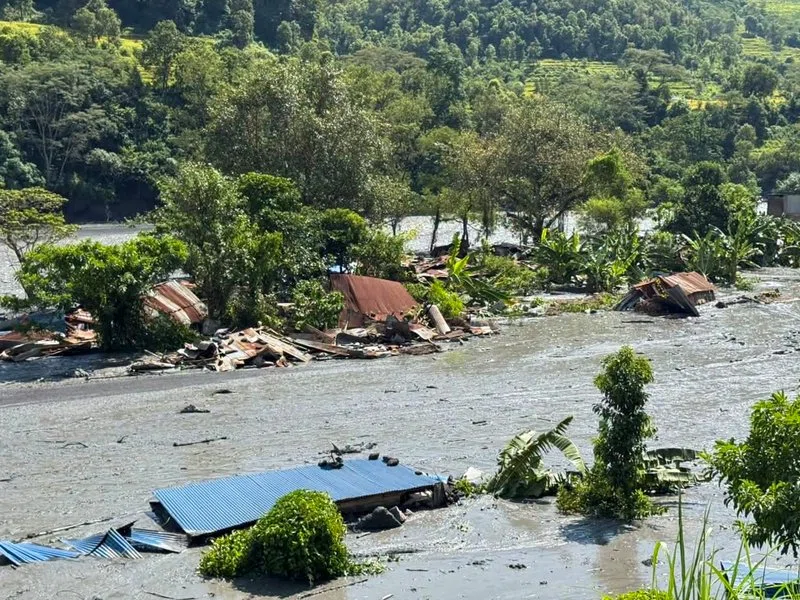
The Nepali government plans to expand flood early warning systems across six major river basins and lower water levels in four high-risk glacial lakes. These initiatives follow devastating floods on August 26 that claimed around 1,500 lives and left more than 5,000 people missing.
A government white paper states the centre will install flood early warning systems across the Mawa-Ratuwa, Bakraha, Lakhandehi, East Rapti, West Rapti, and Mohana-Khutiya river basins. This work is part of the Priority River Basin Flood Risk Management Project, which runs from 2022 to 2028 with a $7.54 million investment.
The government will provide round-the-clock flood forecasting and early warning services from mid-May to mid-October during the monsoon season. To improve forecast accuracy, the Department of Hydrology and Meteorology plans to prioritise artificial intelligence, machine learning, and high-performance computing systems.
The government also plans to implement the Glacial Lake Outburst Flood (GLOF) Sanjeevani Project from 2026 to 2033 with an estimated budget of $49.9 million. The project aims to lower water levels in four high-risk glacial lakes: Thulagi in Manang district, Lower Barun in Sankhuwasabha district, and Lumding Tsho and Hongu-2 in Solukhumbu district.
The August 26 floods caused $1.81 billion in damage to physical assets, according to a preliminary Rapid Damage and Needs Assessment. Flooding in the Bhotekoshi and Trishuli river basins caused extensive damage to hydropower projects, solar energy facilities, electricity transmission infrastructure, and transport networks.
Key facts
- The government will invest $7.54 million in flood early warning systems across six river basins through 2028.
- The GLOF Sanjeevani Project aims to lower water levels in four high-risk glacial lakes with a $49.9 million budget.
- Recent floods on August 26 killed approximately 1,500 people and left over 5,000 missing.
- Physical asset damage from the floods reached $1.81 billion.
Three perspectives
Neutral
The Nepali government is implementing new disaster preparedness measures following floods that killed 1,500 people.
Positive
The government plans to use artificial intelligence and machine learning to improve the reliability of flood forecasts.
Negative
The recent floods caused $1.81 billion in damage and left more than 5,000 people missing.
Your week in news, every Wednesday
The biggest stories of the week for your edition, in your inbox every Wednesday morning, your time. Free, and you can unsubscribe at any time.