

NASA selects 19 proposals for new citizen science projects
The Science Mission Directorate has chosen research teams to develop new opportunities for volunteers to participate in NASA science.
 Space Desk 2 min read
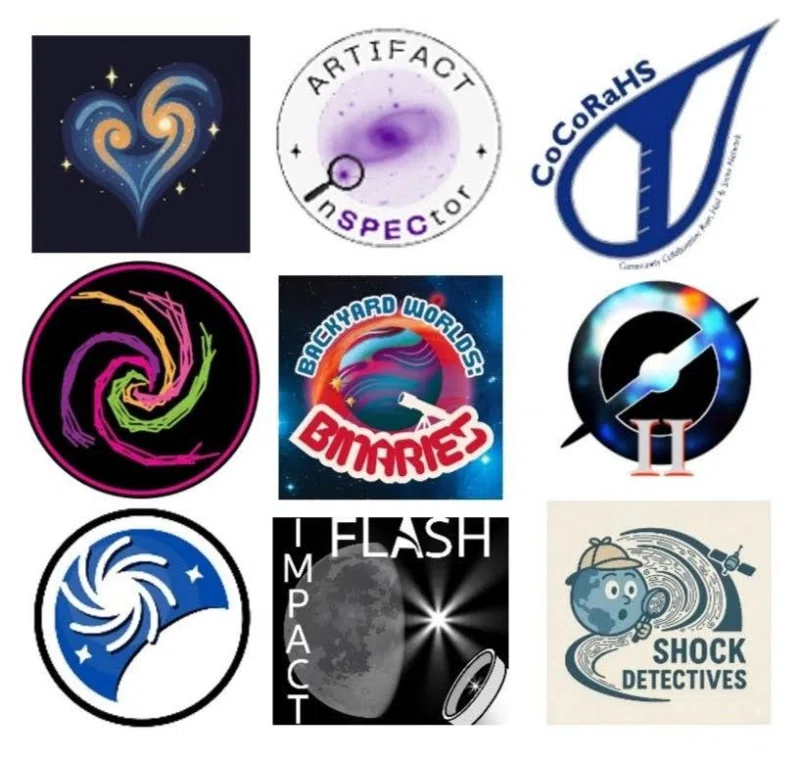
NASA’s Science Mission Directorate has selected nineteen proposals from research teams in 2026 to create new opportunities for citizen science. The Citizen Science Seed Funding Program (CSSFP-25) aims to support experts in developing these projects and expanding the pool of professional scientists using citizen science techniques.
Twelve new proposals were selected for the CSSFP-25 program. Another project, led by Kameswara Bharadwaj Mantha of the University of Missouri, will involve classifying mock images of galaxies to investigate galaxy mergers.
Bernard Gaudi of the Ohio State University will lead "Planet Hunters Roman" to help spot exoplanets in data from the Nancy Grace Roman Space Telescope.
Research into space weather is also included. Hyunju Connor at NASA’s Goddard Space Flight Center will lead a project involving magnetometers in Alaska to monitor the Earth's magnetosphere. Lauren Blum of the University of Colorado, Boulder, will lead a project to turn plasma wave data into sound signals, while Wenli Mo at Johns Hopkins University will lead a project to examine data from the MMS mission to identify foreshock transients.
Muhammad Fraz Bashir at the University of California, Los Angeles, will lead the IMPACT project to help match patterns between satellite measurements of energetic particles and ground-based electromagnetic wave measurements. This work aims to help scientists understand and predict disruptions to GPS and radiation risks during space weather events.
Key facts
- NASA's Science Mission Directorate selected 19 proposals in 2026 for new citizen science opportunities.
- Twelve proposals were selected through the Citizen Science Seed Funding Program (CSSFP-25).
- The Zooniverse platform reached a milestone of 1 billion classifications with a grant from NASA.
Three perspectives
Neutral
NASA has selected 19 research proposals to expand its citizen science initiatives in 2026.
Positive
The selected projects will provide new opportunities for volunteers to contribute to NASA science and help scientists understand phenomena like galaxy evolution and space weather.
Negative
Space weather events can cause energetic particles to disrupt GPS operations and increase radiation risks.
Your week in news, every Wednesday
The biggest stories of the week for your edition, in your inbox every Wednesday morning, your time. Free, and you can unsubscribe at any time.