

Eight million people affected by drought and food shortages in Papua New Guinea
El Niño has caused rivers to dry up, leading to food insecurity, school closures, and health facility disruptions across the country.
 Climate Desk 2 min read
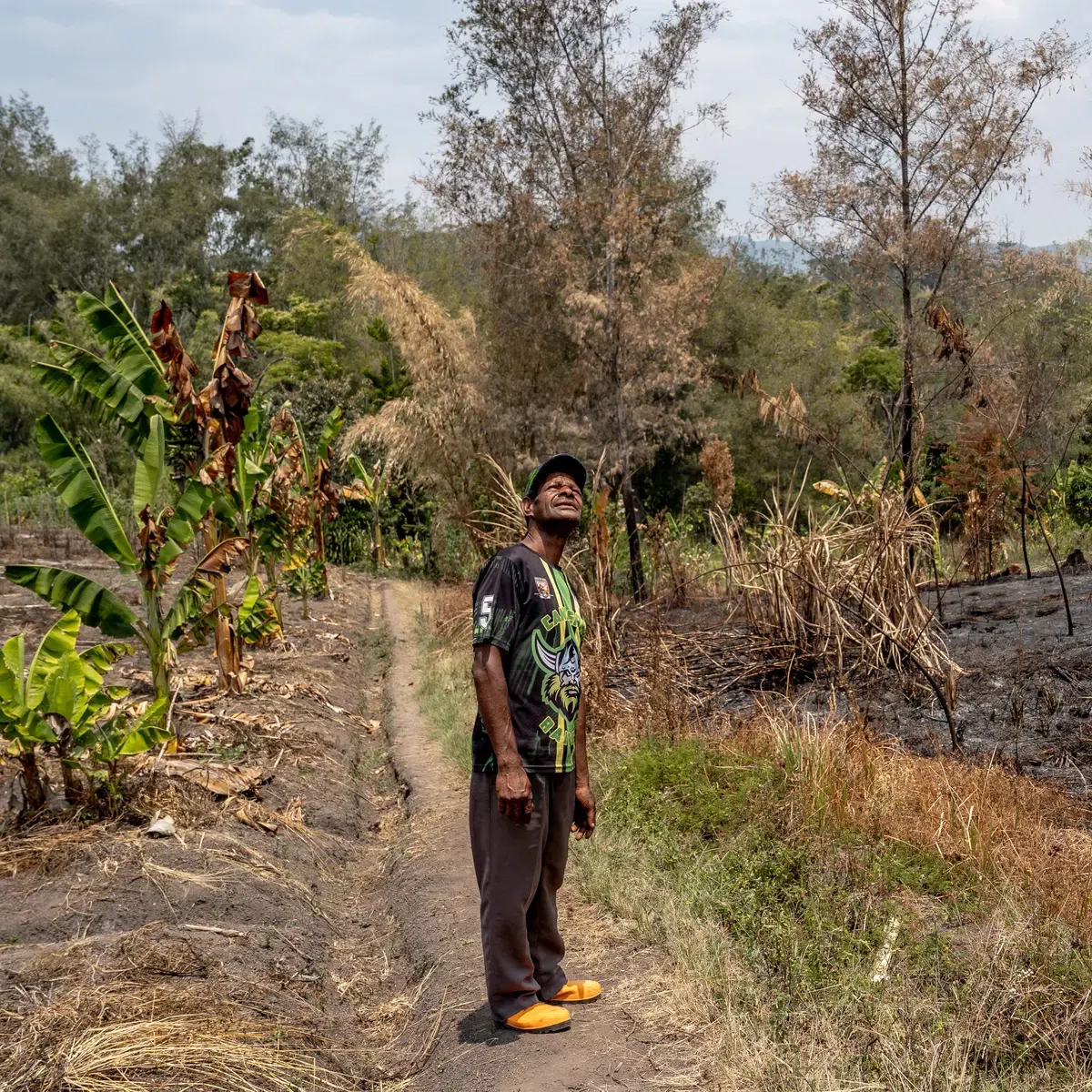
As many as eight million people have been affected by food shortages, electricity loss, and the closure of health clinics in Papua New Guinea. The PNG National Weather Service declared the onset of El Niño in June, but Kasis Inape, the service's assistant director, said much of the country was already in drought at that time.
In rural highland areas, families are rationing food to one meal a day, which has led to localised disputes between families. For women and girls, the situation involves traveling three to four hours to source water and food, exposing them to a heightened risk of harassment. Emilly Meren, a humanitarian projects manager at CARE International in PNG, said stories of transactional sex are occurring in the community, where sex is exchanged for money or food.
Rivers and creeks have dried up, leaving families without water for drinking, cooking, and washing. In the Bulolo district of Morobe province, smaller rivers have dried up. Martha Zureno, a resident in Leklu village, said her children and she must walk for miles every afternoon to fetch water for cooking and drinking. Most local residents depend on panning for gold for income, but without water, this has become increasingly difficult.
Schools and health facilities are being forced to close early because they lack sufficient water to provide basic services. In the Bulolo district, some clinics are no longer accepting inpatients due to a lack of available water. A destructive hailstorm in parts of Enga province earlier this month buried sweet potatoes under ice, which exacerbated food scarcity.
Prime minister James Marape has directed provincial and district authorities to prepare for a prolonged dry season. He said his government is examining financial arrangements to support disaster responses. Peter Aitsi, a business figure and co-chair of the Community Coalition Against Corruption, said the government needs to carry out proper assessments of the impacts, particularly on rural communities.
Key facts
- Eight million people have been affected by drought and related issues in Papua New Guinea.
- El Niño has caused rivers to dry up and crops to wither in various provinces.
- Families in rural highland areas are rationing food to one meal a day.
Three perspectives
Neutral
The El Niño weather pattern has shifted warm tropical waters east, leaving Papua New Guinea starved of rain.
Positive
Prime minister James Marape has directed authorities to prepare for a prolonged dry season and is examining financial arrangements for disaster response.
Negative
Food insecurity and water shortages are leading to localised disputes and instances of transactional sex in some communities.
Your week in news, every Wednesday
The biggest stories of the week for your edition, in your inbox every Wednesday morning, your time. Free, and you can unsubscribe at any time.