

Ulanqab transforms from potato capital to China AI computing hub
Ulanqab, a city in China's Inner Mongolia Autonomous Region known for potato farming, has emerged as one of the largest and fastest-growing AI computing clusters in the Asia-Pacific region.
 AI & Cyber Desk 2 min read
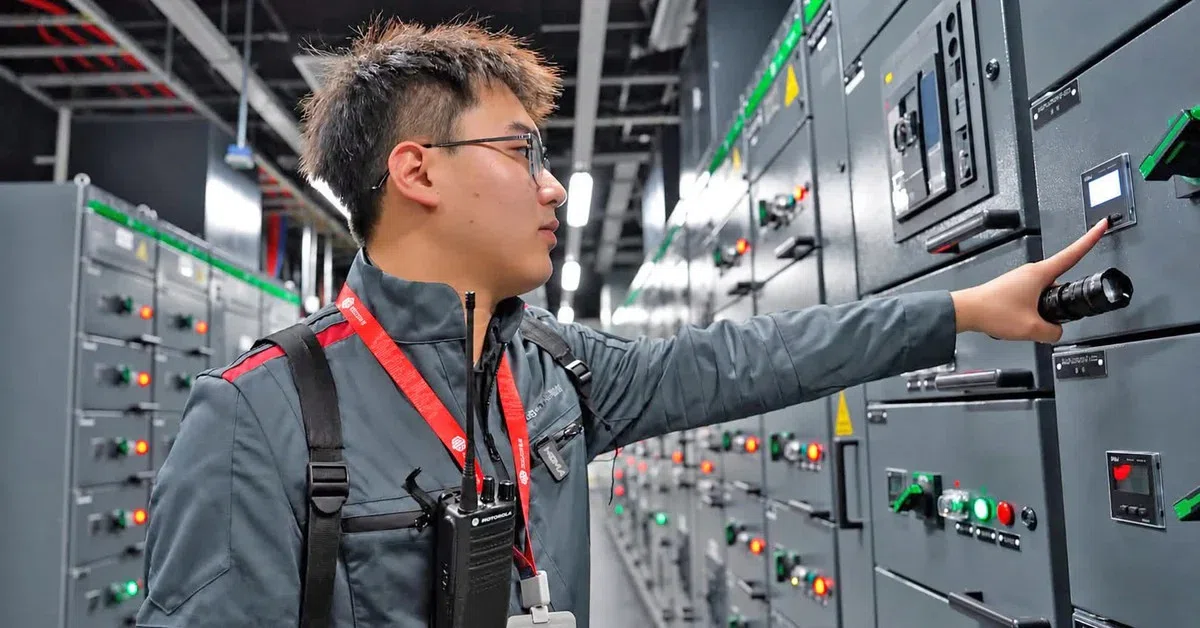
Ulanqab, a city in China's Inner Mongolia Autonomous Region known for potato farming, has emerged as one of the largest and fastest-growing AI computing clusters in the Asia-Pacific region. The city is becoming a factory for generating AI tokens, which are transmitted to Beijing via a fiber optic cable with a one-way data transmission latency of 2.1 milliseconds.
As of June 2026, 20 of China's top 30 private computing companies have established a presence in Inner Mongolia, with total investments exceeding 200 billion yuan, or approximately 30 billion USD. In the first half of 2026, Ulanqab's computing industry saw a 39% increase in fixed asset investment, a 90% increase in electricity consumption, and a 12% increase in revenue compared to the previous year.
The region's development is supported by natural conditions, including a climate that allows for natural cooling for nearly 10 months each year and abundant green energy sources. Ulanqab's operational computing capacity has reached 190,000 petaflops, with intelligent computing accounting for over 90% of that total. The city currently receives computing workloads from Beijing equivalent to 75,000 petaflops, supporting large AI model training for companies such as ByteDance, DeepSeek, and Baidu.
The computing boom is changing local lives by creating demand for skilled personnel. Chen Gang, a 23-year-old technician, previously worked as a hotel waiter in Qingdao before returning to Ulanqab to join a local training program. He now performs routine checks on power supply, cooling, and equipment in a server room.
Starting in November 2025, Ulanqab implemented a three-year action plan to build a "token city." This plan aims to create an industrial chain ranging from wind and solar power generation to value creation from tokens. In Inner Mongolia, enterprise-level linkages between training institutions and computing centers have trained more than 2,000 AI specialists.
Key facts
- Ulanqab's operational computing capacity has reached 190,000 petaflops.
- Investments in Inner Mongolia's computing sector exceed 200 billion yuan.
- The city's computing industry electricity consumption increased by 90% in the first half of 2026.
Three perspectives
Neutral
Ulanqab is transitioning from a traditional potato-growing region to a major center for AI computing and data processing.
Positive
The computing industry boom is attracting young people back to their hometowns and creating new technical roles.
Negative
The rapid growth of the industry has led to a 90% increase in electricity consumption in Ulanqab during the first half of 2026.
Your week in news, every Wednesday
The biggest stories of the week for your edition, in your inbox every Wednesday morning, your time. Free, and you can unsubscribe at any time.