

Denver Zoo welcomes first southern white rhinos
Two male rhinos, Viazi and Mkuu, have arrived from Florida to join the Denver Zoo Conservation Alliance.
 Science Desk 2 min read
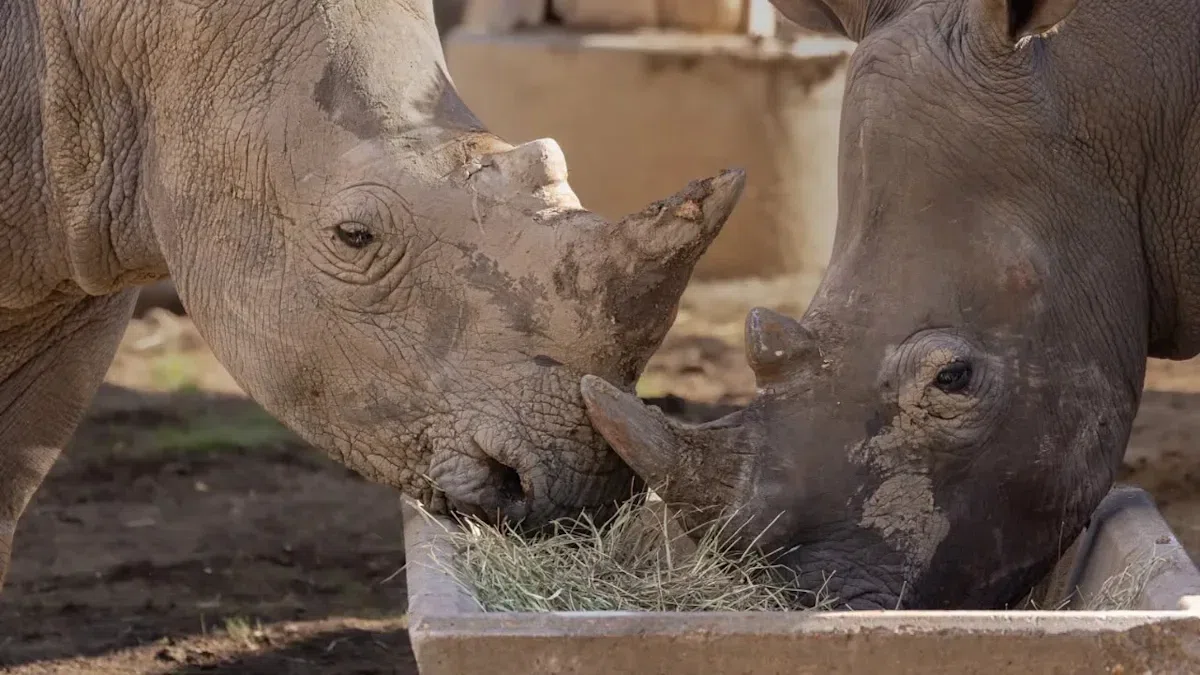
The Denver Zoo Conservation Alliance has two new residents, marking the first southern white rhinos the zoo has ever had. Viazi and Mkuu arrived from Florida after months of planning, according to an announcement made on October 13.
Viazi is a four-year-old male from Busch Gardens, while three-year-old Mkuu arrived from ZooTampa. Both males are currently getting to know each other at their new home in Denver.
The zoo renovated its old Pachyderm Building to accommodate the pair, performing work on both indoor and outdoor areas. This area has previously housed elephants and black rhinos. The Schoelzel Family Foundation, Kintzele Family, and other donors funded the renovations and transportation.
Maura Davis, the zoo's curator of large mammals, said that bringing in two males can be as useful as having a breeding pair. She explained that housing males can sometimes be the best way to support a specific animal population.
The rhinos are part of the Association of Zoos and Aquariums' Species Survival Plan to help manage animal populations. Southern white rhinos are native to parts of Africa, including Namibia, South Africa, Zimbabwe, and Kenya. The species is currently classified as Near Threatened by the International Union for Conservation of Nature.
The zoo has scheduled an official public debut for Friday, October 16, from 9 to 11 a.m. A special Rhino Mail activity is also planned for October 16, where visitors can use postcards to write welcome messages to the arrivals.
Key facts
- Viazi and Mkuu are the first southern white rhinos at the Denver Zoo.
- The two rhinos arrived from Florida after months of planning.
- The zoo's official public debut for the rhinos is scheduled for Friday, October 16.
Three perspectives
Neutral
Two male southern white rhinos, Viazi and Mkuu, have moved from Florida to the Denver Zoo.
Positive
The arrival of the rhinos is part of the Association of Zoos and Aquariums' Species Survival Plan to manage animal populations.
Negative
The species is currently classified as Near Threatened by the International Union for Conservation of Nature.
Your week in news, every Wednesday
The biggest stories of the week for your edition, in your inbox every Wednesday morning, your time. Free, and you can unsubscribe at any time.