

 United States
Scientists find traces of heme in 115-million-year-old dinosaur bone
Researchers identified heme-derived molecules in the vascular canals of an Aratasaurus museunacionali fossil from Brazil.
 Science Desk 2 min read
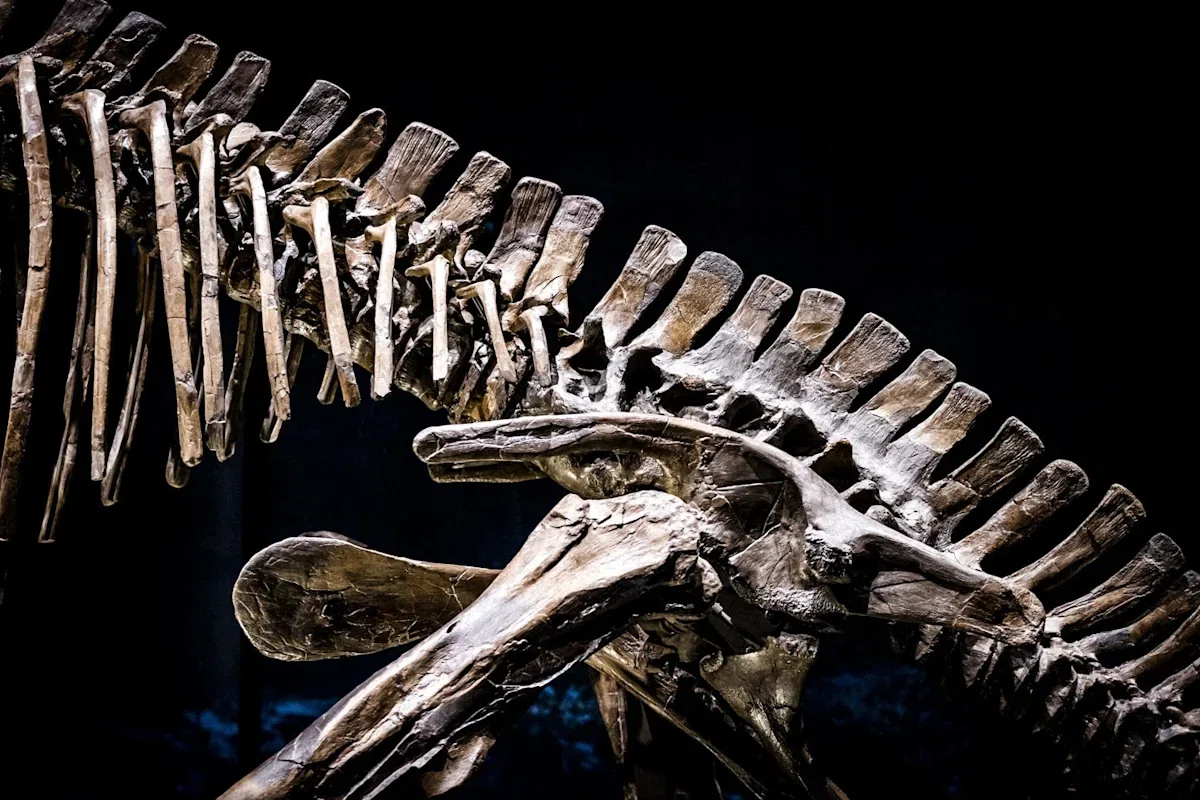
An international team of scientists reported finding traces of heme in the vascular canals of a 115-million-year-old dinosaur bone. Heme is an organic molecule that helps blood carry oxygen. The fossil comes from the leg of Aratasaurus museunacionali, a distant relative of Velociraptor that lived during the early Cretaceous.
The fossilized bones were found in 2008 at a mine in the Romualdo Formation of northeast Brazil. The specimen survived a 2018 fire that destroyed the National Museum at the Federal University of Rio de Janeiro. Its scientific name means "the dinosaur born from the National Museum fire."
Researchers from the U.S., Japan, Brazil, and Curtin University analyzed the fossils using liquid chromatography–mass spectrometry, Raman spectroscopy, and transmission electron microscopy. These techniques detected heme inside the bone's vascular canals, but not in the surrounding rock. This contrast suggests the heme came from the dinosaur rather than seeping in from the surroundings.
Kliti Grice said the fossil red blood cell-like structures appear larger and more rounded than cells found in modern birds and crocodilians. This could suggest the red blood cells of dinosaurs not related to birds were shaped differently. However, Mary Schweitzer of North Carolina State University said the difference in shape and the lack of a nucleus is too radical a departure from birds and crocodilians, suggesting the structures are not blood cells.
The dinosaur likely died and sank into a watery, low-oxygen grave where microbes grew over the top. The presence of the mineral hausmannite may have acted like an antioxidant to slow decay. Eventually, the blood cells mineralized much like the vascular channel and the bones.
Key facts
- Scientists found heme-derived molecules in the vascular canals of a 115-million-year-old Aratasaurus museunacionali bone.
- The fossil was discovered in 2008 in the Romualdo Formation of northeast Brazil.
- The discovery was made using liquid chromatography–mass spectrometry, Raman spectroscopy, and transmission electron microscopy.
Three perspectives
Neutral
Researchers identified heme-derived molecules in the vascular canals of a 115-million-year-old dinosaur bone.
Positive
A paleobiologist described the study as the most comprehensive effort done so far regarding evidence of dinosaur blood.
Negative
Mary Schweitzer suggested the structures might not be blood cells due to their shape and lack of a nucleus.
Your week in news, every Wednesday
The biggest stories of the week for your edition, in your inbox every Wednesday morning, your time. Free, and you can unsubscribe at any time.