Researchers find two giant tears in tectonic plate under southeastern Iran
The ruptures in the Arabian Plate are caused by differences in rock density and may eventually meet.
 Science Desk 2 min read
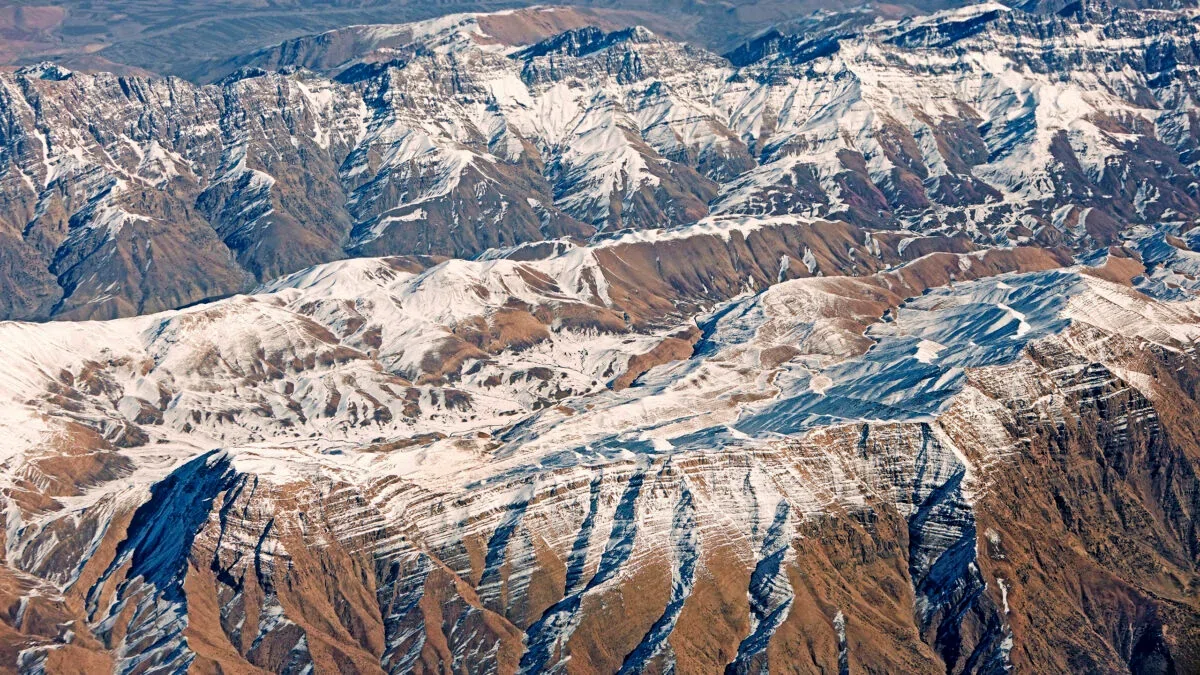
Researchers led by a team from the Chinese Academy of Sciences have found evidence of two giant tears in the Arabian Plate underneath southeastern Iran. These ruptures are caused by different rock densities.
One part of the plate is an oceanic slab that was once part of the ancient Neo-Tethys Ocean. The basalt rock there is thinner and heavier, and it is being pushed under a neighboring plate through subduction.
The other part of the plate consists of thicker, less dense continental rock with granite-like ingredients. This rock forms mountains when it hits resistance instead of being pushed underground. This mismatch causes the ruptures.
The researchers used a network of 69 seismic monitoring stations to detect vibrations from distant earthquakes between March 2017 and September 2018. These vibrations change speed based on rock density and temperature, allowing a picture of tectonic activity to be assembled.
The recordings revealed a horizontal tear where the Zagros collision zone meets the Makran subduction zone, and a smaller vertical tear closer to the surface by the Makran Trench. In the Makran subduction zone, the oceanic lithosphere has subducted to depths of at least 450 km, while the continental lithosphere in the Zagros collision zone has subducted no deeper than 300 km.
The two tears have been progressing for several million years and will likely eventually meet. Hot magma appears to be filling some of the gaps caused by the ruptures.
Key facts
- Researchers found two giant tears in the Arabian Plate under southeastern Iran.
- The tears are caused by a mismatch between heavy, thin oceanic basalt and thicker, less dense continental rock.
- The two tears are expected to eventually meet as the intervening boundary segment is consumed.
Three perspectives
Neutral
The study provides a look at the transition from oceanic subduction to continental collision.
Positive
The discovery gives a new perspective on how continents collide and oceans disappear.
Negative
The processes governing this transition remain unclear due to sparse observations of structure at depth.
Your week in news, every Wednesday
The biggest stories of the week for your edition, in your inbox every Wednesday morning, your time. Free, and you can unsubscribe at any time.