Canada and China agree to trade tariff reductions in Shenzhen
Prime Minister Mark Carney and President Xi Jinping announced new concessions to expand market access for Canadian seafood and pork while Canada extends steel and aluminum exemptions.
 Business Desk 2 min read
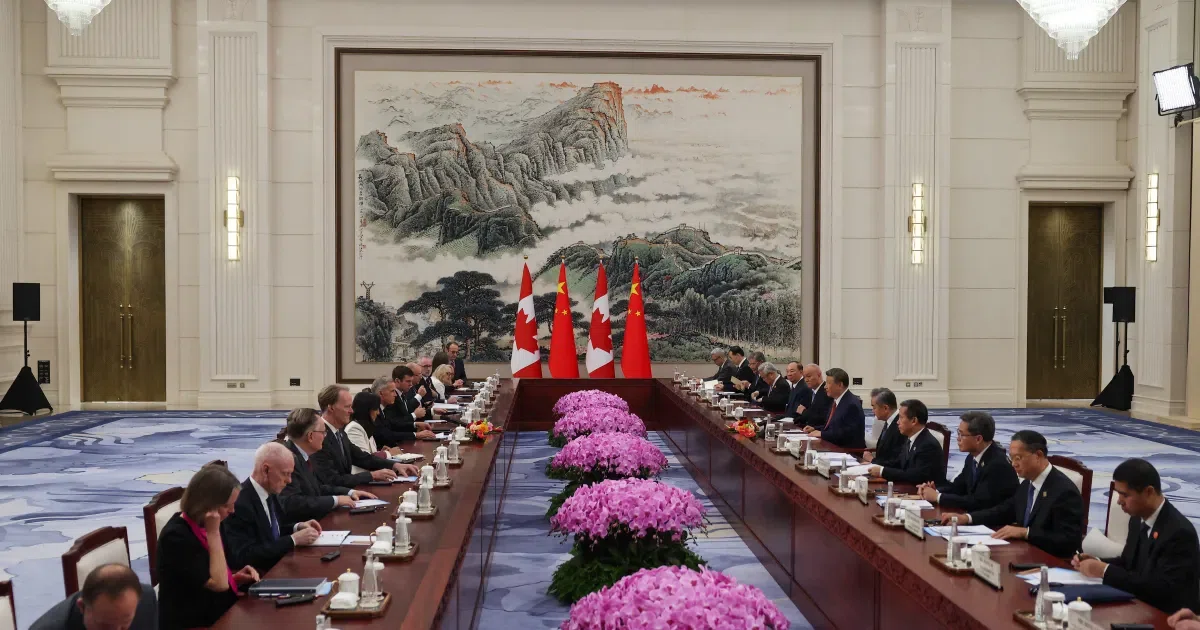
Canada and China have agreed to reduce tariffs on various goods following a bilateral meeting between Prime Minister Mark Carney and President Xi Jinping in Shenzhen on Tuesday. Under the new arrangement, Beijing will remove a 25 per cent tariff on Canadian frozen pork cuts and certain seafood, including Greenland halibut, sea cucumber, and frozen cold-water shrimp and prawns. This move is expected to provide tariff relief for approximately $400 million ($280 million USD) in Canadian exports annually.
In exchange, Ottawa will extend tariff exemptions on specific Chinese steel and aluminum products for two more years. Canada will also expand its remission coverage to include 32 additional steel and aluminum items, consisting of 23 steel and nine aluminum products for which domestic supply is insufficient or unavailable.
The two nations also agreed to open Chinese market access for Canadian lentils, chickpeas, and fava beans. They intend to work toward a further agreement regarding wild aquatic products and pet food by the end of the year.
Carney previously indicated that Canada could look toward Chinese automakers if discussions with Washington regarding the North American auto industry fail.
Chinese Foreign Minister Wang Yi met with Canadian Foreign Minister Anita Anand in Shenzhen on Tuesday to discuss the development of the China-Canada strategic partnership. Wang stated that the relationship has entered a period of steady development following strategic guidance from both countries' leaders.
The trade shifts come as Canada seeks to diversify its trading relationships and protect domestic industries from friction with the United States. Canada has introduced a C$142.1 billion budget framework titled "Masters of our Destiny" to increase economic resilience. Finance Minister François-Philippe Champagne said the plan aims to change the country's growth model to ensure independence regardless of global or southern border developments.
Key facts
- China will remove a 25 per cent tariff on $400 million of Canadian pork and seafood exports.
- Canada will extend tariff exemptions on Chinese steel and aluminum for two years and add 32 new items to the remission list.
- The agreement was announced during a bilateral meeting between Mark Carney and Xi Jinping in Shenzhen.
Three perspectives
Neutral
Canada and China have reached an agreement to lower tariffs on Canadian agricultural products and seafood in exchange for expanded access for Chinese steel and aluminum.
Positive
The deal is expected to boost Canadian exports to China by 50 per cent by the end of the decade and provides relief for $400 million in exports.
Negative
The trade adjustments follow increased market volatility and trade friction between Canada and the United States.
Your week in news, every Wednesday
The biggest stories of the week for your edition, in your inbox every Wednesday morning, your time. Free, and you can unsubscribe at any time.