

New structures discovered at Butrint archaeological site
Archaeologists using LiDAR technology have identified previously unknown buildings, fortifications, and burials within the Butrint Archaeological Park and the Ksamil Peninsula.
 Science Desk 2 min read
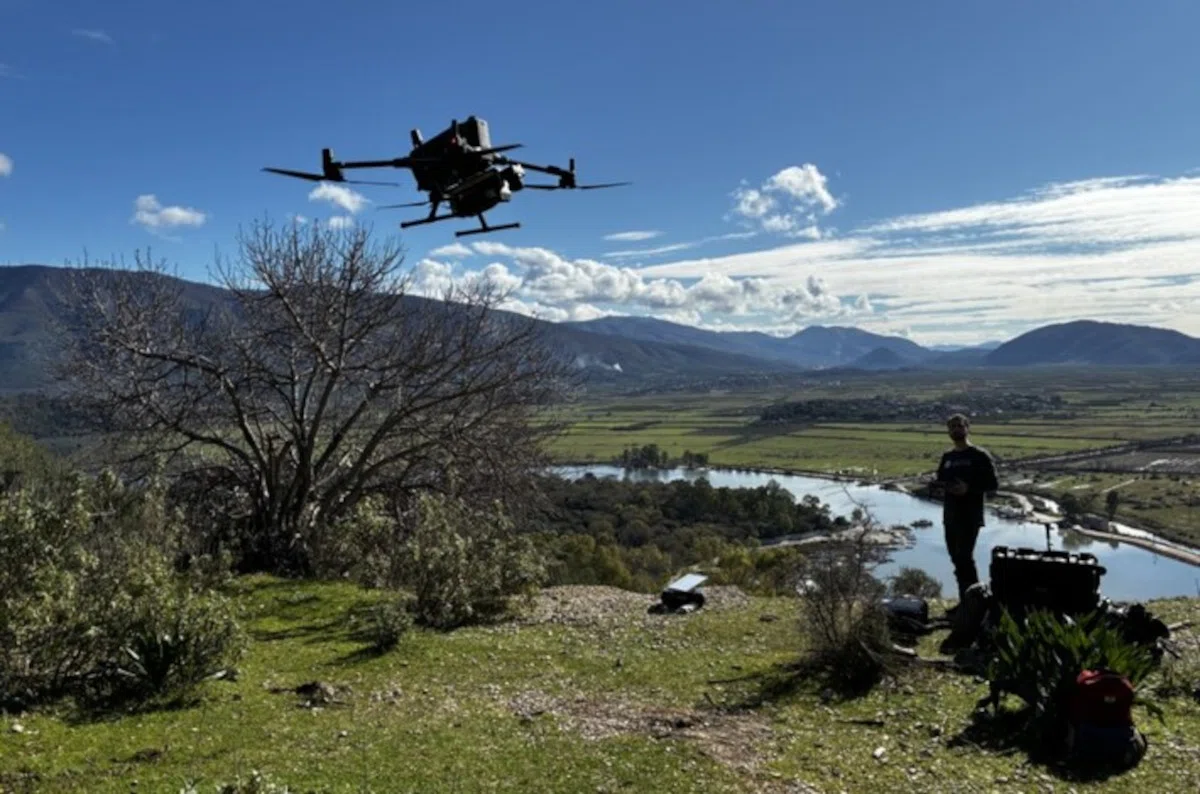
New excavations at the ancient city of Butrint have brought to light numerous previously unknown structures. The findings include buildings, water supply systems, fortifications, and ancient burials. These discoveries were made through a campaign of topographic surveys and reconnaissance.
The research mission is coordinated by Enrico Giorgi from the University of Bologna and Belisa Muka from the Archaeological Institute of Tirana. The project also involves the Laboratory of Landscape Archaeology and Remote Sensing at the University of Siena, directed by Professor Stefano Campana. Researchers used LiDAR technology to create a high-resolution digital model of the terrain, allowing them to see through dense vegetation.
Within the Archaeological Park, excavations uncovered a building with two apses that remains preserved to a height of nearly two meters. The construction technique is similar to the Great Basilica, suggesting a possible connection to the late antique phase of the city. Other findings include a limestone-block well and a circular cistern lined with hydraulic mortar on the northwestern slopes.
Near the acropolis, where the Italian-Albanian Mission excavated between 2019 and 2024, a new section of Hellenistic-period fortification walls made of large, squared stone blocks was identified. East of the Roman Forum, a rectangular depression revealed a large two-room building containing traces of plaster, a terracotta slab floor, and a stone threshold.
The surveys also extended to the surrounding hills and the Ksamil Peninsula, where the LiDAR survey detected a high number of anomalies. These investigations identified other ancient buildings and numerous burials, some carved into the rock. More recent traces of Albanian history, such as bunkers and long trenches, were also found.
Key facts
- New excavations at Butrint have revealed previously unknown buildings, water systems, and fortifications.
- Researchers used LiDAR technology to identify structures hidden by dense vegetation.
- Findings include a two-apsed building, Hellenistic fortification walls, and a large two-room building near the Roman Forum.
Three perspectives
Neutral
Archaeologists are using LiDAR technology and field observations to identify and verify ancient structures at Butrint.
Positive
The collaboration between the University of Bologna, the Archaeological Institute of Tirana, and the University of Siena has expanded the understanding of the historical landscape at Butrint.
Negative
Dense natural vegetation makes parts of the park and surrounding hills difficult for archaeologists to investigate.
Your week in news, every Wednesday
The biggest stories of the week for your edition, in your inbox every Wednesday morning, your time. Free, and you can unsubscribe at any time.