

Antibiotics sold as a service in Siem Pang and other areas
Studies show high rates of drug-resistant bacteria in children and hospital patients, while easy access through pharmacies and informal sellers continues.
 Health Desk 2 min read
Bacteria are increasingly resistant to basic treatments in Cambodia, even in very young children. In Siem Reap, a study of 605 children under five at Angkor Hospital for Children found that 88% carried gut bacteria resistant to third-generation cephalosporins. Another 3% carried bacteria resistant to carbapenems, which are drugs of last resort.
Data from Battambang Provincial Referral Hospital showed that between 2020 and 2022, 74% of E. coli found in the blood were resistant to ceftriaxone, and one in three Staphylococcus aureus were resistant to methicillin. The country's eight sentinel sites reported the same 74% rate to the WHO for 2022.
Children are falling ill less often, with the share of under-fives who had a fever in the previous two weeks falling from 26.8% in 2010 to 13.2% between 2010 and 2021-2022. Diarrhoea also dropped from 14.5% to 6.9%. However, in 2021-2022, 53% of fever episodes and 29% of diarrhoea episodes were treated with antibiotics.
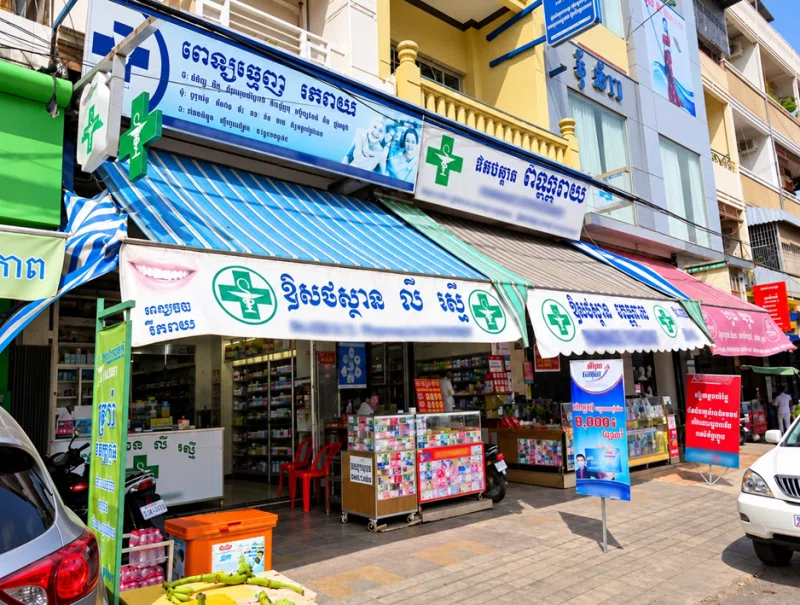
In Siem Pang, a rural district of Stung Treng province, researchers found that residents have a poor grasp of how antibiotics work and little idea of what resistance means. The local health centre is expensive and far away, while the local seller is right there. Informal sellers describe selling antibiotics as socially responsible or as an economic necessity.
Resistance is also present in livestock. A study in April 2025 found that 91% of Salmonella strains isolated from poultry were multidrug-resistant. Earlier work in 2016 found ESBL-producing E. coli on about 60% of pork, chicken, and fish samples bought at two Phnom Penh markets.
Cambodia has a new multisectoral action plan on antimicrobial resistance for 2025-2029, published by the WHO on 26 February 2026. This follows a first plan for 2019-2023 led by the ministries of Health, Agriculture, and Environment.
Key facts
- 88% of children under five at Angkor Hospital for Children carried gut bacteria resistant to third-generation cephalosporins.
- Between 2020 and 2022, 74% of E. coli found in the blood at Battambang Provincial Referral Hospital were resistant to ceftriaxone.
- In 2021-2022, 53% of fever episodes in children were treated with antibiotics.
Three perspectives
Neutral
Antibiotic use in Cambodia is driven by easy access through private pharmacies and informal sellers.
Positive
Cambodia has a new multisectoral action plan on antimicrobial resistance for 2025-2029.
Negative
Bacteria are increasingly resistant to basic treatments, even in very young children.
Your week in news, every Wednesday
The biggest stories of the week for your edition, in your inbox every Wednesday morning, your time. Free, and you can unsubscribe at any time.