

Research paper details first year of Aditya-L1's SUIT instrument
A study led by Rahul Gopalakrishnan describes the performance and solar observations of the Solar Ultraviolet Imaging Telescope during its first year of operation.
 Space Desk 2 min read
A research paper detailing the performance of the Solar Ultraviolet Imaging Telescope (SUIT) on board Aditya-L1 has been accepted for publication in the Journal of Astrophysics and Astronomy. The study, titled 'Unraveling the Secrets of the Lower Solar Atmosphere: One Year of Operation of the Solar Ultraviolet Imaging Telescope (SUIT) on board Aditya-L1', was led by Rahul Gopalakrishnan and a team of researchers.
The paper describes how the instrument was operated, calibrated, and maintained while capturing features of the Sun, including solar flares. SUIT is one of seven scientific instruments aboard Aditya-L1 and captures images of the Sun in near-ultraviolet light, covering wavelengths between 200 and 400 nanometres.
Unlike observations using visible light, SUIT's ultraviolet images allow scientists to examine the Sun's photosphere and chromosphere. These layers provide clues about solar activity and can help scientists trace how solar disturbances develop into larger eruptions.
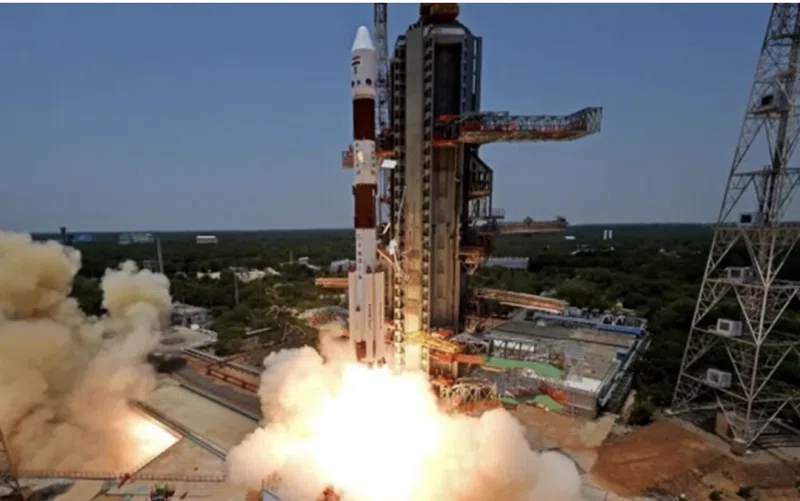
Launched by the Indian Space Research Organisation (Isro) on September 2, 2023, Aditya-L1 is India's first dedicated space-based solar observatory. The spacecraft reached its designated halo orbit around the Sun-Earth Lagrange Point 1 (L1) on January 6, 2024, approximately 1.5 million kilometres from Earth.
The mission aims to help scientists understand how the Sun's outer atmosphere gets heated and how solar flares and massive eruptions of material begin. These activities influence space weather, which can affect satellites, communication networks, and power systems on Earth.
Key facts
- The research paper on SUIT's first year of operation was led by Rahul Gopalakrishnan.
- Aditya-L1 was launched by Isro on September 2, 2023.
- SUIT captures solar images in near-ultraviolet light between 200 and 400 nanometres.
Perspectives
Neutral
The research paper details the calibration, maintenance, and solar observations of the SUIT instrument during its first year of operation.
Positive
The mission aims to help scientists understand solar heating and eruptions to better understand space weather impacts on Earth.
Your week in news, every Wednesday
The biggest stories of the week for your edition, in your inbox every Wednesday morning, your time. Free, and you can unsubscribe at any time.