

Researchers call for iodine fortification in vegan milk alternatives
Studies show replacing dairy with non-fortified plant-based products could increase iodine deficiency among women and young people.
 Health Desk 2 min read
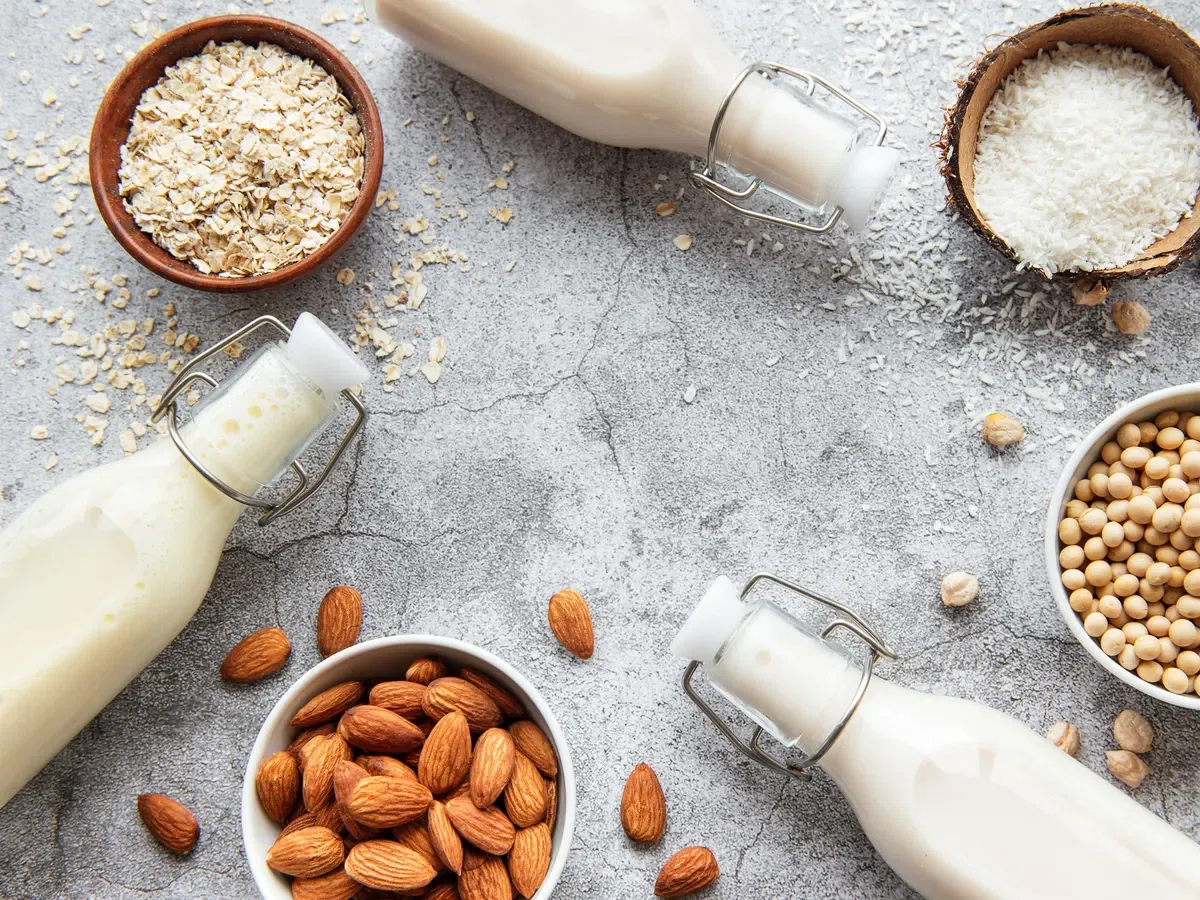
Researchers are calling for vegan milk alternatives to be fortified with micronutrients, particularly iodine. Moving partly to plant-based substitutes for milk, cheese and yoghurt could lead to falls in iodine, calcium, riboflavin and vitamin B12 if the products, which are often based on soya, almonds or oats, are not fortified.
The study, published in the Lancet Planetary Health, found that replacing a third of dairy intake with vegan alternatives would cause the prevalence of iodine deficiency to rise from 54% to 65% of adolescent girls and from 32% to 42% of women aged 19 to 49 years old. Switching to 100% non-dairy alternatives could lead to inadequate iodine levels reaching 80% in teenage girls and 72% in teenage boys.
Dr Sarah Bath, an associate professor in public health nutrition at the University of Surrey, said the population groups at greatest risk are young women and women of childbearing age. Iodine is used by the thyroid gland to produce hormones that regulate metabolism and support healthy growth and brain development.
While 61% of the 146 non-dairy milks, 76 yoghurts and 67 cheeses studied had added calcium and 46% had added vitamin B12, only 12% were fortified with iodine. There is currently no formal requirement for plant-based milk alternatives to be fortified with micronutrients.
Niamh Brannelly, the head of nutrition and science communications for Danone in the UK, said the core range of Alpro products is fortified for calcium, iodine and vitamins B2 and B12. Caroline Orfila Jenkins, a vice-president for science and technology at Oatly, said all its unflavoured, non-organic oat drinks are fortified with nutrients including iodine, calcium, riboflavin and vitamins B12 and D.
Nichola Ludlam-Raine, a registered dietitian and spokesperson for the British Dietetic Association, said the research raised an important population-level concern but noted that overall diet matters. She recommended that anyone choosing plant-based milk check the label to choose one fortified with iodine.
Key facts
- Replacing a third of dairy with vegan alternatives could increase iodine deficiency in adolescent girls from 54% to 65%.
- Only 12% of the plant-based dairy substitutes studied were fortified with iodine.
- Requiring all non-dairy alternatives to be fortified with iodine would prevent average declines in iodine intake.
Three perspectives
Neutral
Researchers found that plant-based milk alternatives often lack the iodine levels found in dairy products.
Positive
Some brands, including Alpro and certain Oatly drinks, already fortify their products with iodine and other nutrients.
Negative
Switching entirely to non-dairy alternatives could lead to inadequate iodine levels in 80% of teenage girls.
Your week in news, every Wednesday
The biggest stories of the week for your edition, in your inbox every Wednesday morning, your time. Free, and you can unsubscribe at any time.