

Liberian delegation completes study tour of Rwanda's justice system
A joint delegation from Liberia studied Rwanda's post-conflict accountability and memorialization framework to prepare for establishing its own war and economic crimes court.
 Politics Desk 2 min read
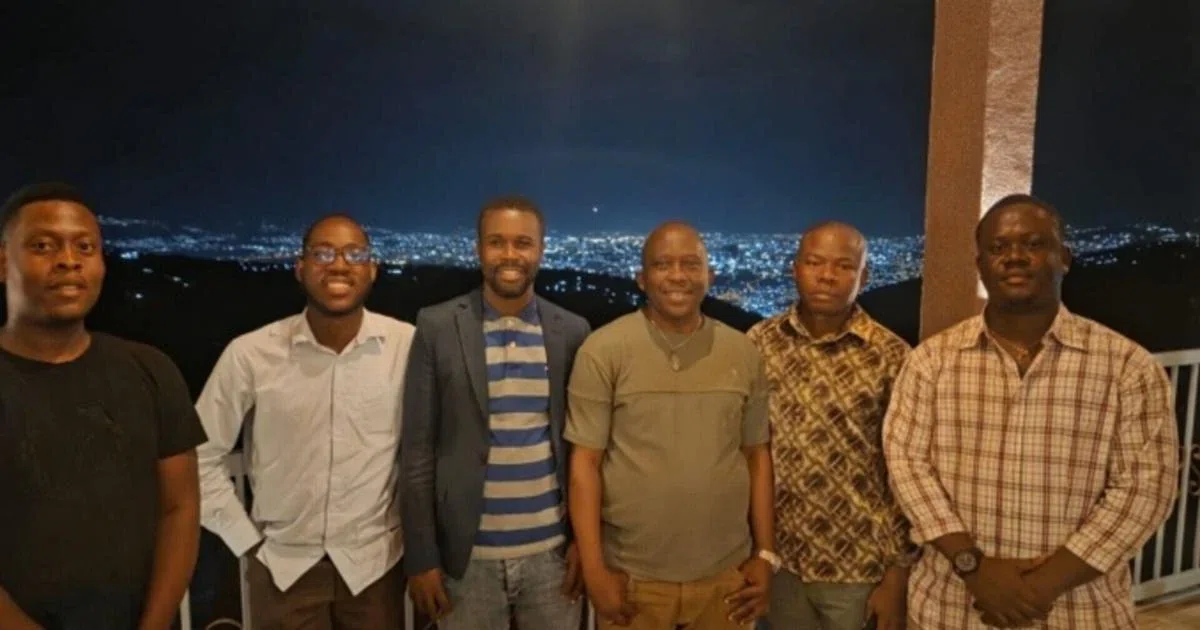
A high-level joint delegation from the Office for the Establishment of the War and Economic Crimes Court for Liberia (OWECC-L) and the Press Union of Liberia (PUL) returned to Monrovia late Monday, October 12, 2026. The delegation completed a three-week study tour of Rwanda’s post-conflict transitional justice and memorialization framework.
The mission, conducted from September 24 to October 12, 2026, sought to draw lessons from Rwanda’s experience in post-conflict recovery, accountability, reconciliation, and the preservation of historical memory. This study aims to inform Liberia's preparations to operationalize the War and Economic Crimes Court (WECC) and the National Anti-Corruption Court (NACC).
Led by Jallah A. Barbu, Executive Director of OWECC-L, and Julius Kanubah, President of the Press Union of Liberia, the group engaged government officials, transitional justice practitioners, and media organizations. Engagements took place across Kigali, Musanze, Rubavu, Kibuye, and Nyanza. The delegation examined Rwanda’s response to the 1994 Genocide against the Tutsi, focusing on institutional accountability, survivor support, and public memorialization.
The delegation included Ezekiel E. Fayia, an intelligence and investigative officer from the Liberia National Police; Simeon J. Lomah, Head of Information and Communications Technology at OWECC-L; and Edmond S. Kamei, Assistant Director for Operations at OWECC-L. Tyfred B. Teh, a Liberian postgraduate law student in Rwanda, provided technical support.
The group held consultations with the Rwandan Journalists Association (ARJ), the Rwanda Media Commission (RMC), and the Liberian Media Institutions Network-Rwanda (LMIN-R). These discussions explored how media can promote public awareness and accountability rather than spreading inflammatory narratives.
The joint delegation stated that Rwanda’s experience offers invaluable lessons on confronting painful histories while fostering national cohesion. The consultations are expected to provide a foundation for structured partnerships focused on specialized transitional justice reporting and digital documentation.
Key facts
- The Liberian delegation conducted a three-week study tour in Rwanda from September 24 to October 12, 2026.
- The mission focused on Rwanda's post-conflict justice, accountability, and memorialization to assist Liberia in establishing the War and Economic Crimes Court and the National Anti-Corruption Court.
- The delegation engaged with Rwandan government officials, civil society leaders, and media institutions including the Rwanda Media Commission.
Three perspectives
Neutral
A high-level joint delegation from Liberia studied Rwanda's post-conflict justice system to prepare for establishing Liberia's War and Economic Crimes Court.
Positive
The delegation stated that Rwanda's experience offers invaluable lessons on confronting painful histories while fostering national cohesion and ensuring accountability.
Negative
The delegation acknowledged that media can contribute to division when used to spread inflammatory narratives in conflict settings.
Your week in news, every Wednesday
The biggest stories of the week for your edition, in your inbox every Wednesday morning, your time. Free, and you can unsubscribe at any time.