

Bornean orangutan mothers arrange playdates for young
A 15-year study shows wild mothers adjust their movements to bring offspring into contact with suitable playmates.
 Science Desk 2 min read
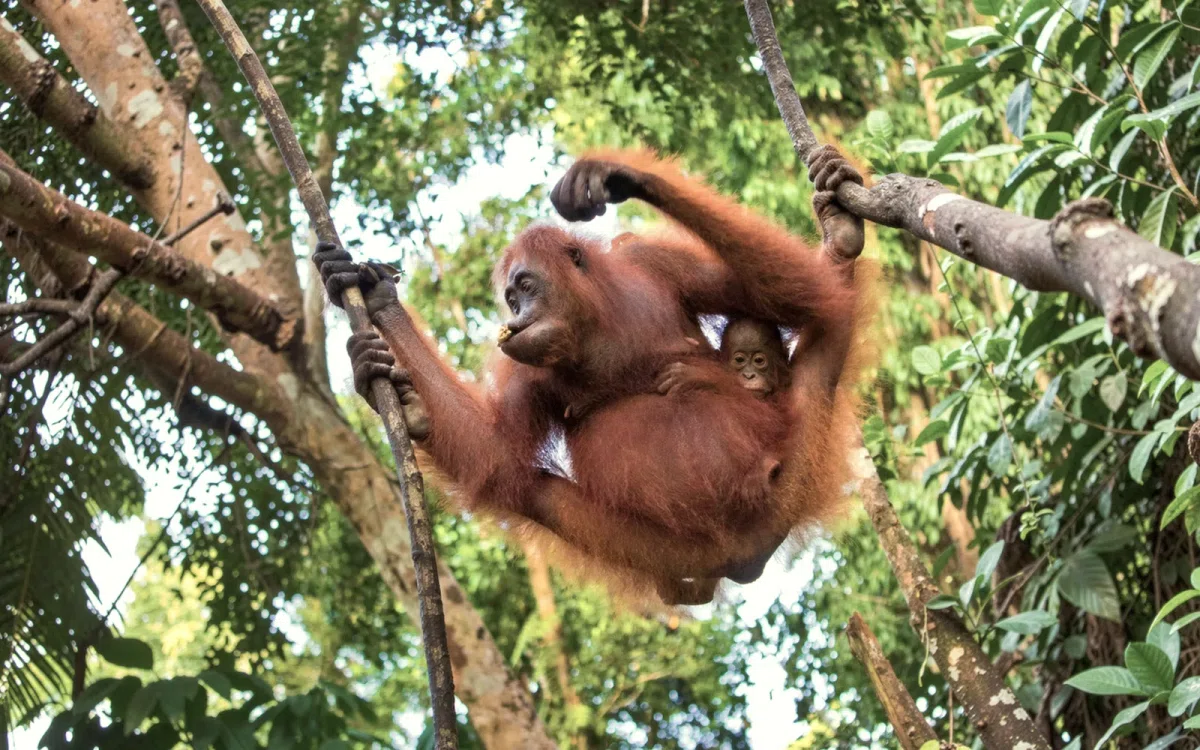
Wild Bornean orangutan mothers deliberately adjust their movements through the forest to bring their young into contact with suitable playmates. This finding comes from a 15-year study in Indonesia’s Central Kalimantan.
Researchers analysed approximately 32,600 hours of observations involving 31 mother-offspring pairs at the Tuanan Research Station. Mothers with similarly aged youngsters tended to spend more time in overlapping areas of forest to give offspring opportunities to meet and play. Mothers appeared to plan these encounters by travelling towards neighbouring mothers’ usual territories before playdates and returning afterwards.
“Mothers appear to match their kids with play partners that are physically and developmentally suitable,” said lead author Odd Jacobson. Maria van Noordwijk of the Max Planck Institute of Animal Behavior, who led the fieldwork, said youngsters zoom toward each other, roughhousing, biting, and grappling.
Arranging these encounters required effort, as mothers travelled farther and spent less time feeding on days when youngsters played. Play occurred on only about 6% of observation days, with youngsters spending roughly 20 minutes playing together during such encounters.
The researchers believe the apes may use spatial memory to seek out opportunities for offspring to socialise. Study co-author Sri Suci Utami Atmoko of Indonesia’s Universitas Nasional said it is still unknown if the time and energy spent arranging playdates gives the young an advantage later in life.
Key facts
- A 15-year study in Indonesia’s Central Kalimantan found orangutan mothers adjust movements to facilitate play for their young.
- Mothers travelled farther and spent less time feeding on days when their offspring had playdates.
- Play occurred on approximately 6% of observation days, lasting about 20 minutes.
Three perspectives
Neutral
The study reveals that Bornean orangutan mothers adjust their forest movements to provide social opportunities for their young.
Positive
Mothers appear to match their children with play partners that are physically and developmentally suitable.
Negative
Arranging these jungle get-togethers came at a price, as mothers travelled farther and spent less time feeding.
Your week in news, every Wednesday
The biggest stories of the week for your edition, in your inbox every Wednesday morning, your time. Free, and you can unsubscribe at any time.