

 United States
OpenAI disbands stand-alone robotics team
Researchers have been reassigned to general research and applied organizations as the company bets that frontier models can directly control physical devices.
 AI & Cyber Desk 2 min read
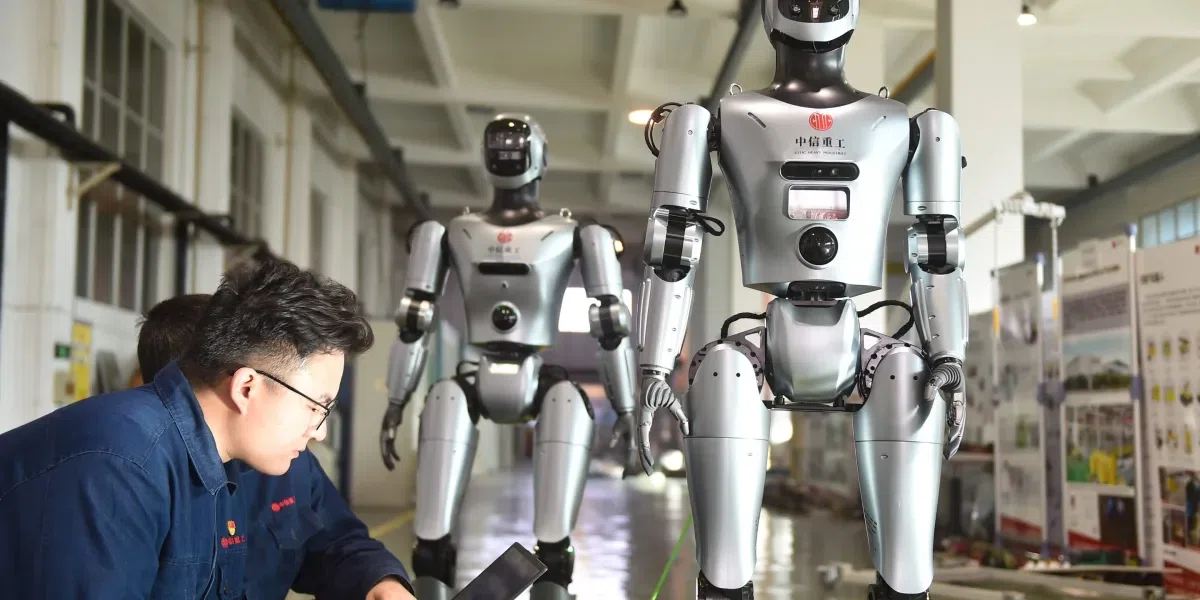
OpenAI has disbanded its stand-alone robotics team and moved its researchers onto other teams. The robotics research team has been reassigned to the company's main research team reporting to Chief Research Officer Mark Chen. The applied robotics and hardware teams have been reassigned to the larger Applied organization reporting to OpenAI President Greg Brockman.
A company spokesperson said robotics remains a core part of OpenAI's long-term vision and described the reorganization as a sign of commitment rather than a retreat. The change reflects a belief that general-purpose models built for language, code, and vision can be used for embodied AI to control devices like robots, drones, or driverless cars. This approach would remove the need for separate robotics teams to build specialized AI models to serve as digital brains for robots.
OpenAI said its researchers assumed at the start of the year that progress required building on models like Sora, a video generation model. However, the company's general-purpose frontier models, including GPT-6 Astra, have since shown they can be directly applied to robotics. This discovery motivated the decision to move researchers onto teams working on more general AI models.
Guanya Shi, an assistant professor at Carnegie Mellon University's Robotics Institute, said the move suggests OpenAI sees robotics as no longer a special problem. Instead, the challenge can be addressed as a downstream application of general intelligence. In an Nvidia study, an Astra-powered agent achieved a 74.8% success rate on a simulated manipulation benchmark, compared with 51.0% reported by the best specialized robotic models.
The reorganization comes as OpenAI faces pressure to rein in costs and focus on core products. CEO Sam Altman previously told the company to abandon side quests to reallocate computing resources to core endeavors. The company is also working to address heavy operating losses, which reportedly totaled $10.9 billion in the most recent quarter, as it prepares for a possible IPO in early 2027.
Key facts
- OpenAI disbanded its stand-alone robotics team and reassigned researchers to the main research and applied organizations.
- The company believes general-purpose frontier models like GPT-6 Astra can be applied directly to robotics.
- OpenAI reported operating losses of $10.9 billion in the most recent quarter.
Three perspectives
Neutral
OpenAI has reorganized its robotics researchers into its main research and applied organizations.
Positive
The reorganization is a sign of OpenAI's commitment to robotics and its vision for general-purpose robots.
Negative
The company is facing pressure to manage heavy operating losses of $10.9 billion from the most recent quarter.
Your week in news, every Wednesday
The biggest stories of the week for your edition, in your inbox every Wednesday morning, your time. Free, and you can unsubscribe at any time.