

No party achieves majority in Israel election
Benjamin Netanyahu's bloc and the opposition led by Gadi Eisenkot both failed to secure the 61 seats required to form a government.
 World Desk 2 min read
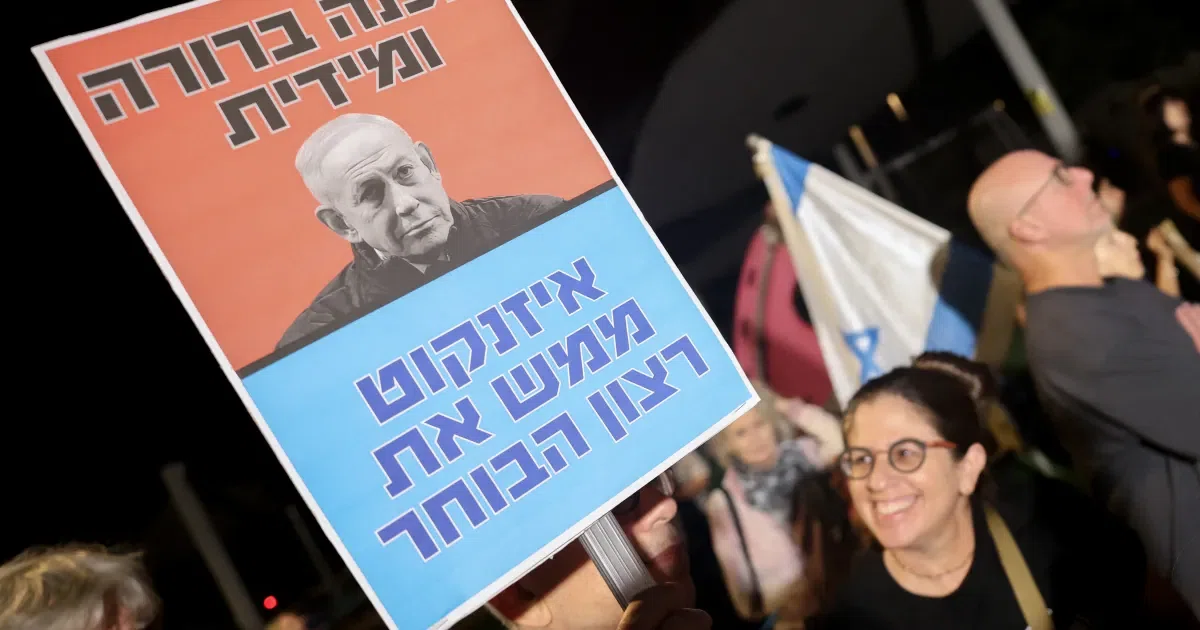
No political party has achieved the 61-seat majority required in the Knesset to form a government in Israel. The Central Elections Committee published final results of the October 27 vote on Friday, showing a voter turnout of 77.9 percent. Netanyahu’s bloc secured 53 seats in the 120-member Knesset, while the opposition bloc led by Gadi Eisenkot won 48 seats.
Political consultations to form a coalition are reported to be under way. If the process fails, Israeli President Isaac Herzog could choose a candidate with the best chance to form a government, who then has about 28 days to do so. If that candidate fails, the president can choose another, or 61 members of the Knesset can request that Herzog assign the task to a Knesset member during a 21-day window. If all processes fail, Israelis will return to the polls.
Both Netanyahu and Eisenkot have ruled out working with the two main electoral lists representing Palestinian citizens of Israel, the United Arab List (Ra’am) and the Joint List, which secured a combined 19 seats. Netanyahu posted on X that it is forbidden to form a government with them. Eisenkot said he would only consider partnering with parties that recognise Israel as a Jewish and democratic state, endorse the values of the Declaration of Independence, and commit to all Israelis performing national service.
The Arab parties have shown interest in partnering with anti-Netanyahu factions. Yousef Jabareen from the Joint List said his party is ready for the ousting of the Netanyahu government, which he called one of bloodshed. Political analyst Ahmed Najar said Ra’am has indicated it is open to participating in an Eisenkot-led government, while the Joint List has left open the possibility of supporting a minority government from outside the coalition.
Key facts
- Netanyahu's bloc won 53 seats and Eisenkot's opposition bloc won 48 seats.
- A 61-seat majority is required to form a government in the 120-member Knesset.
- The October 27 election saw a voter turnout of 77.9 percent.
Three perspectives
Neutral
Political consultations are under way to determine if any party can form a coalition in the Knesset.
Positive
The United Arab List has indicated it is open to participating in a government led by Gadi Eisenkot.
Negative
Neither Benjamin Netanyahu nor Gadi Eisenkot secured the majority necessary to form a government.
Your week in news, every Wednesday
The biggest stories of the week for your edition, in your inbox every Wednesday morning, your time. Free, and you can unsubscribe at any time.