 United Kingdom
Fed chair's policy shifts viewed as yield curve management, analyst says
Federal Reserve chairman Kevin Warsh is engaged in yield curve management rather than following a hawk or dove approach, according to Robin Brooks, a senior fellow at the Brookings Institution.
 Business Desk 2 min read
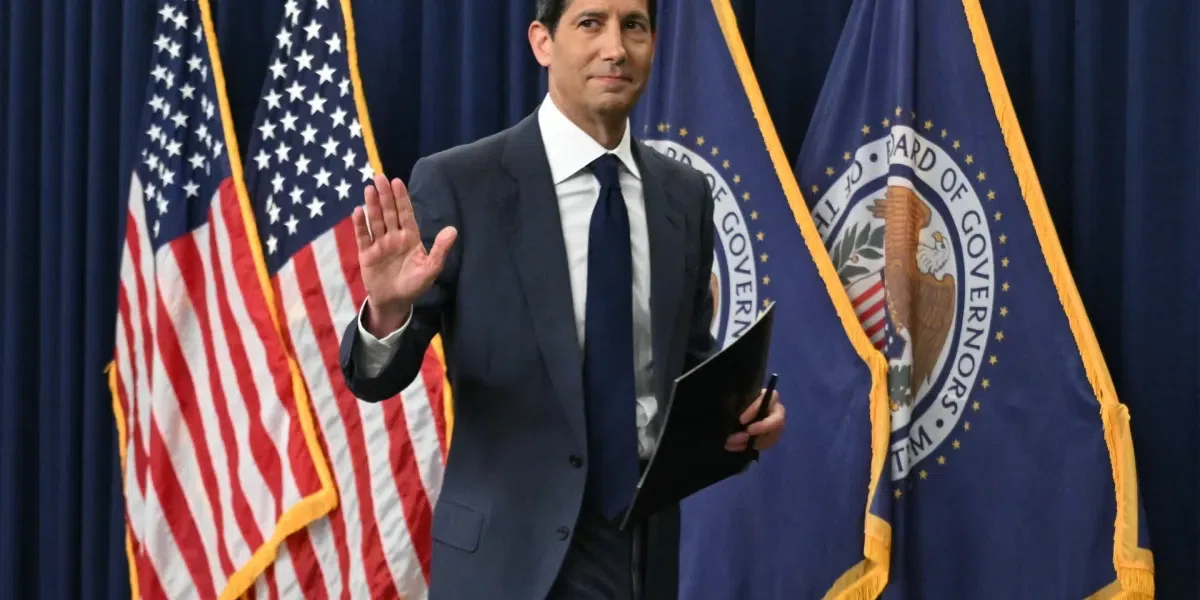
Federal Reserve chairman Kevin Warsh is engaged in yield curve management rather than following a hawk or dove approach, according to Robin Brooks, a senior fellow at the Brookings Institution. Brooks argues that the Fed chair's mixed messages are a response to the precarious U.S. debt picture.
The surge in Treasury yields this year threatens the outlook for U.S. debt, which exceeds $40 trillion in gross terms with publicly held debt at 100% of GDP. In the 2026 fiscal year, which ended in September, federal government debt-interest costs topped $1 trillion, exceeding defence spending.
Brooks suggests the Fed and Treasury Department are in a de facto accord to keep borrowing costs stable. He noted Treasury Secretary Scott Bessent's announcement to buy back more long-term bonds to briefly lower yields, and Bessent's intervention in the currency market to prop up the yen.
Warsh's recent actions have puzzled Wall Street. While he led the Fed to a unanimous rate hike in September, he held off on backing another hike last week despite heating inflation, which produced a dovish effect.
Such management risks fiscal dominance, where high debt and deficits override the Fed's ability to independently manage monetary policy and fight inflation. Analysts at Bank of America estimated that in a scenario where yields are 150 basis points higher than the Congressional Budget Office baseline, the effective interest rate on government debt could exceed long-term nominal GDP growth as early as fiscal year 2028.
Key facts
- U.S. gross debt is above $40 trillion, with publicly held debt at 100% of GDP.
- Federal debt-interest costs exceeded $1 trillion in fiscal year 2026.
- Robin Brooks argues Fed policy is focused on managing long-term yields.
Three perspectives
Neutral
Federal Reserve chairman Kevin Warsh has delivered inconsistent signals regarding monetary policy, ranging from a hawkish speech in August to a dovish refusal to hike rates last week.
Positive
The 10-year yield has dipped back below 5% as investors embraced Treasury debt as a safe asset.
Negative
High debt and deficits risk fiscal dominance, where the Fed's ability to fight inflation is overridden by the debt burden.
Your week in news, every Wednesday
The biggest stories of the week for your edition, in your inbox every Wednesday morning, your time. Free, and you can unsubscribe at any time.