

Tragedy in Nepal as avalanche kills 1,500 and leaves 5,600 missing
A massive rock and glacial ice avalanche in the Himalayas unleashed water and sediment toward the Trishuli River, sweeping away entire villages.
 Climate Desk 2 min read
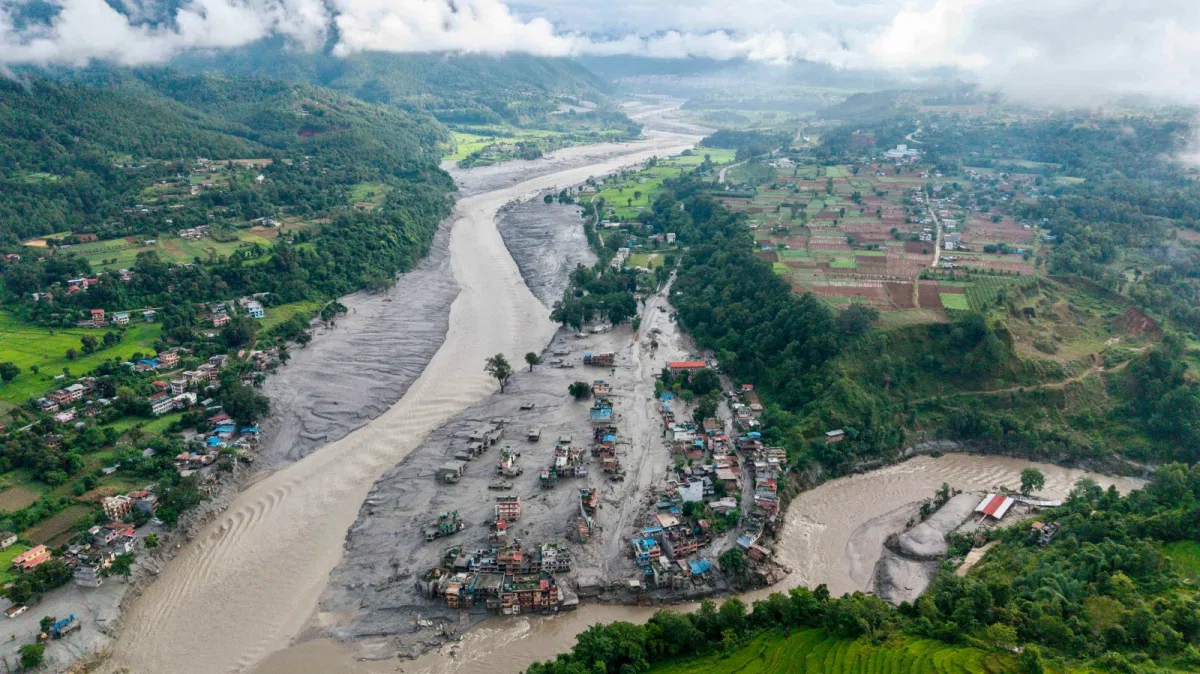
A massive avalanche of rock and glacial ice tore down a mountainside in the Himalayas in August, unleashing a torrent of water, rock and sediment toward communities along Nepal's Trishuli River. The torrent moved at speeds exceeding 100 miles per hour and swept away entire villages. Two months later, the death toll stands at more than 1,500, with another 5,600 people still missing.
The tragedy in Nepal serves as a reminder of the dangers of a warming world and the need to invest in protections before disaster strikes. When world leaders gather in Turkey for the United Nations climate summit COP31 from November 9, protecting people from increasingly dangerous climate hazards must be at the center of their agenda.
At last year's summit, countries agreed to triple the amount of financing to help communities prepare for and withstand climate impacts by 2035. However, making sure money is spent on the right solutions for the right threats is a challenge.
Nature-based solutions, such as forests that stabilize hillsides, can provide protection. In Colombia, a study found that conserving and restoring forests along roads could be 16 times more cost-effective than paying for damage caused by landslides. A study of projects in Haiti, India, Indonesia and Uganda found that economic benefits exceeded implementation costs within five to 10 years.
Obstacles to expanding nature-based adaptation include institutional, financial and political issues. Many nature-based projects rely on grants lasting only two or three years, while restoring a forest or wetland can take much longer. Additionally, conventional investment assessments frequently underestimate the value of nature.
Key facts
- An August avalanche in the Himalayas left more than 1,500 dead and 5,600 missing near the Trishuli River.
- Countries agreed to triple climate adaptation financing by 2035.
- Nature-based projects in Haiti, India, Indonesia and Uganda showed economic benefits exceeding costs within five to 10 years.
Three perspectives
Neutral
World leaders will meet in Turkey for the COP31 summit starting November 9 to discuss climate hazards.
Positive
Conserving and restoring forests along roads in Colombia could be 16 times more cost-effective than paying for landslide damage.
Negative
An avalanche in the Himalayas killed more than 1,500 people and left 5,600 missing.
Your week in news, every Wednesday
The biggest stories of the week for your edition, in your inbox every Wednesday morning, your time. Free, and you can unsubscribe at any time.