

US officials renew criticism of Afghanistan military campaign and withdrawal
US Defence Secretary Pete Hegseth and former inspector general John Sopko question the strategy, cost, and leadership of the 20-year intervention.
 World Desk 2 min read
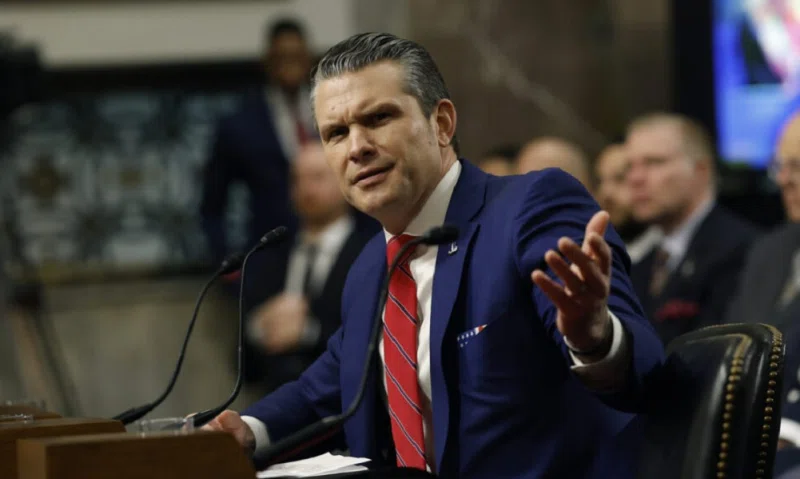
Senior US officials have renewed criticism of America’s 20-year military campaign in Afghanistan. They questioned the strategy behind the intervention, the billions of dollars spent, and the chaotic withdrawal of international forces in August 2021.
US Defence Secretary Pete Hegseth criticised the American military establishment for failing to conduct a comprehensive examination of the Afghanistan withdrawal. He argued that the lessons of the campaign cannot be properly understood without an honest assessment of what went wrong. Hegseth described the August 2021 suicide bombing at Kabul airport’s Abbey Gate, which killed 13 US service members, as evidence of major operational, strategic, and political failures.
Hegseth said the disorderly conclusion of America’s military involvement had damaged the country’s international credibility. John Sopko, the former Special Inspector General for Afghanistan Reconstruction (SIGAR), also questioned whether Washington ever had a coherent strategy for its involvement in Afghanistan.
Sopko said successive US administrations repeatedly changed the mission’s objectives without establishing a clear understanding of what they ultimately wanted to achieve. He raised questions about the enormous financial cost of the intervention, noting the collapse of the Afghan government shortly after international forces withdrew, despite years of extensive financial and military support.
Relations between Washington and Kabul remain strained. The United States has not formally recognised the Islamic Emirate of Afghanistan, while Afghan authorities have repeatedly urged Washington to move beyond the legacy of the war and pursue a more constructive relationship based on diplomatic engagement and cooperation. Washington continues to maintain its highest travel warning for Afghanistan, advising American citizens against visiting the country.
Key facts
- US Defence Secretary Pete Hegseth cited the Abbey Gate suicide bombing as evidence of operational and strategic failures.
- Former SIGAR official John Sopko questioned the coherence of US strategy and the enormous financial cost of the intervention.
- The United States has not formally recognised the Islamic Emirate of Afghanistan.
Three perspectives
Neutral
The United States maintains its highest travel warning for Afghanistan while relations between Washington and Kabul remain strained.
Positive
Afghan authorities have urged Washington to pursue a more constructive relationship based on diplomatic engagement and cooperation.
Negative
US officials have acknowledged serious failures in planning, leadership, and the long-term objectives of the mission in Afghanistan.
Your week in news, every Wednesday
The biggest stories of the week for your edition, in your inbox every Wednesday morning, your time. Free, and you can unsubscribe at any time.