

Water bankruptcy is a challenge of justice and power, says architect
Water bankruptcy is a challenge of justice, power, and political economy rather than a purely technical or hydrological problem.
 Climate Desk 2 min read
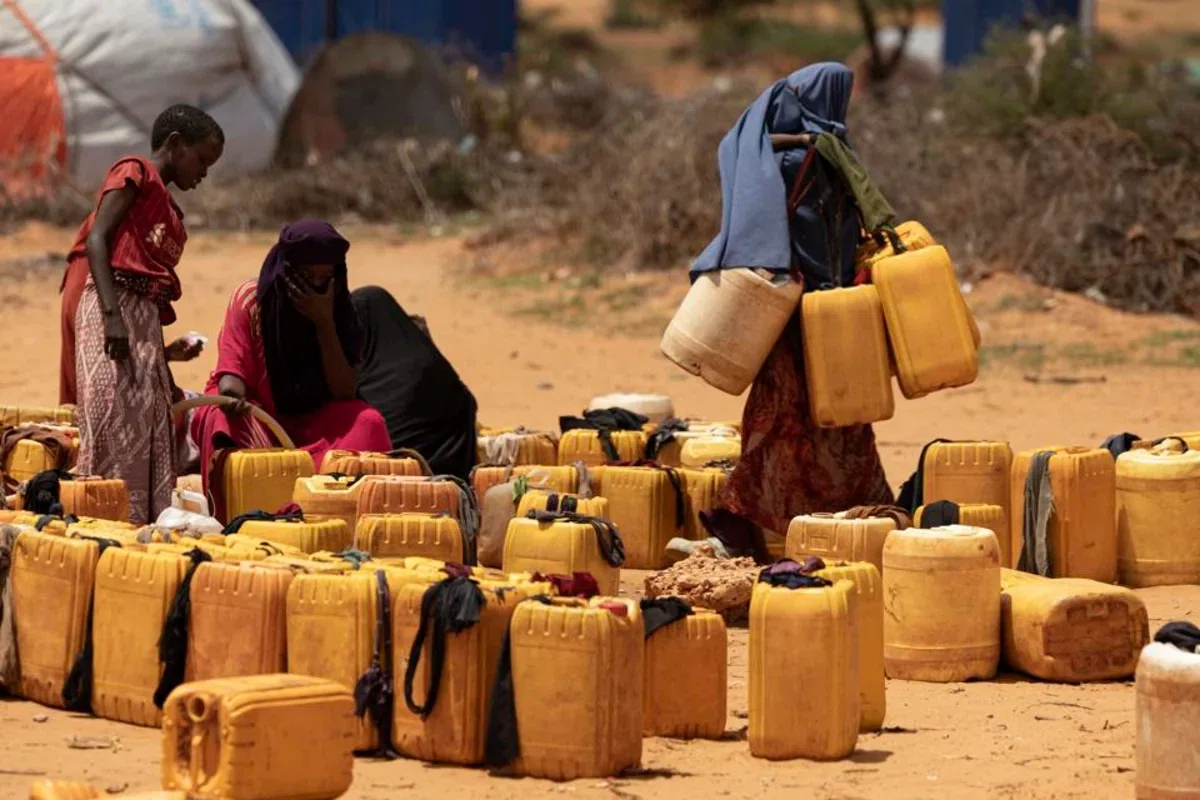
Water bankruptcy is a challenge of justice, power, and political economy rather than a purely technical or hydrological problem. It is a condition where damage to water-related natural capital has become effectively irreversible.
The architect of the water bankruptcy concept explains that the consequences of using more water than resources can sustain are rarely shared equally. While some benefit from decades of unsustainable development, others inherit depleted aquifers, degraded ecosystems, and lost livelihoods.
In Somalia, millions of people face the repercussions of a severe drought following three consecutive failed raining seasons. Kismayo, the capital of Jubaland State, is one of the largest cities receiving hundreds of thousands of people fleeing prolonged drought and conflict.
Addressing water bankruptcy requires reforming the institutions, policies, and economic arrangements that helped create it. This involves procedural justice, which asks who participates in decisions and whose interests influence the outcome.
Inequality extends across borders, as water-intensive production can generate profits for distant consumers while leaving producing regions with damaged ecosystems. Water bankruptcy deepens existing inequalities within and between nations.
Key facts
- Water bankruptcy is a condition where damage to water-related natural capital becomes effectively irreversible.
- Millions in Somalia face repercussions from a severe drought after three consecutive failed raining seasons.
- Kismayo is one of the largest IDP-receiving cities in Somalia due to drought and conflict.
Three perspectives
Neutral
Water bankruptcy is a concept used to understand persistent conditions where water-related natural capital is damaged.
Positive
Save the Children provides health and nutrition services across the IDP camp in Kismayo.
Negative
Poorer households and smallholder farmers face greater vulnerabilities and fewer options during water scarcity.
Your week in news, every Wednesday
The biggest stories of the week for your edition, in your inbox every Wednesday morning, your time. Free, and you can unsubscribe at any time.