New method detects unintended CRISPR gene edits at single-cell resolution
Superb-seq allows researchers to identify off-target Cas9 edits and their impact on gene expression in individual cells.
 Science Desk 2 min read
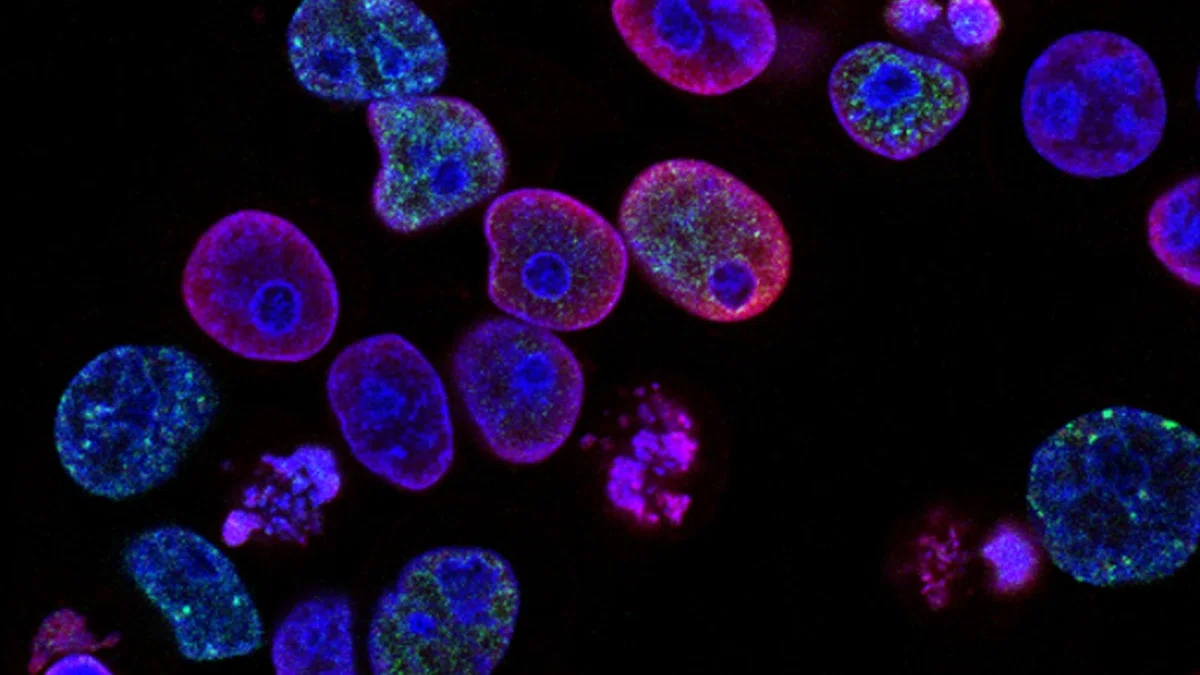
Researchers have developed a new method called Superb-seq to identify both intended and unintended edits made by CRISPR/Cas9 technology. The technique allows scientists to read changes at single-cell resolution to see how unwanted edits affect gene activity. This tool was developed by a team including Graham McVicker from the Salk Institute.
In a test using 10,000 human leukemia cells, the method identified 43 edit sites, 36 of which were off-target. The researchers used seven guide RNAs to target four chromatin-remodeling genes. While the tool detected 5,761 edited cells, the off-target edits were found across 18 chromosomes.
The Superb-seq process involves three steps: delivering a Cas9-guide RNA complex with a 34-base pair T7 promoter to live cells, incubating the fixed cells with T7 polymerase, and performing single-cell RNA sequencing. This approach uses the cell's own end-joining repair to incorporate the promoter, which then marks the edit site through transcription.
Graham McVicker said the work was inspired by the inability of current technologies to see how off-target edits affect a cell. He noted that off-target edits were more frequent than he expected.
The protocol has been validated in three cell lines and tested on 34,000 cells. However, the developers stated that the full protocol is not yet validated in primary cells.
Key facts
- Superb-seq identifies both on-target and off-target CRISPR/Cas9 edits at single-cell resolution.
- A test on 10,000 leukemia cells found 43 edit sites, including 36 off-target sites.
- The method uses T7 polymerase transcription to mark edit sites for single-cell RNA sequencing.
Three perspectives
Neutral
Superb-seq integrates Cas9 editing, T7 transcription, and single-cell RNA sequencing to capture edits and their impact on gene expression.
Positive
The method is accessible because it uses standard equipment and off-the-shelf kits without the need for viruses.
Negative
The study found that off-target edits were more frequent than expected, with 36 out of 43 sites being unintended.
Your week in news, every Wednesday
The biggest stories of the week for your edition, in your inbox every Wednesday morning, your time. Free, and you can unsubscribe at any time.