

NASA seeks private sector help to extend Hubble Space Telescope lifespan
The agency has issued a request for information to commercial companies to propose in-space servicing or upgrades before the telescope re-enters Earth's atmosphere by 2034.
 Space Desk 2 min read
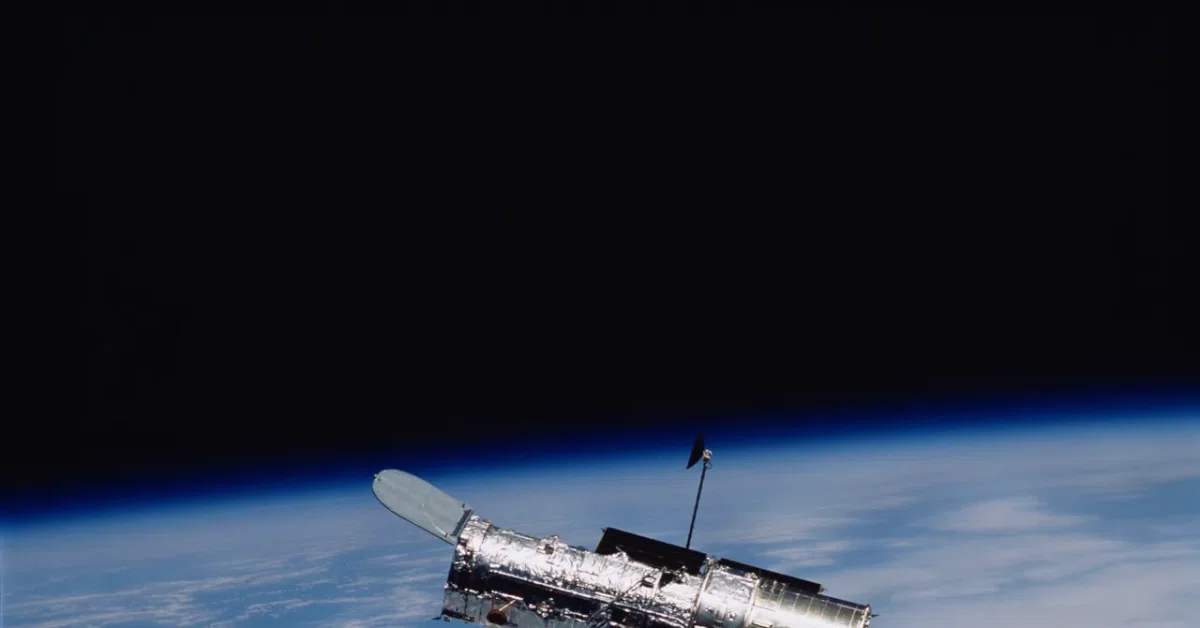
NASA is asking commercial space companies for proposals on how to extend the lifespan of the Hubble Space Telescope. The agency has issued a formal Request for Information seeking proposals for in-space servicing. This could involve raising the telescope's altitude or managing a safe and controlled reentry or disposal while it is still in orbit.
The telescope has spent over 30 years in Earth's orbit but is gradually descending due to atmospheric drag. Because Hubble is not equipped with a propulsion system to adjust its own orbit, NASA analysis suggests it will likely re-enter the atmosphere and crash onto the planet in 2033 or 2034.
Space companies can also propose upgrades to enhance the telescope's functionality during its remaining years. NASA estimates that a mission to raise the orbit must be carried out by 2032. If the telescope can be raised to a higher, more stable orbit, it could continue to observe the cosmos for several more years.
The telescope is currently experiencing malfunctions, including issues with its gyros. In June 2024, NASA transitioned Hubble to a new operating mode using only one of its six gyros to assess orientation. After more than three decades, only three gyros were operational, and one of those was starting to return abnormal readings.
Nicky Fox, associate administrator of NASA's Science Mission Directorate, said Hubble is a national icon. She stated that NASA is eager to explore possibilities to boost Hubble to a higher orbit while developing the flagship mission to follow.
NASA administrator Jared Isaacman said the agency should look at every reasonable opportunity to keep Hubble delivering for as long as possible. He added that if there are innovative and cost-effective ways to extend the life of an asset already in orbit, the agency owes it to the scientific community and the American taxpayer to explore them.
Key facts
- NASA expects Hubble to re-enter Earth's atmosphere in 2033 or 2034.
- The agency is seeking private sector proposals for in-space servicing or upgrades.
- A mission to raise the telescope's orbit will need to be carried out by 2032.
Three perspectives
Neutral
NASA is seeking commercial proposals to manage the orbital decay and potential reentry of the Hubble Space Telescope.
Positive
Extending Hubble's life would provide more opportunities to expand the understanding of the universe through more science and discoveries.
Negative
The telescope is experiencing malfunctions and is gradually descending toward Earth due to atmospheric drag.
Your week in news, every Wednesday
The biggest stories of the week for your edition, in your inbox every Wednesday morning, your time. Free, and you can unsubscribe at any time.