

Hichilema appoints Brenda Tambatamba as mines minister
The appointment follows President Hakainde Hichilema's second term and aims to address stagnant copper production and geopolitical competition for critical minerals.
 Business Desk 2 min read
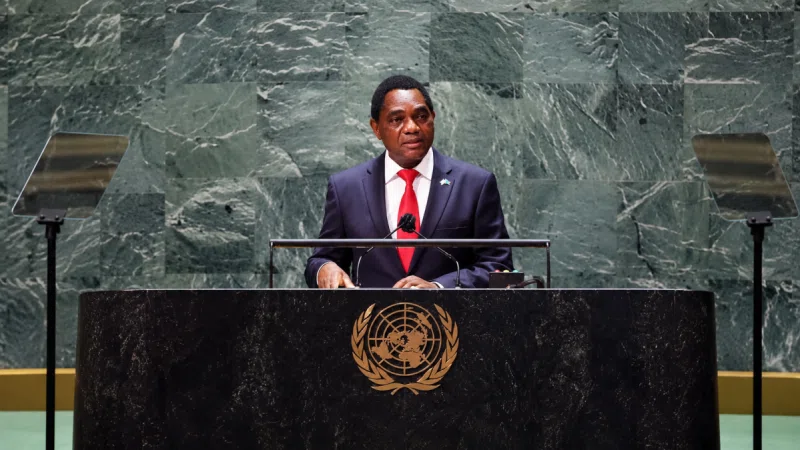
President Hakainde Hichilema named Brenda Tambatamba as the new mines minister on Wednesday. The appointment follows the president securing a second term in the August election.
Ms. Tambatamba previously served as labour minister and worked as a sustainability manager at Barrick Gold’s Lumwana mine. She inherits a sector critical to Zambia's macroeconomic survival, currently facing a production shortfall.
Zambia aims to triple annual copper output to three million metric tons by 2031 to supply the global energy transition and electric vehicle manufacturing. However, copper production fell to roughly 698,000 metric tons in 2023 from over 760,000 metric tons in 2022.
Mining accounts for over 70 percent of Zambia's export earnings and nearly a quarter of government revenues. Lower volumes affect debt restructuring efforts and foreign exchange reserves needed to stabilize the Zambian kwacha.
Technical disruptions, tax royalty disputes, and power shortages caused by regional drought have affected throughput. The drought has also reduced output from hydroelectric dams, forcing mines to use expensive diesel generators or imported electricity.
Ms. Tambatamba must also manage competition between Western allies and China.
Key facts
- Brenda Tambatamba has been appointed as the new mines minister.
- Zambia's copper production fell to approximately 698,000 metric tons in 2023.
- The government aims to reach three million metric tons of copper output by 2031.
Three perspectives
Neutral
Brenda Tambatamba takes over the mining ministry as Zambia attempts to increase copper production amidst geopolitical competition and domestic infrastructure challenges.
Positive
Ms. Tambatamba's background at Barrick Gold provides her with experience in international environmental, social, and governance standards and multinational investment demands.
Negative
Severe drought and technical disruptions have contributed to falling copper production levels and increased electricity costs for mines.
Your week in news, every Wednesday
The biggest stories of the week for your edition, in your inbox every Wednesday morning, your time. Free, and you can unsubscribe at any time.