

Human-driven climate change cut short next ice age, study suggests
The next glaciation was beginning about 2,000 years ago before warming temperatures reversed its growth, according to researchers.
 Climate Desk 2 min read
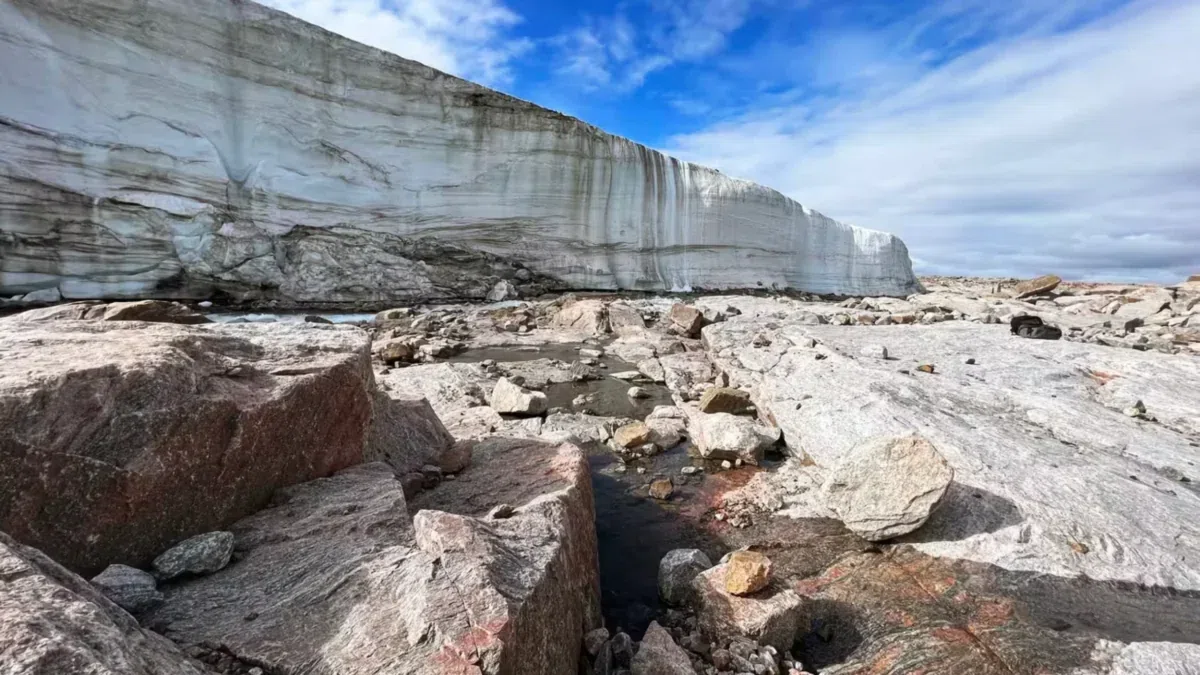
The next ice age may have already begun about 2,000 years ago, only to be cut short by human-driven climate change, a study published in the journal Science suggests. "It was just getting started, everything was normal, the next glaciation was about to happen – and yet it stopped," says Nicolás Young, a geochemist at Columbia University and the study's first author.
Researchers focused on the Barnes Ice Cap (BIC), which they suggest is the heart of an entire ice age and the descendant of the Laurentide Ice Sheet (LIS). The LIS was the largest structure of the Pleistocene, covering much of the northern US and Canada from around 95,000 to 20,000 years ago with up to 3 kilometres of ice.
The BIC reached its historical maximum around 1960, but anthropogenic warming reversed its growth. Since then, its losses can be almost entirely explained by rising summer temperatures, which are shrinking other ice caps across the Canadian Arctic and the North Atlantic.
The researchers used atomic dating methods to create an ice cap chronology, measuring the ratio of cosmogenic beryllium-10 in rocks and carbon-14 in long-dead vegetation. These measures act like terrestrial stopwatches to track climate change.
Models suggest the BIC or a future mix of these terms will be gone for good under current climate profiles. "That will be the true very last remains of the Laurentide, disappearing for good," Young concludes.
Key facts
- The next glaciation began around 2,000 years ago but was interrupted by human-driven climate change.
- The Barnes Ice Cap reached its historical maximum around 1960 before warming reversed its growth.
- Rising summer temperatures, linked to greenhouse gas emissions dating back to around 1750, are driving ice loss.
Three perspectives
Neutral
The study used beryllium-10 and carbon-14 ratios to reconstruct a chronology of the Barnes Ice Cap and the Laurentide Ice Sheet.
Positive
Researchers successfully used atomic dating methods to create a concise chain of climate change.
Negative
Anthropogenic warming has reversed the growth of the Barnes Ice Cap and may cause it to disappear for good.
Your week in news, every Wednesday
The biggest stories of the week for your edition, in your inbox every Wednesday morning, your time. Free, and you can unsubscribe at any time.