

 South Africa
New marine species fossil preserves internal structures
The fossil of Keurbos susanae, a marine creature from 444 million years ago, preserves muscles, tendons, and digestive remains in detail.
 Science Desk 1 min read
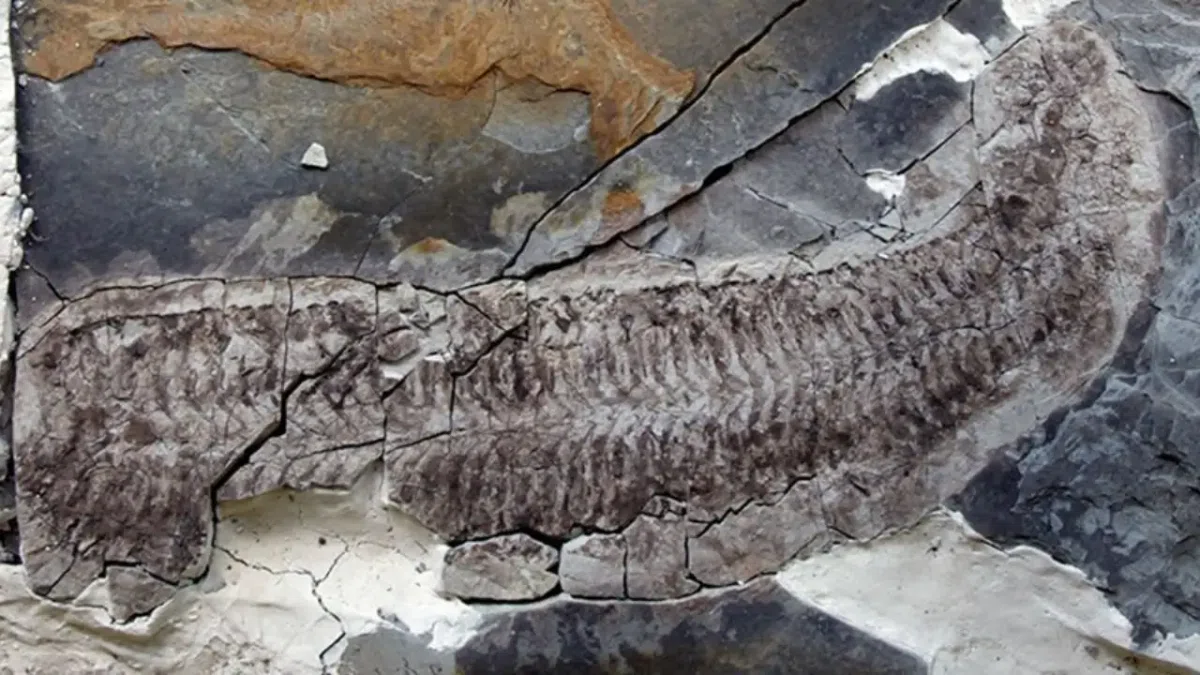
Scientists have discovered a fossil of a marine creature that lived 444 million years ago. The fossil belongs to a new species named Keurbos susanae.
The fossil preserves muscles, tendons, connective structures, and digestive remains in exceptional detail. This preservation occurred even though much of the creature's outer body disappeared.
The specimen lacks its head, legs, and most of its hard outer covering.
Key facts
- The fossil of the new species Keurbos susanae lived 444 million years ago.
- Internal structures including muscles, tendons, and digestive remains are preserved in the fossil.
Three perspectives
Neutral
The fossil of Keurbos susanae preserves internal structures despite the loss of its head, legs, and outer covering.
Positive
The fossil preserves muscles, tendons, connective structures, and digestive remains in exceptional detail.
Negative
The fossil lacks the head, legs, and most of the hard outer covering of the creature.
Your week in news, every Wednesday
The biggest stories of the week for your edition, in your inbox every Wednesday morning, your time. Free, and you can unsubscribe at any time.