

Researchers identify oceanic whitetip sharks by unique fin patterns
A study off Cat Island shows that individual sharks can be identified by their fins, potentially revealing much higher population numbers than traditional counts.
 Science Desk 2 min read
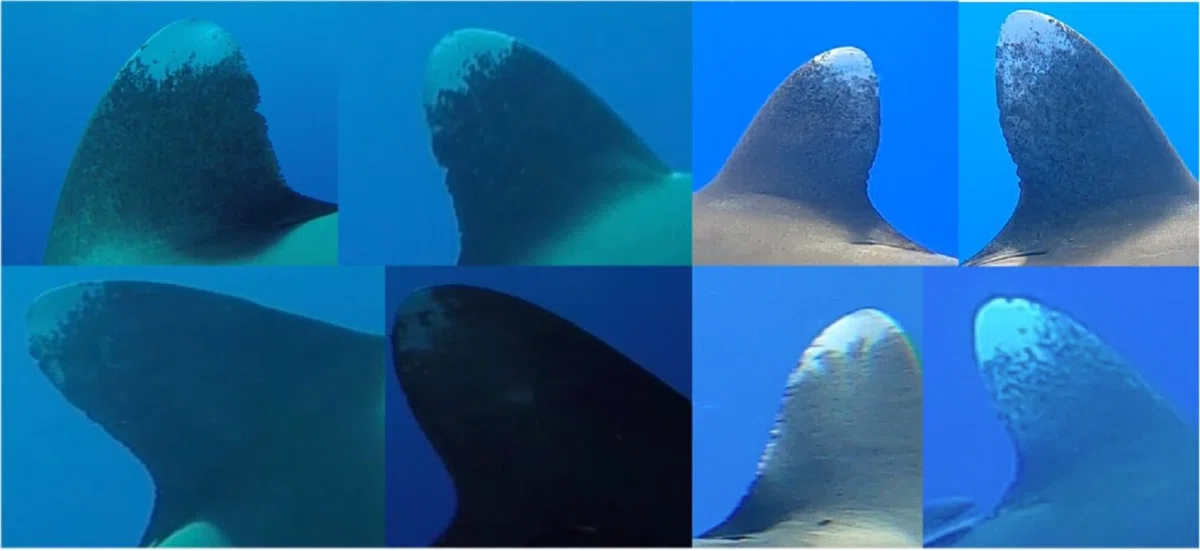
Researchers identified more than 50 oceanic whitetip sharks by their fins alone using pelagic baited remote underwater video stations, or pBRUVS, off the coast of Cat Island. Every oceanic whitetip shark has a fin pattern as unique as a human fingerprint.
The study, published in Marine Biology, used two techniques: free-drifting and boat-tethered pBRUVS. Because the water at Cat Island was too deep to anchor cameras to the bottom, researchers tested these pelagic methods. Boat-tethered pBRUVS allowed the team to increase their sample size and found that boat noise had no effect on shark behavior.
Identification is possible by looking at distinctive fin pigmentation and the shape of the fin tips. While sharks sometimes approached cameras at difficult angles, researchers estimated they could identify individuals around 80% of the time.
Using individual fin patterns allowed researchers to find that the actual number of sharks visiting a camera could be up to three times higher than traditional counts suggested. Traditional surveys often rely on the maximum number of sharks visible at one time, which can miss animals that arrive at different times.
Yannis Papastamatiou, a marine biologist and researcher in the FIU Institute of Environment, said the most important aspect was demonstrating that this relatively cheap and easy camera method can track relative changes in population size. Tracking trends in population over time is a key aspect of managing and conserving an endangered species.
Candace Fields, who is now working at the Cape Eleuthera Institute in Rock Sound, Eleuthera, wants to expand the survey geographically to see if sharks move up and down the archipelago. She also intends to incorporate photos from citizen scientists into the project catalog to increase coverage for tracking resightings.
Key facts
- Researchers identified more than 50 oceanic whitetip sharks using fin patterns off Cat Island.
- Individual identification via fin patterns can show shark counts up to three times higher than traditional methods.
- The study used pelagic baited remote underwater video stations because the water was too deep for anchored cameras.
Three perspectives
Neutral
Researchers used pelagic baited remote underwater video stations to identify oceanic whitetip sharks by their unique fin patterns off Cat Island.
Positive
The ability to identify individual sharks provides a more accurate picture of shark abundance and offers a cheap, easy tool to track population changes.
Negative
The oceanic whitetip shark is a critically endangered species.
Your week in news, every Wednesday
The biggest stories of the week for your edition, in your inbox every Wednesday morning, your time. Free, and you can unsubscribe at any time.