

 United States
Beaver Supermoon to reach peak illumination this week
The November Beaver Moon, the first of three consecutive supermoons, will reach peak illumination at 9:53 a.m.
 Space Desk 2 min read
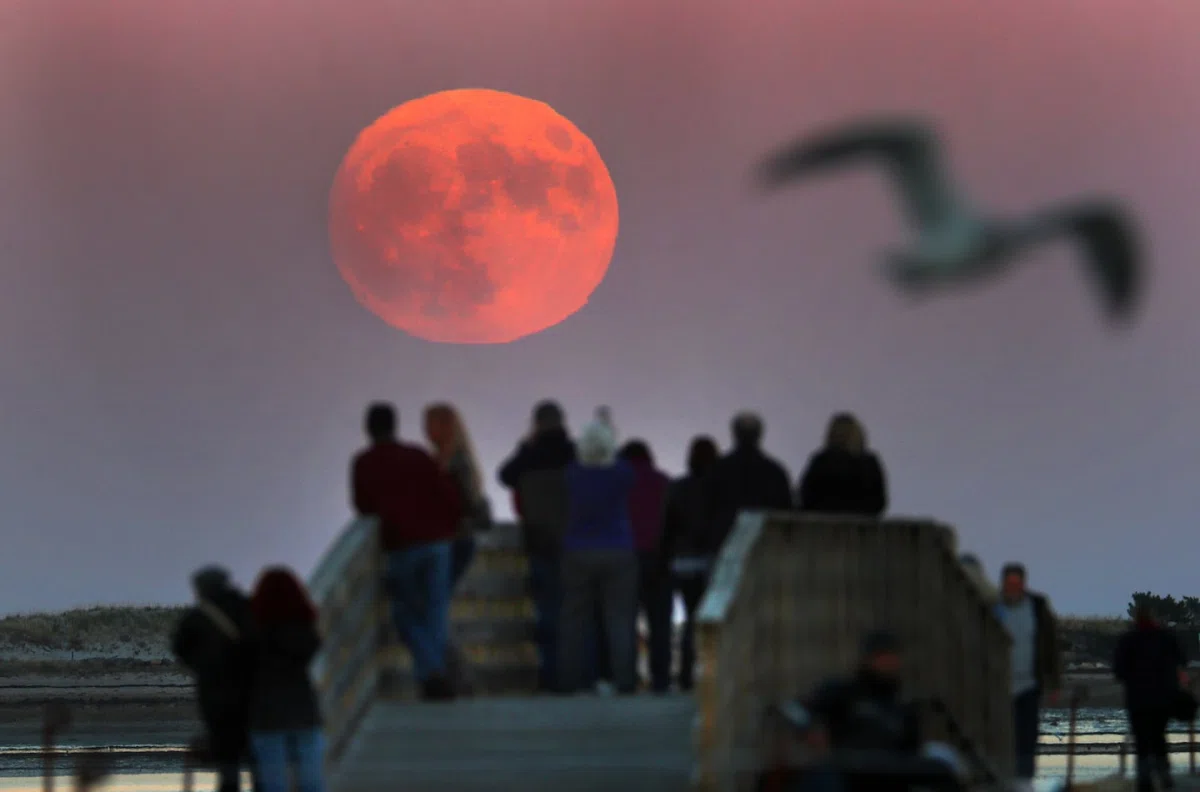
The November Beaver Moon, the first of three consecutive supermoons, will reach peak illumination at 9:53 a.m. EST on Tuesday. This supermoon occurs when the moon is at perigee, its closest point to Earth in its elliptical orbit.
The moon reaches its closest approach to Earth on Wednesday at 4:15 p.m., at a distance of approximately 223,000 miles. Data from AstroPixels.com, hosted by Fred Espenak, indicates the Beaver Supermoon will be 360,768 km (224,170 miles) from Earth at its closest point. This event is one of the closest full moons of the year.
The full moon will also trigger king tides, or perigean spring tides, which are unusually high tide cycles caused by the combined gravitational forces of the sun and moon. In Boston, these tides can rise 1 to 4 feet. High tides are expected to reach nearly 12 feet on Tuesday at 10:09 a.m., Wednesday at 10:57 a.m., Thanksgiving morning at 11:49 a.m., and Friday afternoon at 12:43 p.m.
A storm system moving up from the south during Thanksgiving could lead to minor or moderate coastal flooding. The late-morning high tide on Thanksgiving is 11.8 feet. If the storm arrives later that day, the tide will have dropped by 2 feet, reducing flooding potential.
The name Beaver Moon refers to the time of year when beavers are active in securing their lodges and storing food for winter. This week's moon is the first of four supermoons that will continue until February 2027. The largest supermoon of the season is expected to occur next month on Christmas Eve.
Key facts
- The Beaver Supermoon reaches peak illumination at 9:53 a.m. EST on Tuesday.
- King tides in Boston may reach nearly 12 feet on Tuesday, Wednesday, Thanksgiving, and Friday.
- The moon's closest approach to Earth occurs Wednesday at 4:15 p.m.
Three perspectives
Neutral
The November full moon is a supermoon that coincides with elevated king tides this week.
Positive
The supermoon provides a significant celestial display that is one of the biggest and brightest of the year.
Negative
A storm system moving up from the south during Thanksgiving could cause coastal flooding during high tides.
Your week in news, every Wednesday
The biggest stories of the week for your edition, in your inbox every Wednesday morning, your time. Free, and you can unsubscribe at any time.