 Kenya
KenyaNASA's Webb telescope finds signs of Mars-sized planet collisions
The James Webb Space Telescope has identified evidence of large planetary bodies crashing into each other, similar to the event that formed the moon.
 Global Newsflix 1 min read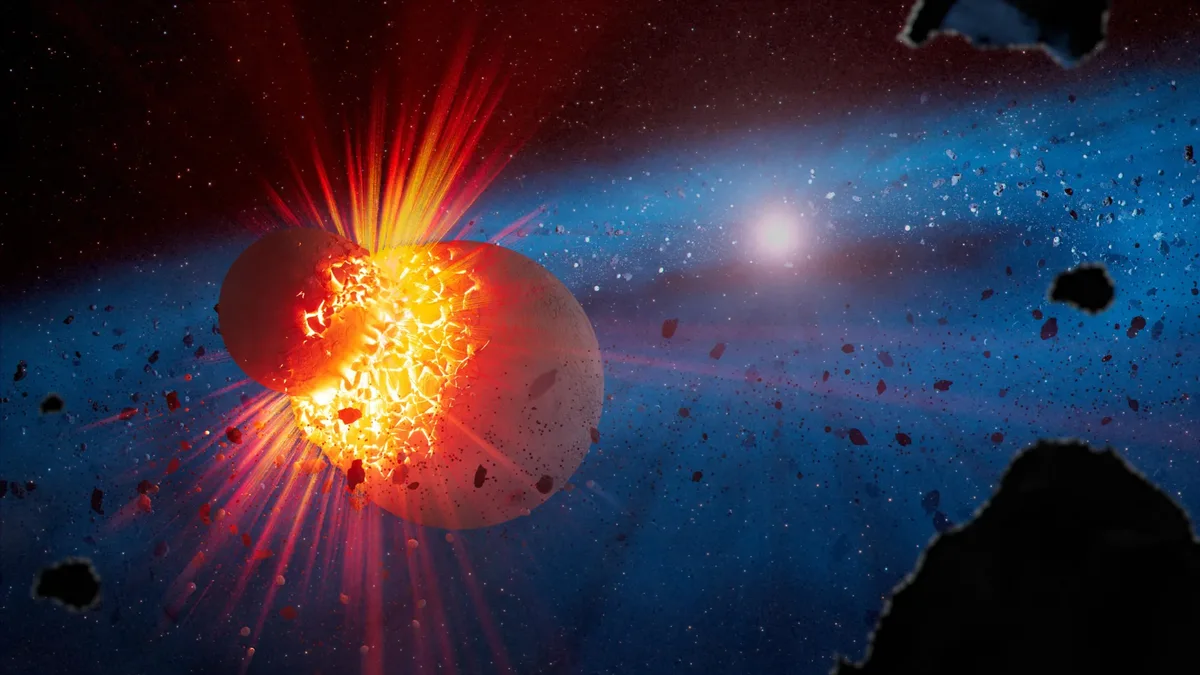
NASA's James Webb Space Telescope has found evidence of Mars-sized worlds colliding. The telescope investigated the processes that occur when planets crash into one another.
The study points to possible collisions of Mars-sized bodies. These observations include signs of collisions similar to the impact that formed the moon. The telescope provides information on these planet-shattering events.
Key facts
- The James Webb Space Telescope identified signs of Mars-sized bodies colliding.
- The study examines the effects of planet-shattering collisions.
- The observed collisions resemble the event that formed the moon.
Three perspectives
Neutral
Researchers will continue to analyze the data to understand planetary formation. Future observations will determine the frequency of these impacts.
Positive
The findings provide a way to study the violent origins of planetary systems. This data helps explain the history of the moon.
Negative
The evidence consists of signs of collisions rather than direct observation. Scientists must still verify the scale of these events.
Your week in news, every Wednesday
The biggest stories of the week for your edition, in your inbox every Wednesday morning, your time. Free, and you can unsubscribe at any time.