

 Mongolia
Animals May Be 200M Years Older
Microfossils from Mongolia suggest the first animals may be up to 200 million years older than their oldest clear fossils, a new study finds. The team estimates the first animals may have evolved between roughly 800 and 700 million years ago.
 Global Newsflix 2 min read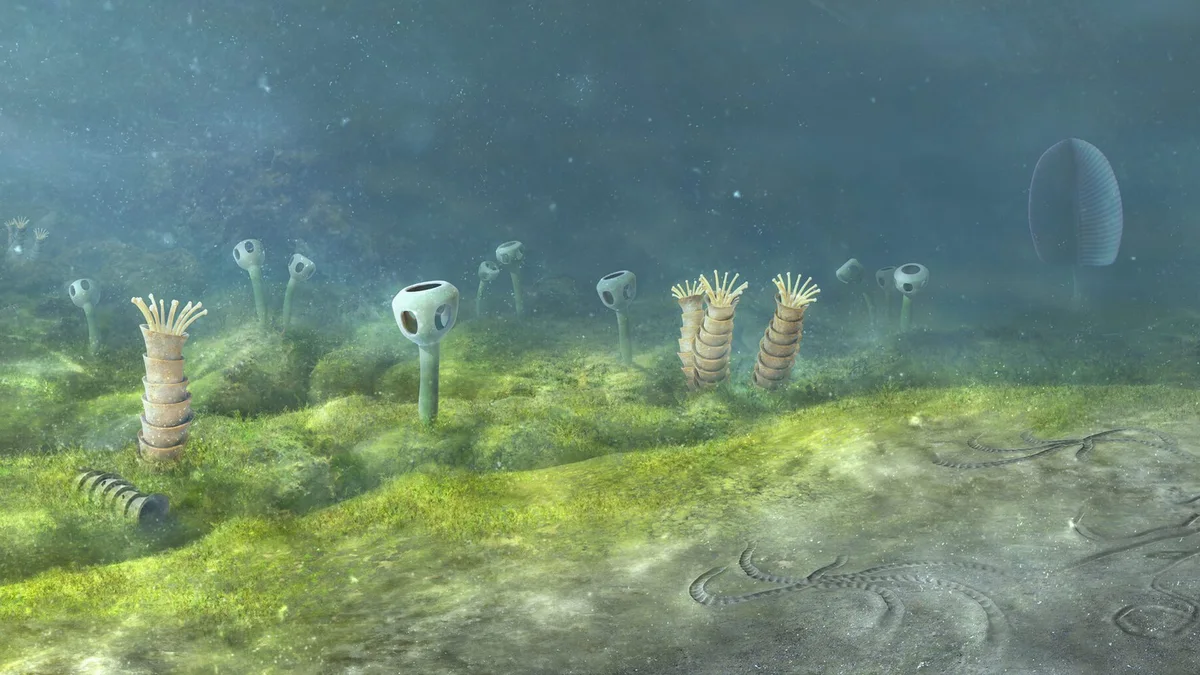
A new study led by the University of Oxford suggests the first animals may be up to 200 million years older than their oldest clear fossils. The team found no older animal fossils, but used genetic dating to estimate when their ancestors split apart.
The study used a molecular clock to compare genetic differences between living species and work backward to estimate when their ancestors split apart. The clock also needs a maximum age, a date before which animals hadn’t evolved yet.
The team collected 143 rock samples from six sites in northern Mongolia, on the shore of Lake Khuvsgul. They found tiny spheres covered in spines and branching arms, but no animal fossils.
The Kheseen Biota in Mongolia made a natural test for the team. Its fossil-bearing rocks formed at least 25 million years after the Weng’an Biota in China, when animals were already living in places such as present-day Namibia and South China.
Orin Lole Durbin, an Oxford undergraduate during the study and now a Ph.D. student at Virginia Tech, is the first author. Ross Anderson, an associate professor at Oxford’s Museum of Natural History, is the senior author.
The team’s findings suggest that animals may have been around before, or during, some of the harshest ice ages Earth has ever had. The study’s estimates put the origin of the first animals between roughly 800 and 700 million years ago.
The specimens from the study are now held at the Yale Peabody Museum. The team’s research was conducted with researchers from UC Berkeley, ETH Zürich, and Yale.
Key facts
- The first animals may be up to 200 million years older than their oldest clear fossils.
- The team estimates the first animals may have evolved between roughly 800 and 700 million years ago.
- The study used a molecular clock to compare genetic differences between living species.
- The team collected 143 rock samples from six sites in northern Mongolia.
Three perspectives
Neutral
The study’s findings provide new insights into the evolution of animals on Earth. The research suggests that animals may have been around for much longer than previously thought. Further research is needed to confirm the team’s estimates.
Positive
The study’s findings are a significant breakthrough in our understanding of animal evolution. The research opens up new avenues for exploration and discovery. The team’s use of genetic dating and molecular clocks is a major advancement in the field.
Negative
The study’s findings are based on estimates and may not be entirely accurate. The research relies on the assumption that the Kheseen Biota in Mongolia is a reliable test for the presence of animal fossils. The team’s conclusions may be subject to revision as new evidence emerges.
Your week in news, every Wednesday
The biggest stories of the week for your edition, in your inbox every Wednesday morning, your time. Free, and you can unsubscribe at any time.