

UNICEF and Republic of Korea conclude water project in Afghanistan
The project established and rehabilitated water supply systems to protect over 39,000 children and families from climate-related shocks.
 Climate Desk 2 min read
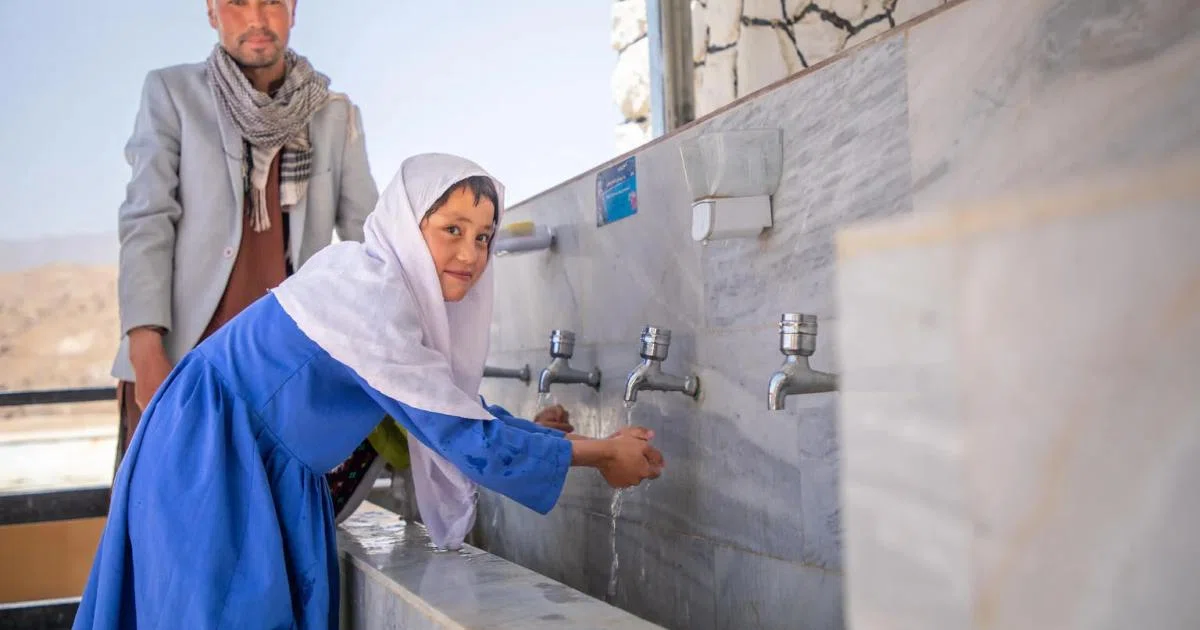
UNICEF Afghanistan and the Government of the Republic of Korea have concluded a project to help children and families in climate-vulnerable communities access safe and reliable water. With support from the Government of the Republic of Korea, the project established and rehabilitated climate-resilient water supply systems, including 19 boreholes, solar-powered pumping systems, water reservoirs, and distribution networks.
The systems help protect more than 39,000 children and their families from the impacts of droughts, floods, and other climate-related shocks by providing reliable access to safe water for households, schools, and communities. This support comes as Afghanistan ranks highest in South Asia for child vulnerability, with millions of children exposed to at least three overlapping climate hazards, including droughts, floods, heatwaves, extreme heat, fires, and sand and dust storms.
In Ghor Province, the new systems are changing daily life in remote communities that have struggled with water shortages. In Jonobe Badrah village, women and children previously walked for hours through rocky mountain paths to collect water that was often unsafe. A solar-powered borehole now pumps water into an 80,000-litre storage tank above the village to bring safe water closer to homes.
Dr. Tajudeen Oyewale, the UNICEF Representative in Afghanistan, said children in Afghanistan are living on the frontlines of the climate crisis and that access to safe water is an urgent way to protect their health, dignity, and future. He expressed gratitude to the Government of the Republic of Korea for support that helps vulnerable communities withstand climate shocks and stay healthy.
The project involved drilling new wells, rehabilitating existing water supply systems, constructing reservoirs, installing solar pumping systems, and constructing or repairing pipe networks. UNICEF also provided household connections and water quality testing to ensure access to safe water.
Key facts
- The project protects over 39,000 children and their families from climate-related shocks.
- The initiative included 19 boreholes and solar-powered pumping systems.
- In Jonobe Badrah village, a solar-powered borehole pumps water into an 80,000-litre storage tank.
Three perspectives
Neutral
UNICEF and the Government of the Republic of Korea have completed a project to provide climate-resilient water access to vulnerable Afghan communities.
Positive
The new water systems help protect more than 39,000 children and their families from the impacts of droughts and floods.
Negative
Millions of children in Afghanistan are exposed to overlapping climate hazards such as heatwaves, fires, and sand and dust storms.
Your week in news, every Wednesday
The biggest stories of the week for your edition, in your inbox every Wednesday morning, your time. Free, and you can unsubscribe at any time.