

Montreal neighborhood model transforms rooftops and lots into resource hubs
A Concordia study proposes using urban agriculture, solar power, and rainwater harvesting to increase local self-sufficiency and reduce carbon footprints.
 Science Desk 2 min read
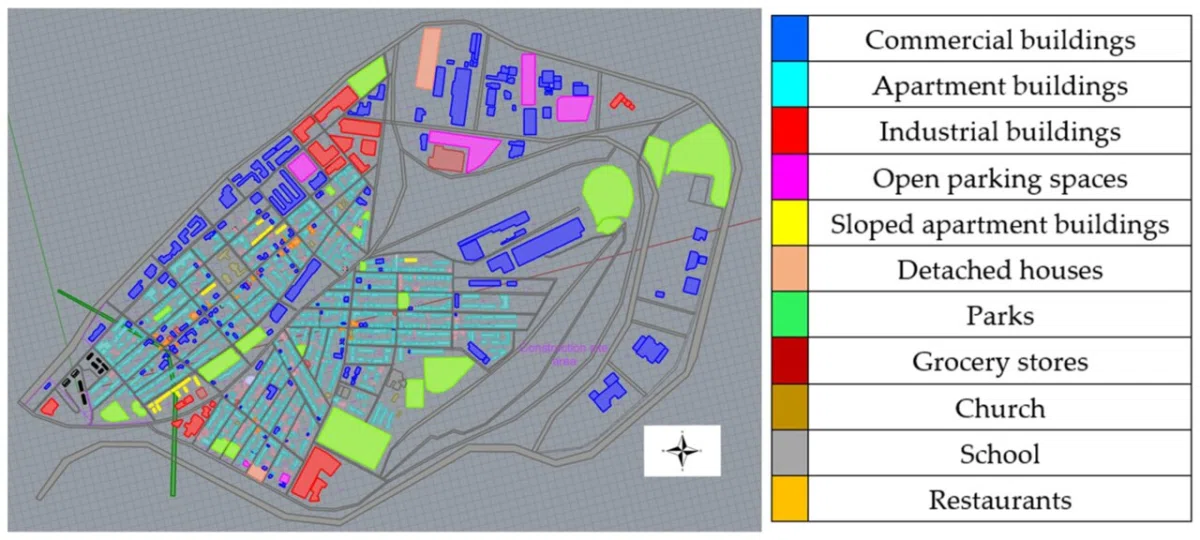
Researchers have developed a neighborhood-scale framework to transform underused rooftops, vacant lots, and parking areas into local food, energy, and water resource hubs. Using the Pointe-St-Charles neighborhood in Montreal as a case study, the model combines urban agriculture, solar power, rainwater harvesting, and local food-sharing networks.
The model proposes assigning greenhouses, green roofs, or solar panels to rooftops depending on the building, while vacant lots could be used to grow crops. Solar-panel canopies over parking areas could generate electricity without reducing parking capacity, and harvested rainwater could be used for irrigation.
Caroline Hachem-Vermette, an associate professor in the Department of Building, Civil and Environmental Engineering, said the approach considers food, energy, and water as an integrated system rather than separate systems. Instead of optimizing each system in isolation, the goal is to increase local resource self-sufficiency while reducing carbon emissions.
The researchers divided Pointe-St-Charles into 91 neighborhood units to evaluate different scenarios. They estimate these changes could produce about 407 metric tons of crops annually, meeting roughly 30% of demand for selected foods. Solar panels could supply about 14% of the neighborhood's building energy needs.
The model estimates that producing food closer to home and generating renewable electricity could cut emissions from food transportation by 96% and reduce emissions from grid electricity by 27.5%.
The framework is designed to be adapted to other neighborhoods, though real-world implementation would require local assessment, testing, and permits. Hachem-Vermette said existing neighborhoods could be progressively retrofitted to avoid the impacts of demolition and rebuilding.
Key facts
- The model could produce 407 metric tons of crops each year, meeting about 30% of demand for selected foods.
- Solar panels could supply approximately 14% of the neighborhood's building energy needs.
- Food transportation emissions could be cut by 96% under the proposed model.
Three perspectives
Neutral
The framework uses the Pointe-St-Charles neighborhood in Montreal to model how integrated food, energy, and water systems function at a neighborhood scale.
Positive
The approach could reduce carbon emissions and increase local resource self-sufficiency while avoiding the impacts of demolition and rebuilding.
Negative
Real-world implementation of the framework would still require local assessment, testing, and permits.
Your week in news, every Wednesday
The biggest stories of the week for your edition, in your inbox every Wednesday morning, your time. Free, and you can unsubscribe at any time.