

East African Community expansion faces economic and geopolitical challenges
Rapid expansion of the economic bloc has led to domestic displacement in Somalia and institutional anxiety in the Democratic Republic of Congo.
 Politics Desk 2 min read
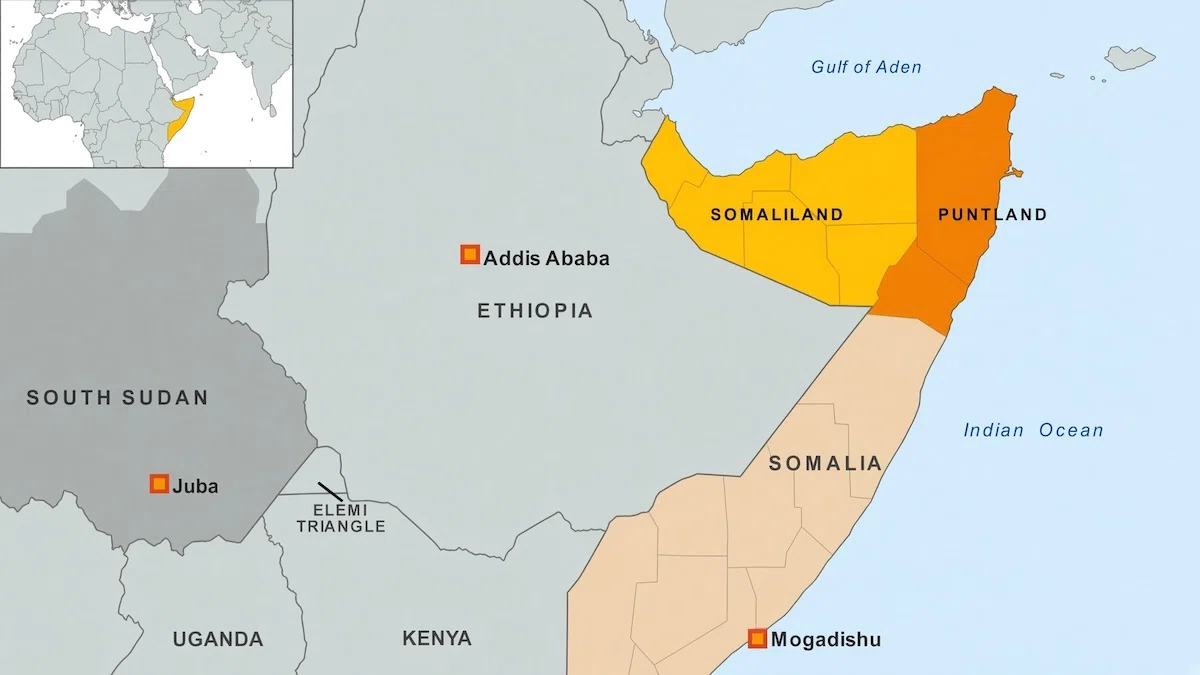
In Somalia, which ratified the EAC in early 2024, the economic reality has proven asymmetrical. While Mogadishu gained access to a consumer market of over 300 million people and a 3,000-kilometre Indian Ocean coastline, Somali traders have yet to benefit meaningfully due to a lack of a manufacturing base.
Highly competitive and subsidized manufactured goods from Kenya and Tanzania have flooded the Somali market, causing domestic displacement. Additionally, the administrative requirements for the EAC Common External Tariff have strained the Somali treasury, which relies heavily on foreign donor aid.
In Central Africa, the admission of the Democratic Republic of Congo (DRC) was intended to create an economic super-corridor from the Indian Ocean to the Atlantic. However, the Northern and Central Transport Routes have faced difficulties.
In the Horn of Africa, Ethiopia's pursuit of sovereign access to the sea has unsettled the region. Prime Minister Abiy Ahmed’s government has prioritized costly projects and drone fleets over macroeconomic stability. The 2020–2022 Tigray War depleted foreign exchange reserves and fueled inflation. Ethiopia's unilateral approach to maritime access has placed pressure on coastal states Eritrea, Djibouti, and Somalia.
Key facts
- Somalia joined the EAC in early 2024, gaining access to a 300 million person market and a 3,000-kilometre coastline.
- Subsidized goods from Kenya and Tanzania have flooded the Somali market, displacing local enterprises.
- Ethiopia's pursuit of maritime access has unsettled neighbors Eritrea, Djibouti, and Somalia.
Three perspectives
Neutral
The East African Community's expansion has integrated new markets and coastlines while introducing complex administrative and geopolitical challenges.
Positive
Somalia gained access to a consumer market of over 300 million people and a maritime prize through its EAC ratification.
Negative
Ethiopia's unilateral maritime ambitions and the economic displacement of Somali traders have created regional instability.
Your week in news, every Wednesday
The biggest stories of the week for your edition, in your inbox every Wednesday morning, your time. Free, and you can unsubscribe at any time.