

Researchers develop new approach to count more than 9,000 photons
A new detection system using multiplexing and superconducting nanowire single-photon detectors enables precise large-scale optical measurements.
 Science Desk 2 min read
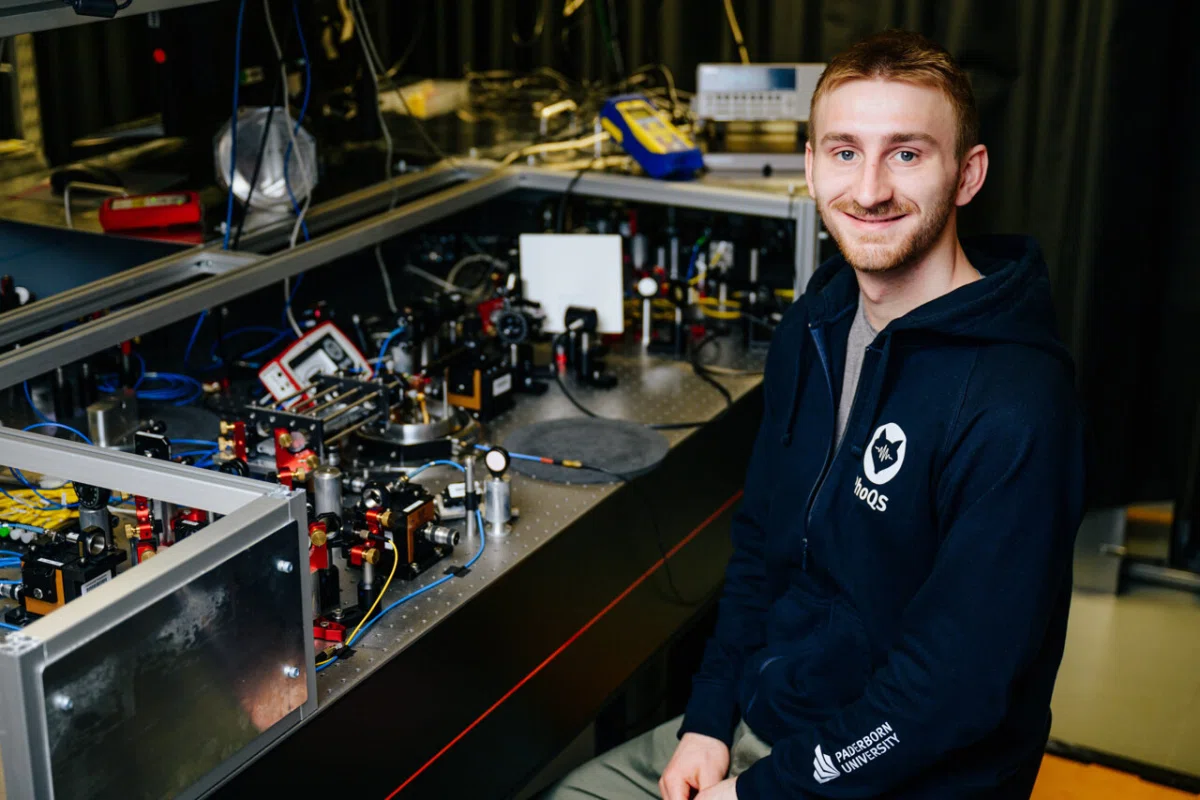
Researchers have developed a new approach that can precisely count from zero to more than 9,000 individual photons. This advance opens new possibilities for studying quantum light at large scales and making precise optical measurements.
The team developed a detection system that combines superconducting nanowire single-photon detectors (SNSPDs) with multiplexing to create 1,024 detection bins. They used this approach, along with a detector model previously developed with Mariia Sidorova from PTB in Germany, to measure light pulses containing up to 276 photons with an uncertainty smaller than a single photon.
Timon Schapeler from Paderborn University said precisely counting photons becomes more challenging as their numbers increase. He stated the approach extends photon counting to larger numbers of photons, bridging the gap between single-photon measurements and high-sensitivity optical power meters.
The researchers used multiplexing to split one light pulse into 128 smaller pulses separated in time, then further split these onto eight different detectors to produce 1,024 individual smaller pulses. This method uses low-loss optical components to distribute light evenly across the bins while preserving photon-number information.
Tim Bartley from Paderborn University said large-scale measurement of individual photons is a cornerstone of photonic quantum computing and single-photon-level imaging. He added that the technology can help researchers learn how photonic quantum computers and single-photon-sensitive cameras can be scaled.
While the current study applied SNSPDs to measuring laser pulses, researchers plan to apply them to bright quantum states of light to uncover quantum effects at large scales.
Key facts
- The new system uses 1,024 detection bins to count photons.
- Researchers demonstrated photon counting of up to 276 photons with measurement uncertainties below one photon.
- A conventional multiplexed system would require about 37,000 detector elements to achieve the same precision as this 1,024-bin system.
Three perspectives
Neutral
Researchers have developed a detection system using multiplexing and superconducting nanowire single-photon detectors to count large numbers of photons.
Positive
The new technology enables precise measurements and provides a way to learn how photonic quantum computers and single-photon-sensitive cameras can be scaled.
Negative
Making detectors that can distinguish large numbers of individual photons is extremely challenging.
Your week in news, every Wednesday
The biggest stories of the week for your edition, in your inbox every Wednesday morning, your time. Free, and you can unsubscribe at any time.