

 Ethiopia
Abiy Ahmed Re-Elected
Ethiopia's new parliamentary term begins with Abiy Ahmed as Prime Minister, following the June 1 general election. The Prosperity Party secured a parliamentary majority, giving them the mandate to organize and lead the federal government.
 Global Newsflix 2 min read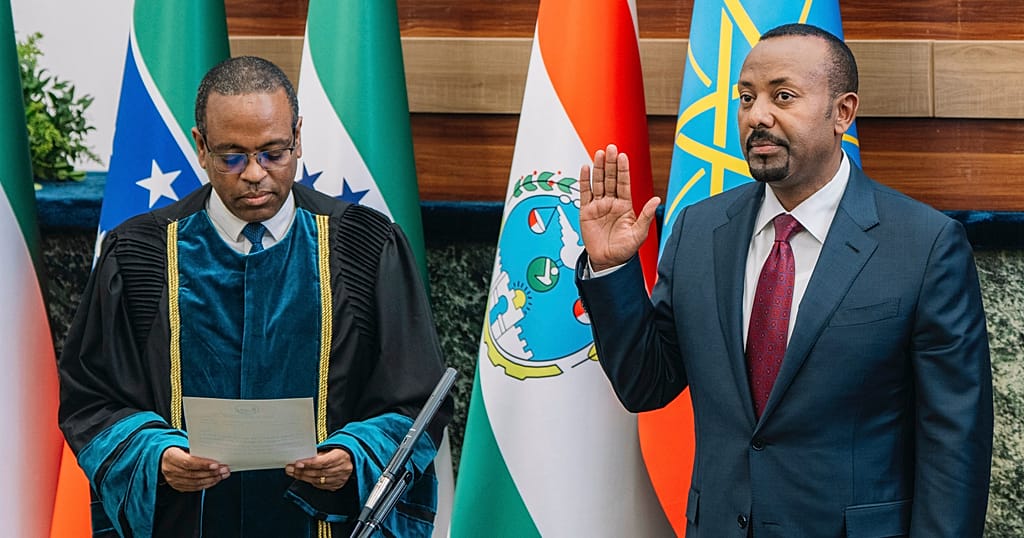
Abiy Ahmed has been re-elected as Prime Minister of Ethiopia, marking the beginning of a new five-year political and institutional chapter for the country.
The new parliamentary term started with the convening of the newly elected House of People’s Representatives, which will set in motion the constitutional process for forming the federal government.
The June 1 general election, one of the largest in Ethiopia’s history, saw over 54 million citizens cast their ballots, with the Prosperity Party emerging victorious.
The election involved 42 political parties and 10,438 candidates, with the Prosperity Party securing a parliamentary majority under Article 56 of the Constitution.
The incoming administration is expected to translate the electoral mandate into functioning institutions, policies, and national priorities, while addressing some of Ethiopia’s longstanding political and social questions.
The implementation of the outcomes of Ethiopia’s National Dialogue is a central element of the new administration’s agenda, with the Ethiopian National Dialogue Commission handing over its consolidated agenda items and recommendations to the House of Peoples’ Representatives.
Prime Minister Abiy Ahmed described the handover as an important milestone in the country’s National Dialogue process, while Chief Commissioner Professor Mesfin Araya stressed that implementation is now the critical next step.
Key facts
- Abiy Ahmed re-elected as Prime Minister of Ethiopia
- Prosperity Party secured a parliamentary majority in the June 1 general election
- Over 54 million citizens cast their ballots in the election
- Ethiopian National Dialogue Commission handed over its recommendations to the House of Peoples’ Representatives
Three perspectives
Neutral
The new administration faces the task of addressing Ethiopia’s longstanding political and social questions, while implementing the outcomes of the National Dialogue. The international community will be watching the developments in the country. The next steps will be crucial in determining the direction of the new government.
Positive
The re-election of Abiy Ahmed and the formation of a new government offer an opportunity for Ethiopia to move forward and address its challenges. The implementation of the National Dialogue recommendations could lead to positive changes in the country. The new administration has a mandate to bring about meaningful reforms.
Negative
The new government faces significant challenges in addressing Ethiopia’s political and social issues, and the implementation of the National Dialogue recommendations may be difficult. The opposition may criticize the new administration’s policies, and the country’s problems may persist. The new government will have to work hard to meet the expectations of the Ethiopian people.
Your week in news, every Wednesday
The biggest stories of the week for your edition, in your inbox every Wednesday morning, your time. Free, and you can unsubscribe at any time.