

 Australia
WA police facial recognition trial results in 122 arrests and nine false alerts
Western Australia police concluded a five-month trial of facial recognition technology on Saturday, which resulted in 122 arrests.
 Crime & Justice Desk 2 min read
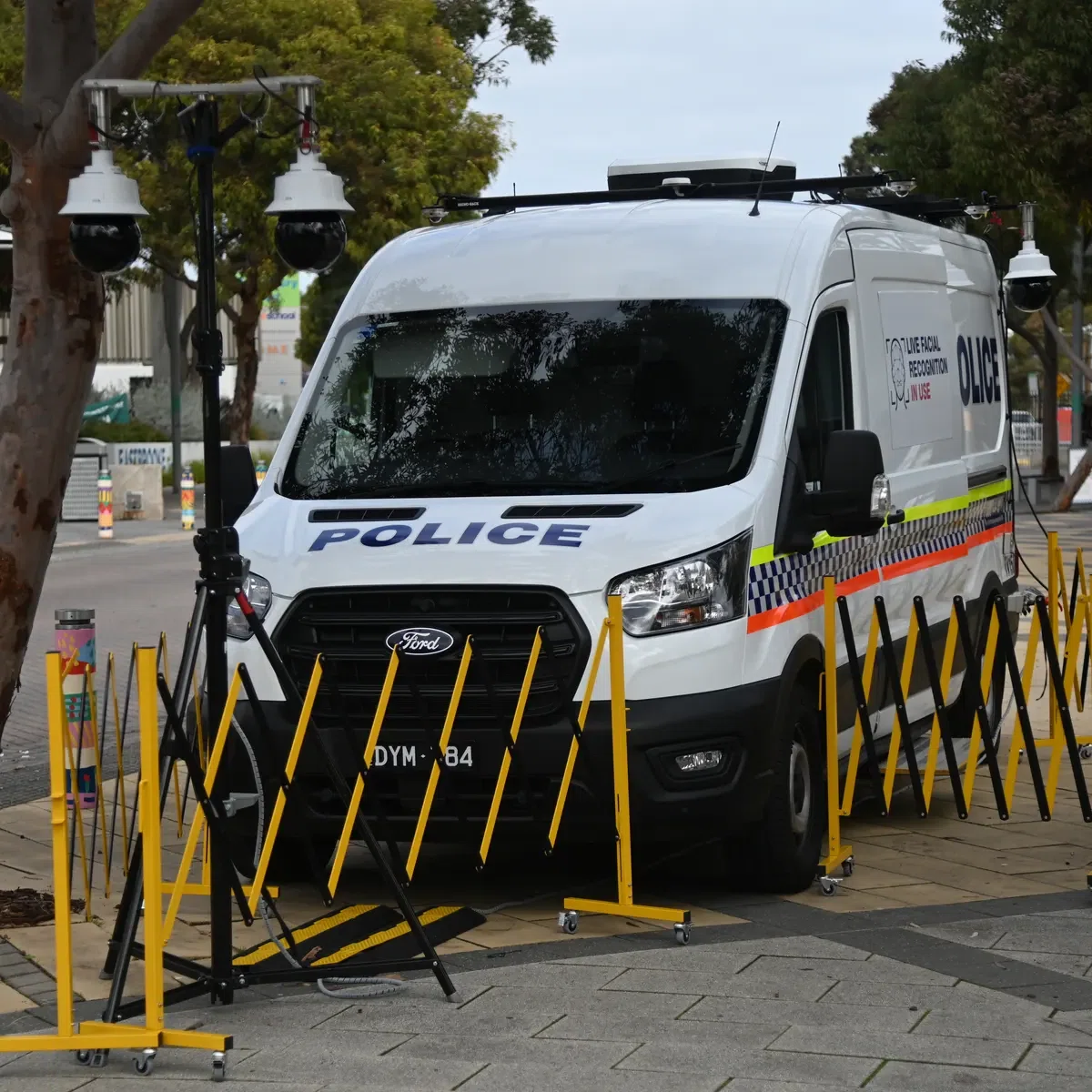
Western Australia police concluded a five-month trial of facial recognition technology on Saturday, which resulted in 122 arrests. The technology was deployed on marked vans at 43 regional and metropolitan locations, including the Perth royal show.
During the 100 deployments, the system scanned 1,380,882 faces. The scans generated nine incorrect alerts, which police said represented an error rate of 0.00065%. These false alerts led officers to engage with 146 registered sex offenders and locate 10 people for welfare checks.
Blanch said each alert resulted in an interaction where officers asked relevant questions. He acknowledged the technology was not perfect but maintained that officers followed up on alerts as they would if a member of the public raised suspicions.
Civil liberties advocates criticised the framing of the error rate. Bill Rowlings, chief executive of Civil Liberties Australia, said police were "severely gilding the lily" by using the 0.00065% figure. He suggested the rate should be calculated by comparing how many of the 122 arrests result in convictions.
Sarah Schwartz, legal director at the Human Rights Law Centre, said every false match involves a real person who may be stopped, questioned or investigated because an algorithm got it wrong. She questioned if conducting biometric surveillance on an extraordinary scale was proportionate in a democratic society and raised concerns about deployment at public demonstrations.
The surveillance vans have been removed from public deployment while the force conducts an internal evaluation of the trial.
Key facts
- The facial recognition trial scanned 1,380,882 faces across 43 locations in Western Australia.
- The trial resulted in 122 arrests and nine false alerts.
Three perspectives
Neutral
Western Australia police completed a five-month trial using facial recognition technology on marked vans, resulting in 122 arrests and nine false alerts.
Positive
The trial led to 122 arrests and allowed officers to engage with 146 registered sex offenders and 10 people for welfare checks.
Negative
Civil liberties advocates criticised the technology, noting that false matches result in real people being stopped or questioned and questioning the proportionality of large-scale biometric surveillance.
Your week in news, every Wednesday
The biggest stories of the week for your edition, in your inbox every Wednesday morning, your time. Free, and you can unsubscribe at any time.